

Our Reporter, Abuja
Former Minister of Education and good governance advocate, Dr. Oby Ezekwesili, has condemned the Nigerian Senate over the continued suspension of Senator Natasha Akpoti-Uduaghan, describing it as “an existential threat to constitutional democracy.”
In a memo titled “The Senate’s Constitutional Overreach in the Case of Senator Natasha Akpoti-Uduaghan” shared via her verified X account on Wednesday, Ezekwesili warned that democracy “dies when laws become weapons and lawmakers become serial lawbreakers.”
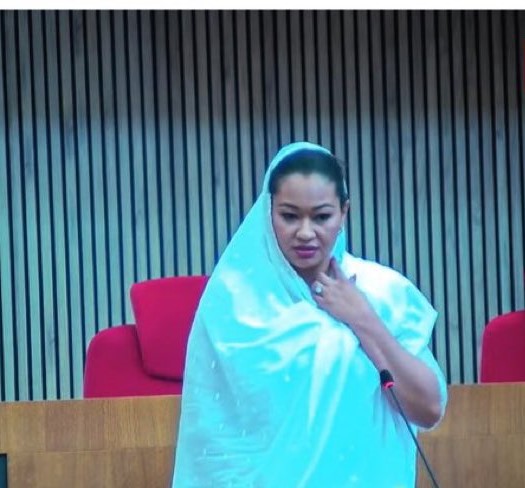
Senator Akpoti-Uduaghan, representing Kogi Central, was suspended on March 6, 2025, after she accused Senate President Godswill Akpabio of sexual harassment. Six months later, the suspension remains in place despite a ruling by Justice Binta Nyako of the Federal High Court declaring it “excessive.”
Ezekwesili criticized the September 4, 2025 letter signed by the Acting Senate Clerk which informed Akpoti-Uduaghan that her suspension would continue indefinitely pending the conclusion of her case in court. She described the Senate’s justification as “preposterous,” arguing that pending litigation cannot be used to perpetuate an unconstitutional act.
Citing Section 67(4) of the Senate Rules, she stressed that lawmakers may only be suspended for a maximum of 14 days, making the six-month sanction a violation of the chamber’s own rules. She also noted that with the National Assembly sitting only 181 days in a legislative year, Akpoti-Uduaghan’s suspension had effectively silenced the entire Kogi Central constituency for more than a session.
“The numbers tell a stark story of constitutional overreach,” Ezekwesili said.
“The proportion of legislative participation denied to Senator Akpoti-Uduaghan’s constituents is over 100%.”
She recalled judicial precedents from 2017 and 2018 in which the Federal High Court ruled that suspensions beyond two weeks were “illegal, unlawful and unconstitutional.” Despite this, Ezekwesili noted, the Senate imposed what she called a “seven-point punishment,” including withdrawal of security, stoppage of salary, denial of office access, and exclusion from the National Assembly premises.
Warning of the dangers of unchecked legislative power, she added: “When the legislative arm can ignore judicial restraints with impunity, we witness the erosion of the separation of powers that forms the bedrock of constitutional democracy.”
Ezekwesili urged the Chief Justice of Nigeria and the National Judicial Council to urgently address what she termed “judicial inconsistencies” in the case, insisting that the courts must act swiftly to prove to Nigerians that they are not complicit in undermining the rule of law.
“The fastest conclusion of the Akpoti-Uduaghan case is imperative,” she said, “for the judiciary to show Nigerians that it stands as the guardian of constitutional order, not an enabler of abuse.”
