

…Accuses Whitemen of destroying Africa’s entrepreneurship system
Stephen Ukandu, Umuahia
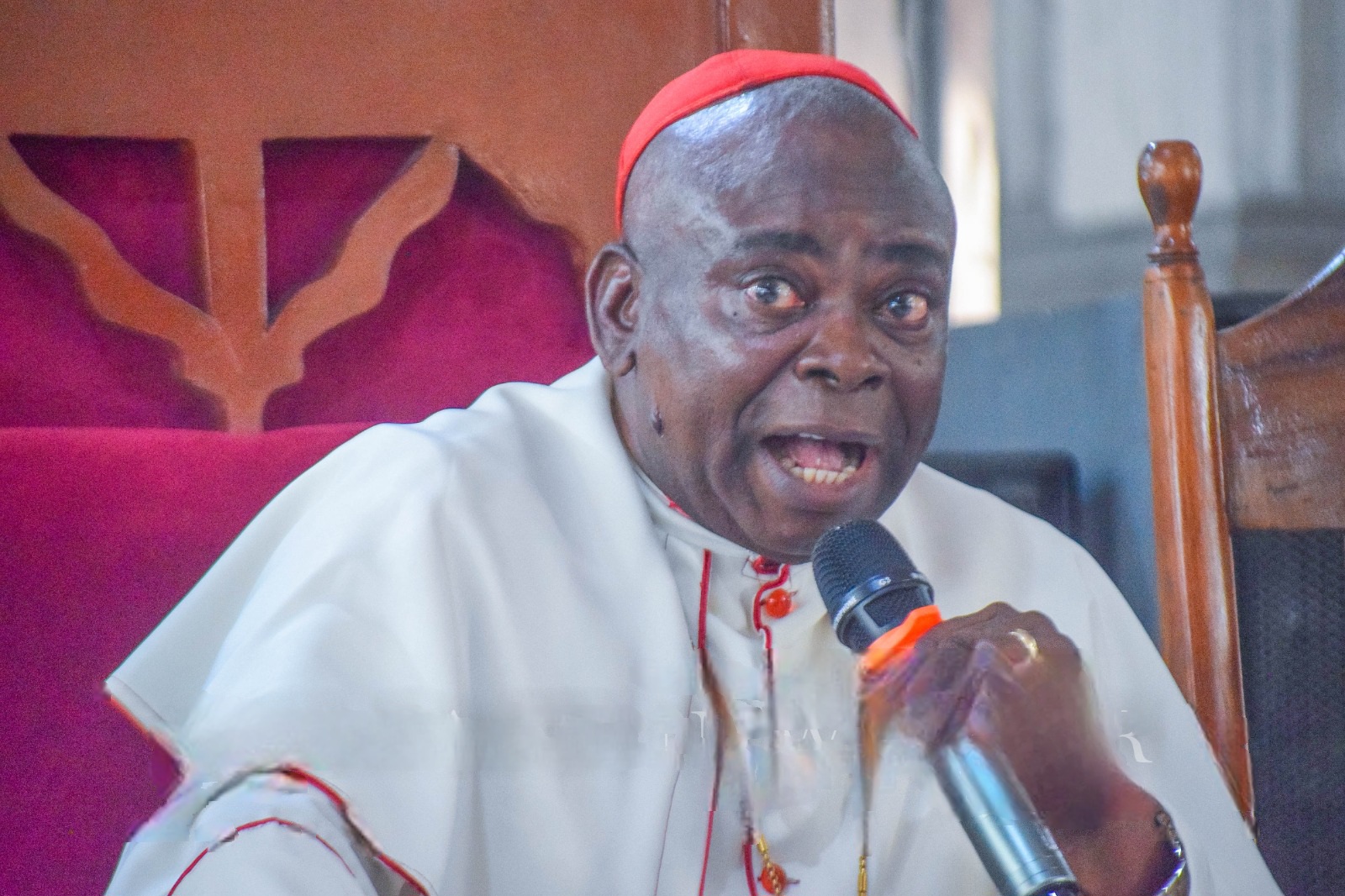
The Methodist Archbishop of Aba Diocese, the Most Rev. Godfrey Agupusi, has decried the rot and falling standard of education in Nigeria.
He also accused Whitemen of distorting Africa’s education system, which originally focused on ability and skills.
The Archbishop, who stated this during a press conference in Aba, contended that placing certificates above ability and skills was defective.
Rev. Agupusi, who spoke on the forthcoming silver jubilee of the Methodist High School, Aba, said the school is prioritizing skills acquisition and vocational studies to make its products self-reliant.
The Archbishop regretted that since the focus of the education system in Africa shifted from ability to certificates, schools began to produce unemployable graduates.
The cleric, who was flanked during the press conference by the Diocesan Lay President, John Ajuga; School Board Chairman, Dr. Emma Ndukwe; the Principal, Mrs. Rejoice Ugbor; and the PTA Chairman, Elder Daniel Okoro, called for a reversal of the trend.
He said: “Before the Whitemen came, no African was unemployed. But when they came, they introduced all kinds of programmes that make people unemployable after graduation.”
Calling for the restoration of History to the school curriculum, Archbishop Agupusi said mission schools focus on both academic excellence and moral values, as the former alone is insufficient.
“Mission schools not only teach academic excellence but also give attention to moral values and re-orientate the human mind. Our society would have been worse without the church,” he said.
On the school’s silver jubilee anniversary scheduled for October 5, Archbishop Agupusi disclosed that the school would launch a N500 million development fund to enable it to expand its ICT facilities and complete the permanent site building project.
He hailed the move by some state governments to ban graduation ceremonies for primary and secondary schools following public outcry that they are exploitative.
He said such unnecessary ceremonies amount to economic waste.
“When we went to school, there was nothing like graduation in primary and secondary schools. There was nothing like birthdays.
“So, stopping it in schools is good so that it doesn’t give our children the false impression that they have arrived. Economically too, it’s a waste. It’s draining the pockets of parents.”
On the growing insecurity in parts of the country, Most Rev. Agupusi blamed the menace on Nigeria’s faulty education system, which centres only on paper certificates.
“Our distorted education system is part of the ills giving rise to the insecurity in our society. If we inculcate discipline and moral values in our students, they will not agree to be recruited as thugs during elections,” he declared.
Contributing, the School Board Chairman, Dr. Ndukwe, said the school had made some progress since inception and re-stated its commitment to its goals of delivering quality and affordable education to all.
While soliciting government support for mission schools, he said the church was not into education for merchandise but to improve quality.
Chairman of the Planning Committee, Uwakwe Maduka, regretted that some well-intentioned government policies in the education sector end up becoming counterproductive due to wrong timing and implementation.
Maduka, who cited the recent introduction of Robotics and AI as compulsory subjects in the primary and secondary school syllabus, advised the government to be more sensitive over the timing and implementation of its policies. He said schools and parents needed more time to adequately prepare for the policy to succeed.
The Diocesan Lay President, Mr. Ajuga, said that missions are better managers of schools, arguing that education in Nigeria had its best of times when it was in the hands of missions.
“The new curriculum is good but at the same time, they should have given schools, students, and parents time to prepare for it.
“If government is bringing Robotics, ICT, and all those things, there has to be preparation for the equipment both in public and private schools.”
