

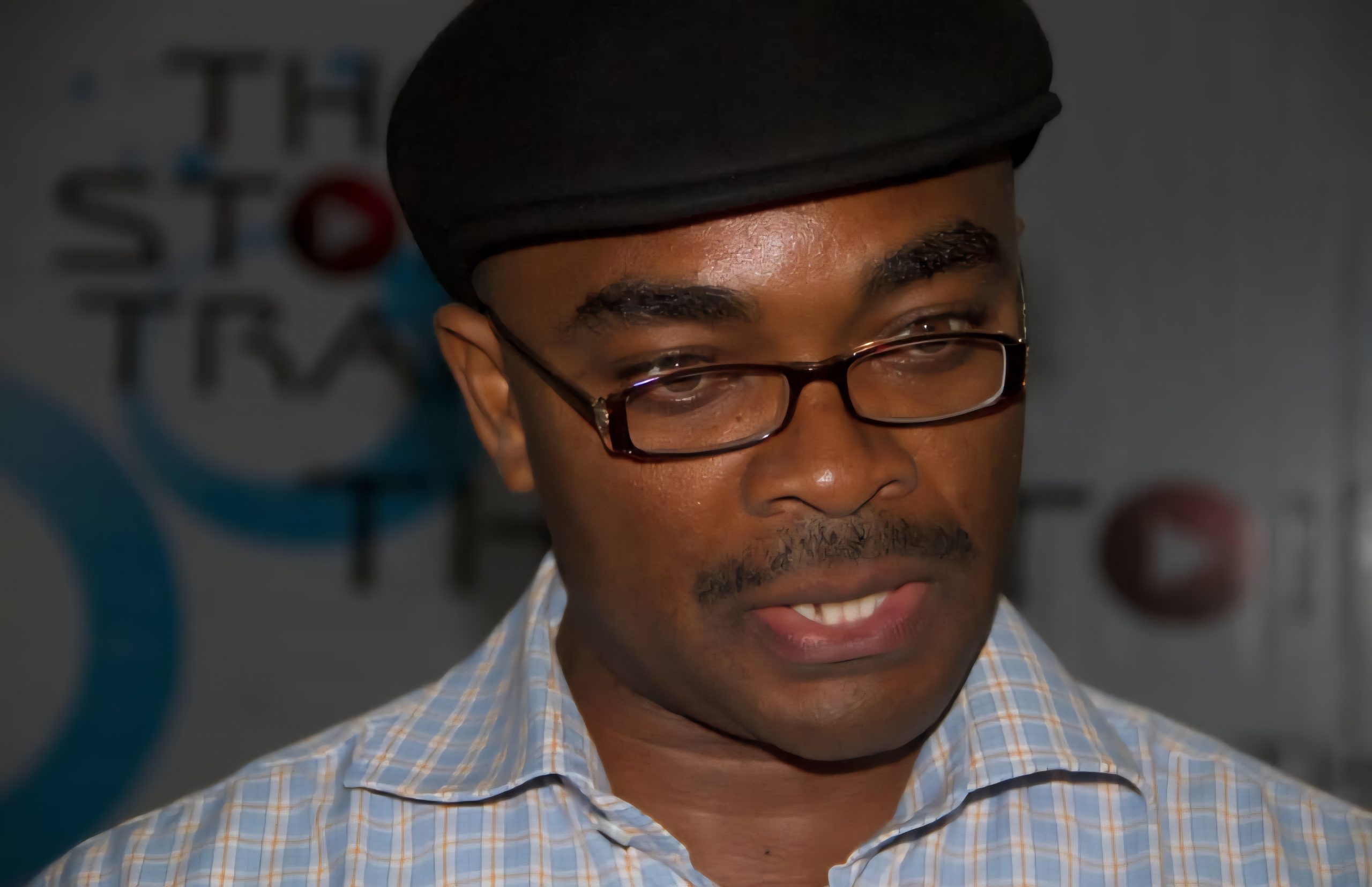
By Crispin Oduobuk
The digital wake for Charlie Kirk has been a global affair. Excluding his homeland, perhaps nowhere has it been more fervently debated than on Nigerian Twitter (Nigerian X doesn’t quite sound right). On 11 September 2025, news broke that the 31-year-old American conservative pundit was shot in the neck during a Utah Valley University Q&A, a suspected politically motivated killing that sparked global outrage. Yet, in Nigeria, timelines usually ablaze with fury over our dire economic conditions, callous leaders, or yet another grid failure became consumed by this foreign tragedy.
To the discerning, the discourse wasn’t really all about American political violence. It became another battleground for ancient Nigerian grudges layered with tribal slurs and malicious glee. With some unprintable terms flying around, it was less a commentary on Kirk than a proxy battle, shadowed by our deep-seated ethno-religious superiority complexes, dressing domestic enemies in foreign costumes to fire another salvo in a seemingly endless, circular online war. In the aftermath, if nothing else, we should ask ourselves some questions, such as, don’t we have some serious soul-searching to do?
Why does a man’s death thousands of kilometres away ignite such intimate, primal fury among Nigerians? To decode this digital madness, we should turn to a voice from our past, one who saw through Nigeria’s divisions before Twitter existed.
Festus Iyayi’s 1979 novel, Violence, offers a scalpel for this interrogation. His seminal work reveals that the deadliest violence is not the bloody headline but the silent, structural kind: a system that impoverishes the many to enrich the few, misdirecting their anger horizontally, onto each other, often along ethnic lines, rather than upward at the powerful.
Nigerian Twitter, with its loud section of rabid tribalism, is this trick performed in real time, a digital smokescreen shielding the architects of our collective misery. But is it a harmless vent, forging tolerance through pugnacious debate? Or an accelerant, stoking embers toward a Rwanda-like catastrophe? The Kirk spectacle demands we ask questions: are our tweets healing us, or sharpening knives for a darker future?
Iyayi’s Prophetic Lens: The Smokescreen of Division
In Violence, Iyayi lays bare Nigeria’s curse. The poor, like driver Idemudia, are crushed by elites such as Chief Iyere, who orchestrate a brutal hierarchy designed for their failure. The true violence is not Idemudia’s eventually fatal accident but the economic system that forced him into a deadly job, the corruption that left no safety net, and the cynical manipulation that pits his wife, Adisa, against the wrong targets.
Tribalism, Iyayi shows, is not primordial but a tool. It is a smokescreen ensuring the oppressed fight each other, not their common enemy. Transpose this to Nigerian Twitter. The platform did not invent our tribal animosities; it digitised and weaponised them. These daily skirmishes that leave some of us exasperated are not authentic conflicts but a digital performance of Iyayi’s play. We are Idemudia and Adisa, convinced in part by algorithmic manipulation that our suffering stems from rival tribes, while the real architects, corrupt officials and their untouchable cronies, trend for some hours before being drowned by the next algorithmically curated tribal spat.
Recent posts lament how “everywhere you turn is filled with tribalism and bigotry,” turning the app into a “menace” that scares users from scrolling. Iyayi’s lesson is clear: this rage is misdirected through manipulation, and the stakes are existential.
History confirms this pattern. In the early 1980s, when the Maitatsine riots tore through Kano and other northern cities, what began as a local religious uprising quickly assumed tribal colouration, pitting neighbour against neighbour. The deeper drivers were economic despair and state neglect, yet the anger found easier expression in identity-based animosities.
Again in 1993, during the annulment of the June 12 election, protests that ought to have united Nigerians around democracy were repeatedly framed in ethnic terms, with agitators and counter protesters twisting a national crisis into a tribal grievance. Even further back, in the colonial era, the newspaper wars between the West African Pilot and the Daily Times fed into ethnic suspicions, as journalists and politicians used the press to caricature rivals along tribal lines. Twitter, then, is not an innovation in division but only its most amplified and accelerated version.
The Charlie Kirk Spectacle: A Case Study in Misdirection
The reaction to Charlie Kirk’s murder is the purest evidence of this misdirection. Kirk’s death had no bearing on garri prices in Mkpat Enin or Mutum Biu, or security crises in Birnin Gwari or Udi. Yet Nigerian Twitter seized it with voracious intensity.
To their credit, some users highlighted the incredible hypocrisy: “Most Nigerians never knew Charlie Kirk before he was killed… but you can see them… writing series of tributes like he was a best friend, they don’t even raise their voices to condemn the killings of their fellow Nigerians.” Others drew sharp contrasts with governance failures: “Can we see how a country functions… within 10 hours the killer of Charlie Kirk got captured… In Nigeria, thousands of people will be massacred and nothing happens.”
To be clear, Kirk’s polarising identity, conservative, anti-“woke,” became a proxy. For some, his death was a “woke” victory, aligned with domestic political foes; for others, a free-speech martyrdom, tied to ethnic adversaries. “Ever since the news broke… many Nigerians on X have been passing their condolences as if he were a close relative. They call him a patriot, a God fearing Christian,” one user noted.
It is worth reiterating that regardless of the surface rhetoric, the conversation was not really about Kirk but a pantomime conscripting American symbols for Nigerian battles. And this is the ultimate distraction: energy spent dissecting a foreign pundit is energy not spent interrogating the 2025 budget, tracking looted allocations, or demanding justice for Pelumi Onifade, a murdered journalist whose only crime was filming a politician acting recklessly during the EndSARS protests. It is Iyayi’s smokescreen, digitised and viral.
Is Twitter Our RTLM? Catharsis or Catalyst?
Could this be a pressure valve? Perhaps Twitter’s rabid debates let Nigerians scream into the void, preventing real-world violence. The EndSARS movement showed the platform’s power to forge cross-ethnic unity, rallying millions for justice. And to be fair, calls for solidarity persist on the platform: “All tribes must come together and unite. No tribal division.”
This hope, though seductive, crumbles under Iyayi’s scrutiny: anger redirected but unresolved is a spark awaiting a flame. Consider Rwanda’s Radio Télévision Libre des Mille Collines (RTLM). Before the 1994 genocide, RTLM’s “cockroach” rhetoric dehumanised Tutsis, making massacres inevitable. Nigerian Twitter is not state-controlled, but its architecture, algorithms rewarding outrage, echo chambers stripping nuance, lies outpacing truth, mirrors RTLM’s mechanics.
A slur can trend nationally in minutes, normalising hatred. Posts reveal this toxicity: “So this guy was paid by an NGO to promote tribal bigotry in Nigeria on the X space,” one user accused, suggesting influencers are fuelling divisions for gain. This is not catharsis. It is a rehearsal for radicalisation, testing whether a nation scarred by pogroms and civil war can endure endless digital hate without a trigger.
Interrogating Our Complicity
The solution is not deleting Twitter or begging for civility. It is not just muting, blocking, and or unfollowing people who tweet rhetoric we are uncomfortable with, though doing so is well within our rights. It is interrogating our complicity, as Iyayi demands. When a tribal firestorm erupts, we must ask: Cui bono? “To whom is it a benefit?” Who benefits when Nigerians expend their energies hurling slurs over a stranger’s death instead of demanding better roads? What crisis, budget padding, out-of-school children, abysmal power generation and worse transmission, etc, is obscured by this noise?
Breaking this cycle means conscious consumption: following accounts that amplify cross-ethnic accountability, revisiting EndSARS’s unifying threads, muting and refusing to retweet propagandists, and amplifying thinkers. In every argument, pause to remember: the user you are dragging is not your enemy. They are your fellow Idemudia, played by the same elite playbook.
The Choice at the Digital Crossroads
Nigeria stands at a digital crossroads, facing Iyayi’s choice. One path is the digital plantation, harvesting likes from fights that leave power untouched. We can remain oppressed actors fighting the oppressed, to the applause of our oppressors.
The harder path resists the algorithm of division, redirecting rage from tribal malice to structural violence, from who insulted whom to who stole what, from who won the argument to who fixed the road.
Our progress will not be measured in a thousand Twitter dunks but in one hospital bed where a child survives malaria, one school where a girl learns without fear, one road that does not claim a father’s life. Festus Iyayi, that great literary prophet, foretold our future. The violence he prophesied is our reality. The only question is whether we will continue to perform it online, or unite to end it.
Oduobuk is a writer and communications practitioner based in Abuja.
