


Our Reporter, Abuja
African Centre for Media & Information Literacy (AFRICMIL); the Executive Secretary of the National Human Rights Commission (NHRC), Dr. Anthony Ojukwu, SAN; and stakeholders in the fight against corruption have called on the judiciary to play a stronger role in safeguarding whistleblowers in Nigeria, describing them as defenders of democracy and human rights.
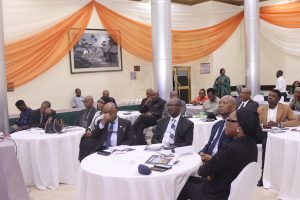
Dr. Ojukwu, who was represented by Harry Ogwuche, Director of Economic and Social Rights at the Commission, spoke on the theme, “The Judiciary and Whistleblower Protection in Nigeria — Challenges and Responsibilities,” made the call in Abuja on Thursday at the First National Interactive Forum on Whistleblowing & Whistleblower protection, which held at the Rockview Hotel, Wuse, and organised by AFRICMIL in partnership with Tap iNitiative, NHRC, CeFTPI & PRIMORG, for federal high court judges.
He noted that whistleblowers are often at the frontline of exposing corruption, fraud, and abuse of power, stressing that the judiciary must serve as their ultimate shield against retaliation.
“A whistleblower is not a snitch but a sentinel of public morality, a human rights defender in the truest sense,” Ojukwu said.
“Every naira stolen is a hospital bed empty, a classroom roofless, a road unmade, and a justice system compromised. Protecting whistleblowers is not an abstract anti-corruption strategy; it is a direct investment in the enjoyment of fundamental human rights.”
Ojukwu reviewed Nigeria’s current whistleblowing framework, citing provisions in the Constitution, the Freedom of Information Act, and anti-corruption laws that offer limited protection. However, he lamented the absence of a comprehensive Whistleblower Protection Act, despite multiple failed attempts in the National Assembly.
He recalled notable cases where whistleblowers suffered reprisals, including the dismissal and prosecution of Aaronnair Abdulmuttalab, who exposed an alleged $289 million repatriation scandal, and the NIA “Ikoyi cash” whistleblower whose identity was controversially revealed.
“These cases show a system that benefits from whistleblowing but fails to protect the whistleblower,” he said.
The NHRC boss urged judges to adopt progressive jurisprudence by granting injunctions against retaliation, awarding punitive damages, enforcing anonymity, and expediting whistleblower cases. He also called for the establishment of fast-track courts and stronger enforcement of the Freedom of Information Act.
Ojukwu further pressed the National Assembly to urgently pass a robust Whistleblower Protection Bill with clear mechanisms for confidentiality, protection against retaliation, and adequate funding for implementation.
He also tasked law enforcement agencies such as the EFCC and ICPC to not only recover looted funds but also investigate and prosecute threats or attacks on whistleblowers.
Calling for a cultural shift, Ojukwu urged Nigerians to view whistleblowers as patriots, not traitors.
“Whistleblowers are not disruptors — they are defenders of the rule of law. The judiciary must therefore be their shield, not their silence,” he declared.
In his welcome address, Dr. Chido Onumah, Coordinator of AFRICMIL, emphasized the importance of whistleblowing as a civic duty rather than an act of disloyalty.
“In Nigeria, it is not corruption that silences most people. It is the fear that nothing will be done if they report, or worse, that something harmful will be inflicted on them for daring to speak up,” Onumah said.
He noted that AFRICMIL, through its flagship Corruption Anonymous (CORA) project, has spent the past eight years supporting whistleblowers, advocating legal reforms, and mainstreaming whistleblowing in governance. However, he lamented the absence of judges in previous advocacy efforts, stressing that judicial officers are “the most important stakeholders in safeguarding whistleblowing and whistleblowers.”
Onumah recalled AFRICMIL’s regional efforts, including the formation of the Whistleblowing Advocacy Coalition of West Africa (WACOWA) to complement the ECOWAS whistleblowing protection strategy unveiled in 2016. He underscored the urgency of equipping judges with the knowledge and tools to handle whistleblower cases effectively.
“Despite the importance of whistleblowing and the role judicial officers play, very little conversation in Nigeria has involved judges. This interactive workshop seeks to close that gap,” he added.
Delivering a goodwill message, Chief Judge of the Federal High Court, Justice John Tsoho, represented by Justice Dorcas Agishi, said the forum was timely and crucial given the risks faced by whistleblowers.
“Whistleblowers are people who, at great personal risk, expose wrongdoing for the good of society. Without proper protection, they face dire consequences including job loss, social ostracism, and even threats to their lives,” he warned.
Justice Tsoho said courts must serve as a safe refuge for whistleblowers, stressing that punishing or silencing them undermines the fight against corruption and erodes public trust in the legal system.
He noted that the workshop would provide judges with the tools to address legal and ethical issues in whistleblower cases, including the protection of identity, evidentiary standards, and the balance between justice and fairness.
“The judiciary’s role is not merely to interpret the law but also to actively create a climate of trust where citizens feel empowered to report wrongdoing without fear,” he said.
Other goodwill messages were received from Mr Danilo Campisi, Deputu Representative, UNODC Nigeria; the Chairman of the EFCC, Ola Olukoyede represented by Mr Wilson Uwujaren; by Jimmy Kande, West Africa and Francophone Director, Platform to Protect Whistleblowers in Africa (PPLAAF); Anna Meyers of Whistleblowing International Network (WIN);Vladimir Radomirovic, Co-founder, Pistaljka, Serbia; Mallam Lanre Issa-Onilu, DG National Orientation Agency (NOA) represented by Mrs Theresa Madueke, a director in the agency; and others.
The workshop was attended by judges, human rights and good governance advocates, and other civil society groups.
