
Close Menu
Ikenga Online
    What's Hot

    Mr. President Was in Turkey. So Was I, by Osmund Agbo

    January 29, 2026

    Re: Russian embassy’s fuss over Azu’s article on Putin by Richard Akinnola 

    January 29, 2026

    Yusuf’s red cap on Tinubu’s red carpet by Azu Ishiekwene 

    January 29, 2026
    Facebook X (Twitter) Instagram
    Ikenga Online
    Facebook X (Twitter) Instagram YouTube
    Donate
    • Home
      • Igboezue
      • Hall of Fame
      • Hall of Shame
    • News
      1. Other States
      2. National
      3. International
      4. Interviews
      5. Personalities
      6. View All

      Kole Shettima, others to be turbaned by Machina Emirate

      January 26, 2026

      APC makes it 29 governors as Yusuf defects with 22 Kano lawmakers

      January 26, 2026

      Abduction of 172: Soldiers blocking access to Kaduna community, rights group alleges

      January 20, 2026

      RULAAC petitions Lagos CP over alleged unlawful detention, abuse of police powers

      January 18, 2026

      MRA releases 2025 free expression report, decries ‘reign of impunity’ in Nigeria

      January 29, 2026

      Whistleblower award board endorses Yisa Usman, urges Nigeria to strengthen whistleblower protections

      January 29, 2026

      Igbos play important role in Lagos development, should not be alienated – Nnaemeka Obiaraeri 

      January 27, 2026

      Presidency reacts to Tinubu’s stumble in Turkey, says no cause for alarm

      January 27, 2026

      Nnamdi Kanu conferred honorary citizenship of Georgia, USA

      January 24, 2026

      US delivers military supplies to Nigeria

      January 13, 2026

      Trump vows more strikes in Nigeria if attacks on Christians persist

      January 9, 2026

      Trump signs order withdrawing US from 66 global bodies

      January 8, 2026

      Slash jumbo salaries to pay minimum wage, Bishop tells Tinubu

      June 19, 2024

      Nigeria remains a country in crisis that needs to heal – Chido Onumah

      January 24, 2024

      The Ekweremadus: Obasanjo writes UK court, seeks pardon for them

      April 5, 2023

      I’m coming with loads of experience to re-set Abia – Greg Ibe

      February 1, 2023

      Anambra-born Ugochi Nwizu shines as UNN best graduating doctor with multiple distinctions

      September 29, 2023

      Bulwark for women, girls: Meet Ikengaonline September town-hall guest speaker, Prof Joy Ezeilo

      September 27, 2023

      Rufai Oseni, the most dangerous man on Nigerian TV by Okey Ndibe

      February 13, 2023

      Stanley Macebuh: Unforgettable pathfinder of modern Nigerian journalism by Uzor Maxim Uzoatu

      February 7, 2023

      Police detain officers over alleged killing of motorcycle rider in Ebonyi

      January 29, 2026

      Ebonyi community Protests Alleged Abductions, Killings by suspected Amasiri warlords

      January 29, 2026

      Ebonyi community, mining company sign ₦2bn five-year agreement

      January 29, 2026

      MRA releases 2025 free expression report, decries ‘reign of impunity’ in Nigeria

      January 29, 2026
    • Abia

      Otti urges Abians to bring investments home, tasks Abiriba people on star paper mill revival 

      January 29, 2026

      AIG steps into Abia community transformer theft

      January 29, 2026

      Abia to roll out industrial policy, begins fresh urban renewal drive

      January 27, 2026

      Enyimba FC gets new head coach

      January 27, 2026

      ASEPA distances itself from machete attack, restates ban on cattle roaming in Umuahia

      January 26, 2026
    • Anambra

      Security deployment to Onitsha a recipe for violence — IPOB

      January 27, 2026

      Anambra community rejects Igwe-elect over exclusion of women from voting

      January 26, 2026

      Sit-at-home: Soludo orders closure of Onitsha main market

      January 26, 2026

      Anambra ALGAF fellows urged to intensify advocacy for inclusive local governance

      January 24, 2026

      Obi decries emergency esponse failures as three siblings laid to rest after Lagos fire

      January 15, 2026
    • Ebonyi

      Police detain officers over alleged killing of motorcycle rider in Ebonyi

      January 29, 2026

      Ebonyi community Protests Alleged Abductions, Killings by suspected Amasiri warlords

      January 29, 2026

      Ebonyi community, mining company sign ₦2bn five-year agreement

      January 29, 2026

      Umahi’s son, Osborne secures Ebonyi APC council ticket, salutes Tinubu, Nwifuru

      January 26, 2026

      Political shake-up in Ebonyi as PDP zonal vice chairman defects to ADC with 10,000 supporters

      January 26, 2026
    • Delta
    • Enugu

      Pope honours philanthropist for building Catholic church in Enugu community

      January 26, 2026

      Commissioner reiterates govt’s commitment to peace across Enugu

      January 22, 2026

      Smart schools fraud: EFCC hands over N1.28bn recovered from Sujimoto to Enugu govt

      January 22, 2026

      Ezea’s replacement: Enugu North needs young, vibrant senator – Agbo

      January 20, 2026

      UNN bows to popular demand, reduces sundry fees

      January 20, 2026
    • Imo

      RULAAC petitions Imo attorney-general over alleged torture, sexual abuse of trainee nurse

      January 25, 2026

      Reporters’ diaries: S-East governors earn praise for rural road improvements

      January 6, 2026

      Rights advocates warn of threats over tiger base accountability campaign

      December 22, 2025

      Four cheat death as Port Harcourt-bound plane crashes at Owerri airport

      December 17, 2025

      RULAAC warns of renewed #EndSARS as police abuses persist, cites Imo ‘tiger base’

      December 16, 2025
    • Rivers

      Rivers assembly vows to proceed with Gov Fubara, deputy’s impeachment process 

      January 16, 2026

      Financial disagreements fuel impeachment moves against Fubara — Aide alleges

      January 16, 2026

      The Tinubu I know will not discard Wike for Fubara — Fayose

      January 13, 2026

      APC rejects moves to impeach Gov Fubara

      January 8, 2026

      ‘Do not take our support for President Tinubu for granted’ — Wike warns APC scribe

      January 5, 2026
    • Politics

      ‘Obi or nothing’ a reflection of youth revolt against old politics — Sam Amadi

      January 27, 2026

      Sam Amadi urges Obidients to build new political alliance, calls it unique force in Nigerian politics

      January 26, 2026

      APC makes it 29 governors as Yusuf defects with 22 Kano lawmakers

      January 26, 2026

      Umahi’s son, Osborne secures Ebonyi APC council ticket, salutes Tinubu, Nwifuru

      January 26, 2026

      Political shake-up in Ebonyi as PDP zonal vice chairman defects to ADC with 10,000 supporters

      January 26, 2026
    • Opinion & Editorial
      • Editorial
      • Columnists
        • Osmund Agbo
        • Chido Onumah
        • Uche Ugboajah
        • Hassan Gimba
        • Edwin Madunagu
        • Rudolf Okonkwo
        • Azu Ishiekwene
        • Osita Chidoka
        • Owei Lakemfa
        • Chidi Odinkalu
      • Opinion
    • Special Reports
    • Art & Entertainment
      • Nollywood
      • Music
      • Ikengaonline Literary Series (ILS)
      • Life
      • Travels
    • Sports
    Ikenga Online
    Home » From Abuja to Islamabad: Terror, Politics, and Power, by Osmund Agbo
    Columnists

    From Abuja to Islamabad: Terror, Politics, and Power, by Osmund Agbo

    Osmond AgboBy Osmond AgboOctober 6, 2025No Comments7 Mins Read
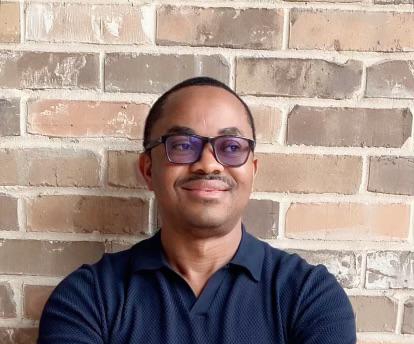
    Dr Osmund Agbo

    If Pakistan, Nigeria, or any nation wishes to escape this cycle, leaders must abandon the illusion of clever deals with extremists. Real security lies not in proxy wars or militant allies but in building just societies, resilient institutions, and inclusive politics that deny extremists the grievances they exploit. Anything less is sowing seeds for future catastrophe.

    In the jagged mountain ranges straddling Afghanistan and Pakistan, a resurgent Pakistani Taliban, known as Tehreek-e-Taliban Pakistan (T.T.P.), are ratcheting up a relentless and deadly guerrilla war against Pakistani security forces as I write this piece. Roads clogged with convoys of battered trucks, overloaded with bedding, cooking pots, sacks of grain, and families fleeing in haste, are now familiar sights. Many have sought refuge in schools, government offices, and private homes in safer parts of the district.

    Pakistan is, without doubt, experiencing its own Boko Haram moment and this is not merely an insurgency; it is the bitter harvest of decades of shortsighted political choices. But to understand how the tiger turned on its rider, a little bit of history will suffice here.

    In 1994, a one-eyed cleric in Kandahar named Mullah Omar, a veteran of the anti-Soviet jihad, gathered a band of religious students who sought to end the chaos of Afghanistan’s civil war. They called themselves the Talibans. Promising stability under God’s law, Omar’s Taliban rose swiftly, sweeping across Afghanistan and capturing Kabul within two years. For Afghans weary of warlord brutality, the Taliban seemed like a reprieve. But for the world, their rise marked the birth of a movement whose fanaticism and brutality would reverberate far beyond Afghanistan’s borders.

    The Taliban’s ascent was not solely born of Afghan desperation. It was also the product of calculated but dangerously myopic bargains. Chief among their patrons was General Hamid Gul, the powerful former head of Pakistan’s Inter-Services Intelligence (ISI). Gul, nicknamed “the godfather of the Taliban,” saw them as a tool to secure Pakistan’s strategic depth in Afghanistan, a buffer against Indian influence. He offered ideological backing, training, and defense of the Taliban project, believing Pakistan could shape and contain it. In truth, he was playing with fire.

    That fire soon spread. Under Taliban protection, Osama bin Laden built the network that carried out the September 11 attacks, the deadliest assault ever on American soil. Yet Pakistan, even while partnering publicly with Washington in the “War on Terror,” shielded Taliban leaders and famously sheltered bin Laden himself in Abbottabad, a stone’s throw from a military academy. What began as “strategic depth” became a national disaster, burning Pakistan’s credibility abroad and destabilizing its security at home.

    The tragedy deepened in 2007 when militants within Pakistan coalesced into the TTP. Unlike the Afghan Taliban, these militants aimed their fury inward. They bombed markets, attacked mosques, assassinated religious leaders. Their most horrifying act came in 2014 when they stormed a school in Peshawar, slaughtering over 140 children and teachers. For a nation that had once midwifed the Taliban, this was a brutal reckoning: the monster had turned on its maker.

    Pakistan launched fierce military campaigns and claimed victory by 2018, boasting that the TTP had been crushed. But the illusion of peace was shattered when the Taliban returned to power in Kabul in 2021. The TTP drew new strength, reuniting splinter factions and absorbing Al Qaeda affiliates. Armed now with American-made weapons abandoned in Afghanistan; sniper rifles, night-vision goggles, drones, they began a new offensive, pushing beyond the tribal areas into Punjab, the political and economic heart of Pakistan.

    Scenes of displacement have returned. Roads are again clogged with desperate families, children clinging to bundles of belongings, entire communities uprooted. The ghosts of past miscalculations are alive, and the bitter harvest of transactional politics is upon Pakistan once more.

    But Pakistan is not alone in this pattern of folly. The United States, too, armed and funded the Afghan mujahideen during the Cold War to fight the Soviets, inadvertently laying the foundations for the Taliban and Al Qaeda. In Iraq, Washington propped up Saddam Hussein during the Iran-Iraq war, only to later face him as a rogue dictator who invaded Kuwait. The logic was the same: short-term gain, long-term catastrophe.

    This is the curse of transactional leadership. It mortgages the future for a fleeting sense of control in the present.

    Leaders imagine they are manipulating extremists as pawns in a game of chess. But pawns have wills of their own. Ideologies, once unleashed, cannot be boxed back in. Gul believed the Taliban would be Pakistan’s strategic tool; American officials believed Saddam Hussein could be their counterweight to Iran. Both were catastrophically wrong.

    The cost of these miscalculations is always borne by the powerless. The families of Bajaur trudging through the mountains, the children massacred in Peshawar, the passengers fleeing collapsing towers in New York, these are the true victims of short-term bargains struck in secret rooms by ambitious men. The architects of such strategies rarely pay with their lives. Ordinary people do.

    Then there’s Saudi Arabia, a Wahhabi theocracy where Salafi extremism is not just preached but exported. Saudi Clerics breed radicals, while wealthy patrons, hiding behind “charities,” bankroll madrassas around the world, including the very institutions that gave rise to Mullah Omar. For decades, the United States has propped up the Saudi monarchy, even as 15 of the 19 9/11 hijackers were Saudi citizens. Yet, despite this staggering complicity in global terror, few Saudis have been held accountable. Complacency, however, would be a grave mistake, they, too, will one day face the reckoning they have long evaded.

    Nigeria offers its own grim parallel. Boko Haram was once courted and tolerated by politicians in Borno for electoral leverage. But it soon broke free, splintering into factions with some pledging allegiance to the Islamic State. Similarly, transnational fighters from the Sahel were invited into Nigeria to sway elections, but after the ballots were cast, they refused to leave. They turned instead to kidnapping, banditry, and trafficking, unleashing a wave of insecurity that now threatens the very elites who once saw them as convenient allies.

    For decades, successive Nigerian administrations have treated terror financing with the casual indifference of political expediency. While the U.S. State Department has moved decisively, sanctioning Boko Haram sponsors, some of whom now rot in UAE prisons, here at home, their collaborators stroll freely through our streets. Even more damning, many of them sit in positions of power, quietly pulling the strings of governance while the nation pays the price of their impunity.

    The lesson is universal: the monsters created for expedience never stay loyal. They mutate, grow stronger, and eventually devour their masters. Mullah Omar’s ragtag students reshaped global politics. Boko Haram’s so-called political tool became a global jihadist franchise. The transactional bargains that midwifed them are now cautionary tales etched in blood.

    If Pakistan, Nigeria, or any nation wishes to escape this cycle, leaders must abandon the illusion of clever deals with extremists. Real security lies not in proxy wars or militant allies but in building just societies, resilient institutions, and inclusive politics that deny extremists the grievances they exploit. Anything less is sowing seeds for future catastrophe.

    History has spoken clearly: whether in Kabul, Baghdad, Maiduguri, or Peshawar, the monsters of transactional leadership never remain in their cages. They return, and when they do, they bring only rubble, blood, and regret.

    Osmund Agbo is a medical doctor and author. His works include, Black Grit, White Knuckles: The Philosophy of Black Renaissance and a fiction work titled The Velvet Court: Courtesan Chronicles. His latest works, Pray, Let the Shaman Die and Ma’am, I Do Not Come to You for Love, have just been released. He can be reached@ eagleosmund@yahoo.com

    Osmond Agbo

    Related Posts

    Mr. President Was in Turkey. So Was I, by Osmund Agbo

    January 29, 2026

    Re: Russian embassy’s fuss over Azu’s article on Putin by Richard Akinnola 

    January 29, 2026

    Yusuf’s red cap on Tinubu’s red carpet by Azu Ishiekwene 

    January 29, 2026
    Editors Picks

    Mr. President Was in Turkey. So Was I, by Osmund Agbo

    January 29, 2026

    Re: Russian embassy’s fuss over Azu’s article on Putin by Richard Akinnola 

    January 29, 2026

    Yusuf’s red cap on Tinubu’s red carpet by Azu Ishiekwene 

    January 29, 2026

    Police detain officers over alleged killing of motorcycle rider in Ebonyi

    January 29, 2026
    Latest Posts
    Columnists

    Mr. President Was in Turkey. So Was I, by Osmund Agbo

    Opinion

    Re: Russian embassy’s fuss over Azu’s article on Putin by Richard Akinnola 

    Azu Ishiekwene

    Yusuf’s red cap on Tinubu’s red carpet by Azu Ishiekwene 

    Subscribe to Updates

    Get the latest news from Ikenga Online.

    Advertisement
    Demo

    IkengaOnline is a publication of the Ikenga Media & Cultural Awareness Initiative (IMCAI), a non-profit organisation with offices in Houston Texas and Abuja.

    We're social. Connect with us:

    Facebook X (Twitter) Instagram YouTube LinkedIn WhatsApp RSS
    • Home
      • Igboezue
      • Hall of Fame
      • Hall of Shame
    • News
      • Other States
      • National
      • International
      • Interviews
      • Personalities
    • Abia
    • Anambra
    • Ebonyi
    • Delta
    • Enugu
    • Imo
    • Rivers
    • Politics
    • Opinion & Editorial
      • Editorial
      • Columnists
        • Osmund Agbo
        • Chido Onumah
        • Uche Ugboajah
        • Hassan Gimba
        • Edwin Madunagu
        • Rudolf Okonkwo
        • Azu Ishiekwene
        • Osita Chidoka
        • Owei Lakemfa
        • Chidi Odinkalu
      • Opinion
    • Special Reports
    • Art & Entertainment
      • Nollywood
      • Music
      • Ikengaonline Literary Series (ILS)
      • Life
      • Travels
    • Sports

    Subscribe to Updates

    Get the latest news from Ikenga Online.

    Facebook X (Twitter) Instagram LinkedIn WhatsApp RSS
    © 2026 Ikenga Online. Ikenga.

    Type above and press Enter to search. Press Esc to cancel.