

Stephen Ukandu, Umuahia
The National Assembly and leaders of all registered political parties under the Inter-Party Advisory Council (IPAC) have reached a consensus on key areas of Local Government reforms, electoral reforms, and gender inclusivity in the ongoing constitutional review process.
This agreement was reaffirmed on Monday during a high-level engagement convened by the House Committee on Constitution Review in Abuja.
Present at the event were the leadership of the National Assembly, national chairmen, secretaries, and women leaders of all registered political parties in the country.
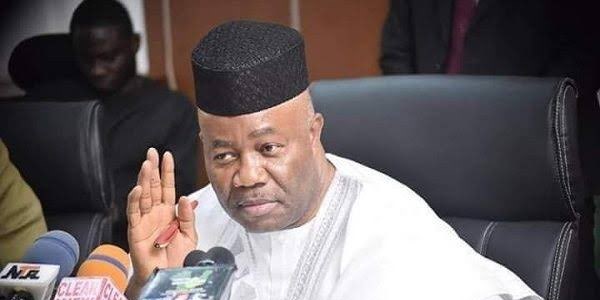
Speaking at the event, the Senate President, Senator Godswill Akpabio—represented by Tahir Monguno—urged political leaders to treat the Constitution as “a living document that must evolve with the nation’s changing realities.”
He said: “We are here because we share one belief: that our Constitution must live, breathe, and grow with the times.
“This engagement with political parties is historic. It shows that Nigeria’s democracy is alive, learning, listening, and leading.”
Akpabio described judicial reform, women’s inclusion, and local government autonomy as “the heartbeats of the Republic,” stressing that electoral credibility and justice “remain the twin pillars of democracy.”
Citing reforms in India and South Africa as successful examples, he called for a strong and independent Independent National Electoral Commission (INEC) and a judiciary insulated from corruption and political interference.
According to him, “True federalism begins at the village level,” as he advocated for the devolution of powers and resources to local governments to make democracy more tangible to citizens.
He further called for policy-backed inclusion of women, noting that countries with empowered women often experience significant national transformation.
“A democracy that sidelines its women weakens itself. Where women rise, nations thrive,” he added.
Akpabio also backed calls for state policing as a pragmatic solution to Nigeria’s security challenges.
In his remarks, the Deputy Speaker of the House of Representatives and Chairman of the House Committee on Constitution Review, Rt. Hon. Benjamin Kalu, described the exercise as “the most inclusive and consultative constitutional amendment process in Nigeria’s democratic history.”
Kalu emphasized the need for governance frameworks that reflect contemporary national aspirations, saying: “Political parties are not just participants in our democracy; they are its backbone. If these amendments must endure, they must reflect a broad consensus that transcends party lines.”
In his contribution, IPAC National Chairman, Yusuf Mamman Dantalle, commended the National Assembly for what he described as a “patriotic and visionary review process.”
IPAC made several recommendations, including the scrapping of State Independent Electoral Commissions (SIECs) and the empowerment of INEC to conduct all 774 local government elections.
It also proposed the establishment of an Independent Appointment Committee (IAC) for the selection of INEC officials to enhance the Commission’s independence.
Other recommendations included restoring public funding for political parties with transparent financial mechanisms and creating an Electoral Offences Commission to prosecute electoral malpractices such as vote-buying, ballot snatching, and result falsification.
