


By his studied silence and deliberate inaction, President Tinubu has sent a message that reverberates louder than any speech. It says that justice in Nigeria remains negotiable; that reconciliation is a privilege granted to the favoured, and that the South-East must continue to learn obedience through humiliation. It is the old pattern, stretching back to the end of the civil war, a paternalistic policy of containment disguised as national unity.“
One of the easiest ways to identify prejudice is to observe how its bearer tries to conceal it. The racist, for instance, is often quick to parade his few “Black friends” as proof of moral purity, as if proximity could absolve conviction. Yet prejudice, whether racial, ethnic, or political, is rarely that crude. It operates beneath the surface, embedded in policies, reflected in silences, and reinforced by the quiet confidence that some lives matter less. Unless confronted with self-awareness and moral courage, it endures unchallenged, unacknowledged, and unhealed.
This, in many ways, defines the tragedy of Nigeria’s treatment of the South-East, a condition inherited, normalized, and now deepened by President Bola Ahmed Tinubu’s administration. In both tone and substance, the government has continued to speak a silent but unmistakable language; one that tells Ndigbo, in effect, you do not belong.
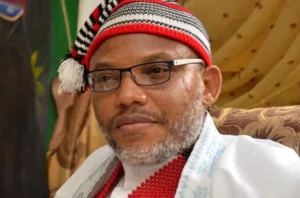
Nothing illustrates this quiet estrangement more powerfully than the continued detention of Mazi Nnamdi Kanu, leader of the Indigenous People of Biafra (IPOB). Despite sustained appeals from across Nigeria’s political, cultural, and moral landscape, from Ohanaeze Ndigbo to eminent clerics, respected monarchs, and elder statesmen, President Tinubu has remained resolute in his refusal to grant freedom to the IPOB leader. What began as a legal question has long morphed into a moral test: whether the Nigerian state can still claim to act with even-handed justice.
Let us be clear: the call for Kanu’s release is no longer about the man himself, nor a vindication of IPOB’s excesses, which have been widely condemned. It is about what his continued incarceration represents; the persistent perception, born of history and reinforced by policy, that the South-East is governed by a harsher, more punitive logic than the rest of the federation.
The practical consequences of this posture are evident on the ground. Kanu’s detention remains the convenient pretext for the ruinous “sit-at-home” orders that have devastated the region’s economy and eroded public morale. Even though IPOB has repeatedly disavowed the lock-downs, fear still governs Mondays in the South-East. His release would likely puncture this excuse, robbing criminal opportunists of their last veneer of legitimacy.
But beyond the tangible lies something far more corrosive: perception, the deepening conviction that the Federal Government’s justice is selective, its mercy conditional, and its empathy partisan. Consider the precedents. The same Nigerian state that negotiated peace and lucrative security contracts with Niger Delta militants, has shown no inclination toward reconciliation when it comes to Igbo agitation. The charges against Sunday Igboho were quietly withdrawn. Thousands of “repentant terrorists” have been rehabilitated, reabsorbed, and even rewarded yet, this government finds no mercy for Nnamdi Kanu.
When President Tinubu recently announced clemency for 175 convicts, including drug traffickers, kidnappers, and fraudsters, the omission of Kanu’s name was not oversight. It was a declaration. The Action Democratic Congress (ADC) called it “a national disgrace.” In truth, it was worse, a calculated gesture of exclusion.
Those who rush to defend the president often point to the presence of a few Igbo appointees in his administration: Dave Umahi, Vice Admiral Ogalla, and a handful of others as proof of inclusiveness. But tokenism, however flamboyant, cannot disguise systemic disdain. History reminds us that even the most oppressive regimes found collaborators among the oppressed. Their existence neither redeems the system nor negates the reality of prejudice. Power, after all, has always had a way of recruiting self-interest to sanitize injustice.
Meanwhile, the lived reality of the South-East tells a more brutal truth. A journey through any major highway in the region feels less like travel within a federation than passage through an occupied zone. Military and police checkpoints litter the roads, turning security into extortion and governance into profiteering. Officers brazenly demand bribes, while kidnappers prowl the forests unchecked. The result is a paradox: the region is both over-policed and under-protected. What masquerades as security is, in truth, institutionalized exploitation.
By his studied silence and deliberate inaction, President Tinubu has sent a message that reverberates louder than any speech. It says that justice in Nigeria remains negotiable; that reconciliation is a privilege granted to the favoured, and that the Southeast must continue to learn obedience through humiliation. It is the old pattern, stretching back to the end of the civil war, a paternalistic policy of containment disguised as national unity.
Yet the real danger in this selective justice lies not in the fate of one man but in the despair it breeds among millions. Nations do not fracture only by secession; they also disintegrate when large segments of their citizenry lose faith in the fairness of the state. When a people begin to feel that they have nothing left to lose, the idea of Nigeria as a shared moral enterprise becomes a hollow phrase.
The detention of Nnamdi Kanu, therefore, is not merely a legal or political issue; it is a moral mirror held up to the soul of the Nigerian state. It forces us to confront uncomfortable truths about who we are, and what kind of union we wish to preserve. Justice is not a favour bestowed upon friends nor a weapon reserved for dissenters. It is the foundation upon which legitimacy itself stands.
If President Tinubu truly seeks to heal the wounds of this fragile nation, he must act not through rhetoric but through fairness. Free Nnamdi Kanu, not as an appeasement to the South-East, but as a reaffirmation that Nigeria still believes in justice without prejudice.
Because in the end, a president need not stand before a crowd to declare his contempt. Sometimes, his silence says it all and it speaks far louder than hate ever could.
