

Our Reporter, Abuja
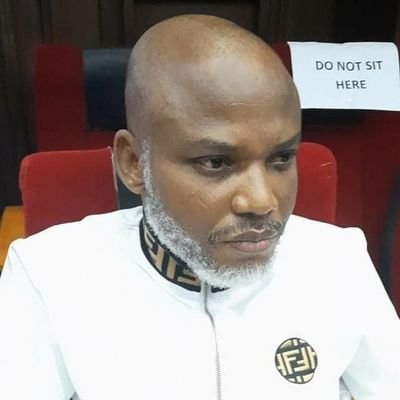
Nnamdi Kanu, leader of the Indigenous People of Biafra (IPOB), on Monday declined to open his defence in the terrorism case filed against him by the Federal Government, insisting that there is no valid charge against him.
At the resumed hearing in Abuja, Kanu—who recently dismissed his legal team and chose to represent himself—told the court that after reviewing his case file, he found no legal basis for the charges.
“Join me in praising God. I have gone through my case file, and there is no charge against me,” Kanu said.
“There is no extant law in this country upon which the prosecution can predicate the charges against me. If there’s any, let my Lord read it out. I should not enter a defence in a charge that does not exist under any law in Nigeria. I urge you to release me today or grant me bail.”
Presiding judge, Justice James Omotosho, had to intervene to explain the legal procedures involved. He told Kanu that after the prosecution closes its case, a defendant has three options—file a no-case submission, open a defence if the submission fails, or choose to rely on the prosecution’s case.
Omotosho cautioned Kanu that refusing to open a defence after his no-case submission was overruled could have serious consequences.
“If you choose not to put in a defence, it means you are relying on the prosecution’s case,” he said.
Despite the warning, Kanu maintained that he was being held unlawfully.
“I am being detained under a fraudulent charge that the Supreme Court has said ought not to be,” he insisted, urging the court to release him on health grounds.
Responding, government counsel Adegboyega Awomolo (SAN) said the matter had effectively ended since Kanu opted not to defend himself. He prayed the court to fix a date for judgment.
Justice Omotosho, however, said it was his duty to ensure fairness, especially since the defendant had no legal representation.
“I must take my time to explain this because I know God will hold me responsible if I don’t,” he said.
The judge said he would grant Kanu additional time to consult with experienced criminal lawyers before proceeding. Awomolo objected, arguing that the court had earlier given the defendant six days to begin and conclude his defence, and should not deviate from that order.
Omotosho overruled, citing the peculiarity of the case and Kanu’s lack of legal training. He subsequently adjourned the matter to November 4, 5, and 6, giving the IPOB leader seven days to seek legal advice and decide whether to open his defence.
The judge warned that if Kanu failed to do so, the court would take final written addresses on November 6 and treat his decision as reliance on the prosecution’s case.
