

Uche Onyema, Owerri
The Catholic Bishops’ Conference of Nigeria (CBCN) has expressed deep concern over the worsening security situation in the country, condemning the persistent violence and repeated attacks on innocent citizens.
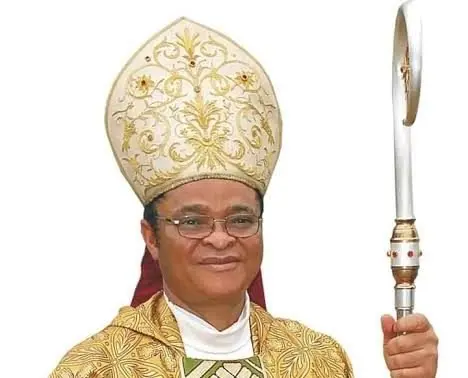
In a statement issued in Owerri and signed by its President, Archbishop Lucius Ugorji of Owerri, and the Publicity Secretary, Archbishop Donatus Aihmiosion, the bishops highlighted the devastating impact of insecurity on communities—particularly in the Northern and Middle Belt regions—where predominantly Christian settlements have been repeatedly attacked, leading to heavy casualties and mass displacement.
The CBCN urged the government to fulfil its constitutional duty of protecting citizens, investigate reports of delayed security responses, and ensure perpetrators of violence are brought to justice. They also demanded the safe return of abducted individuals and encouraged Nigerians to work together in pursuit of peace, justice, and mutual respect.
The bishops stressed that lasting peace requires decisive action, justice, and a renewed commitment to the sanctity of human life. They called on citizens to serve as agents of healing and reconciliation.
Their statement reads in part: “We strongly condemn these atrocities that have brought untold anguish to many communities. It is a matter of grave concern that several predominantly Christian communities, particularly in the Northern and Middle Belt regions of the country, have come under repeated and brutal attacks, resulting in heavy casualties and the tragic loss of many Christian lives.
“In some instances, there have been disturbing reports of delayed or withheld security responses, giving the impression of possible collusion or a lack of will to act. The near-total destruction and occupation of some communities, and the continued attacks on displaced persons even in camps, have deepened the people’s sense of abandonment and despair.
“Such prolonged unbearable conditions have given credence to allegations of ‘genocide’ in some quarters. Yet, mindful of the sacred dignity of every human life, we are equally concerned that Muslims and other innocent citizens of diverse ethnic backgrounds have also been victims of this same cruelty.”
They cited recent incidents—including the abduction of worshippers in Kwara State, 25 young girls in Kebbi, 13 female farmers in Borno, and 265 students and teachers in Papiri, Niger State—along with the killing of more than 70 persons in Southern Taraba and the displacement of thousands. These, they said, reflect the troubling scale of Nigeria’s security crisis.
“Such attacks violate our shared humanity and endanger the future of our nation,” the statement added.
The bishops urged the government to urgently and decisively uphold its primary duty, as mandated by Section 14(2)(b) of the 1999 Constitution, to protect the lives and property of all citizens, insisting that impunity must no longer be tolerated.
They called for investigations into allegations of delayed security responses, the immediate rescue of abducted persons—including pupils and teachers in Kontagora, young women taken in Kebbi and Borno—and the safe return of displaced persons to their ancestral homes.
The CBCN also drew attention to persistent violations of the rights of Christian minorities in several northern states, including denial of land for church construction, destruction of churches, and concerns over the overreach of Sharia courts, which they said threaten Nigeria’s secular character.
They recalled the brutal killing of Deborah Samuel Yakubu in Sokoto, describing it as an example of violence fuelled by extremist interpretations of religious laws, and renewed their call for justice in her case.
The bishops further criticized the activities of morality enforcement groups such as the Hisbah, saying their actions have often resulted in harassment and intimidation of innocent citizens, undermining communal harmony and national cohesion.
Despite the troubling situation, the CBCN commended the resilience of Nigerians and urged citizens of all backgrounds to remain united in the pursuit of peace and national rebuilding.
“Every Nigerian is called to be an agent of healing—rejecting hatred, embracing dialogue, and upholding justice and mutual respect,” the bishops said.
“Rather than engaging in divisive arguments about who has suffered more, we must stand together to defend the sacredness of every human life and protect the vulnerable.
“Together, we can transform our diversity into strength and build a nation that truly reflects harmony, justice, and hope.”
