

Lawrence Ndubeze, Awka
The Service Providers and Accountability Resource Committee (SPARC) in Anambra State has pledged to step up efforts to improve the reporting of sexual and gender-based violence (SGBV) cases and publicly shame more offenders in 2026.
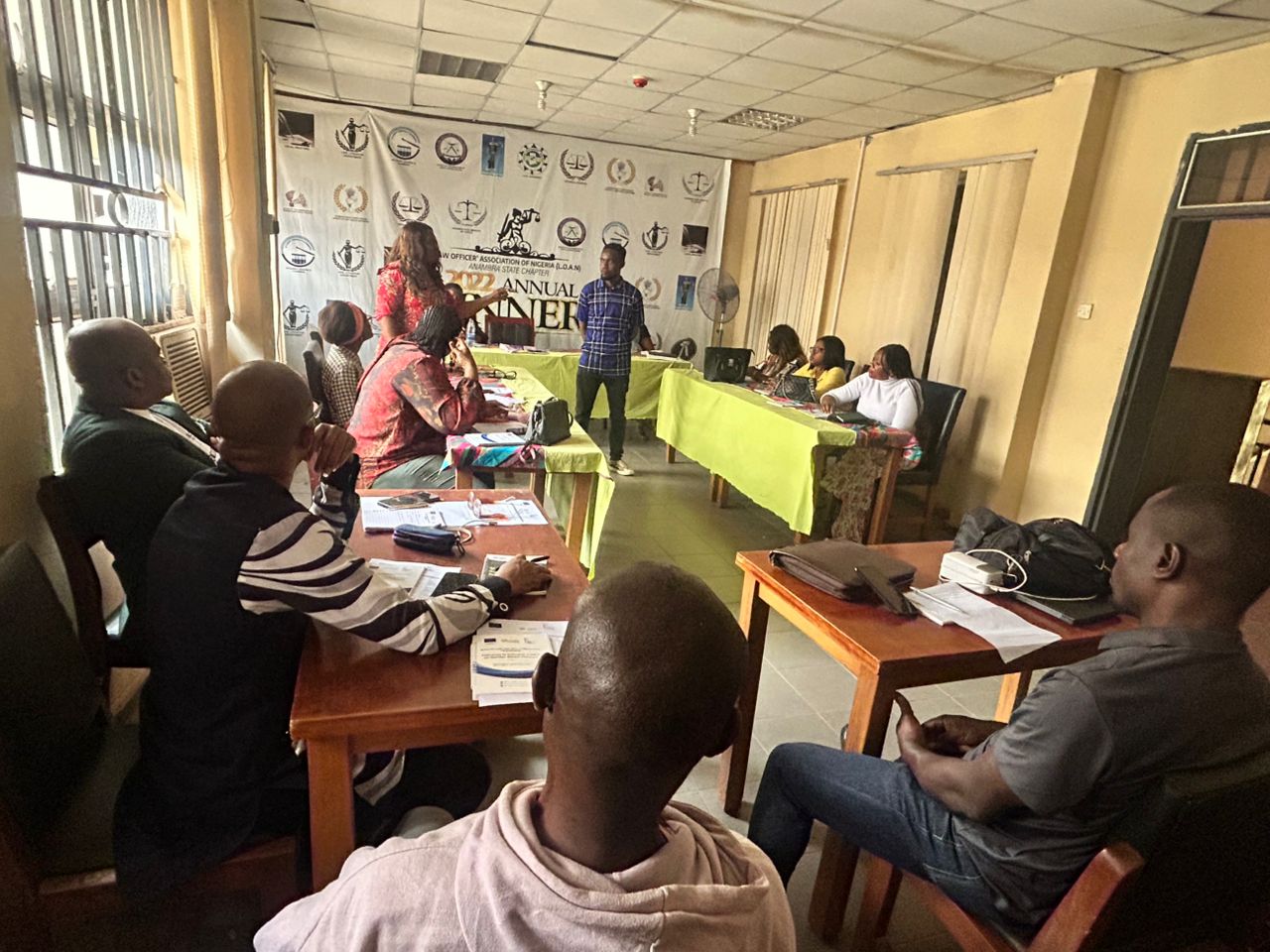
The commitment was made at SPARC’s quarterly review meeting organised by the Habiba Dangana (Hadis) Foundation under the Rule of Law and Anti-Corruption (RoLAC) Programme, funded by the European Union and implemented by the International Institute for Democracy and Electoral Assistance (IDEA).
Speaking with journalists after the meeting, SPARC Coordinator in Anambra, Rachael Yohanna, said the review session provided an opportunity for members and partners to assess progress, reflect on achievements, and outline next steps.
She noted that the group made significant strides in tackling SGBV in 2025, with the state’s Sexual Offenders Register surpassing 130 entries — a development she attributed to increased awareness and improved reporting.
“We started with just a few entries when the Sexual Offenders Register was launched, but now we have over 130. SPARC’s sensitisation efforts have made people aware that help is available and justice is accessible, which has encouraged more consistent reporting,” she said.
Despite the progress, Yohanna decried the conduct of some security operatives who, according to her, demand money from victims or attempt to treat cases as “settlements” rather than criminal matters. She also criticised community by-laws that silence survivors and discourage them from reporting abuse.
“We have faced challenges with the reporting process and how cases are treated. Some security operatives try to settle cases that should be handled by the state. Their financial demands often make victims withdraw.
“Some communities have by-laws that silence survivors, preventing them from reporting abuse. This silence keeps us unaware of cases and stops the state from intervening,” she said.
Yohanna called for stronger collaboration with religious leaders, traditional rulers, security agencies, and the media to boost awareness and ensure survivors receive the support they need while perpetrators face justice.
Programme Officer at the Hadis Foundation, Innocent Kalu, commended SPARC’s achievements, noting that the meeting helped identify gaps and set an action plan for 2026.
“The meeting reviewed SPARC’s role in combating SGBV in the state, the Anambra referral pathway, and action plans for next year. We examined successes, challenges, and drafted an agenda to ensure continued progress,” he said.
The session also featured a review of the translated Igbo and Pidgin versions of the Anambra State Violence Against Persons Prohibition (VAPP) Law.
“We have simplified the law so that those who cannot read English can understand it in Pidgin or Igbo. We even have braille and image-based versions for persons with disabilities,” Kalu added.
