

Our Reporter, Abuja
The Director-General of the World Trade Organization, Ngozi Okonjo-Iweala, has called on member states to explore new strategies to revitalise the global trade body as discussions intensify ahead of its next ministerial meeting.
Speaking on Friday at the 8th South-South Dialogue on Least-Developed Countries (LDCs) and Development in Geneva, Okonjo-Iweala stressed the importance of ongoing reforms within the WTO in preparation for the 14th Ministerial Conference (MC14) scheduled for March 26–29.
She acknowledged progress made in addressing trade priorities of least-developed countries (LDCs) and encouraged them to continue pursuing policies that strengthen their participation in global trade.
Okonjo-Iweala noted that the evolving global economy presents fresh opportunities for LDCs, particularly through their youthful populations and abundant reserves of critical minerals.
According to her, emerging sectors such as services and digital trade could enable these countries to better integrate into regional and international markets.
“WTO reform will be key for helping LDCs trade, grow economically and develop. We need to have a modern WTO that can help transform your economies,” she said.
The WTO chief also highlighted ongoing negotiations among member states on trade and development, agriculture, and fisheries subsidies linked to overcapacity and overfishing.
She further pointed to discussions under the Work Programme on E-commerce, including the moratorium on customs duties for electronic transmissions, as well as the Investment Facilitation for Development Agreement aimed at attracting investment and increasing value addition to exports from LDCs.
Okonjo-Iweala also underscored the role of the Cotton Partnership initiative in strengthening the participation of least-developed countries in global trade.
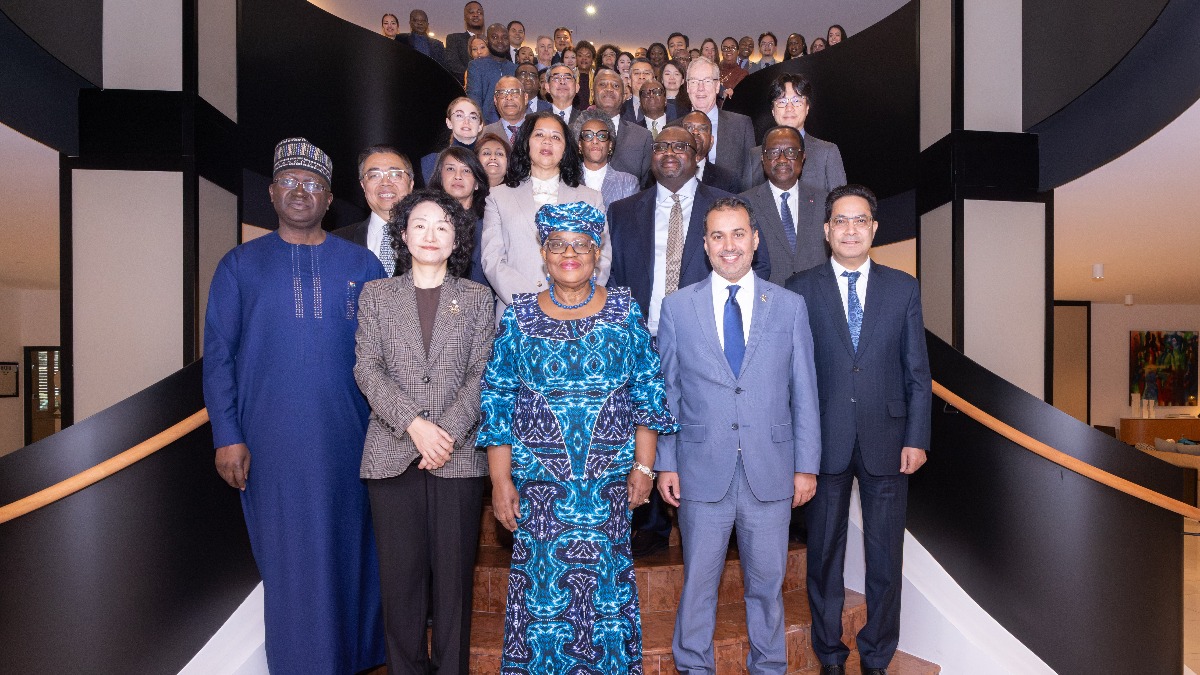
The dialogue brought together about 60 government representatives from LDCs and development partners to deliberate on WTO reforms and trade priorities.
Chair of the WTO General Council, Saqer Abdullah Almoqbel of Saudi Arabia, said the organisation remains critical to global economic stability, particularly for its least-developed members.
“In these challenging times, the world needs the WTO — especially its LDC members — now more than ever. The WTO must keep pace with the changing global landscape,” he said.
The WTO reform facilitator, Petter Ølberg of Norway, urged members to intensify engagement in the reform process and adopt broader perspectives on trade-led development.
Similarly, Muhammadou Kah of The Gambia said discussions on reform must produce practical outcomes ahead of the ministerial conference, particularly on issues affecting LDCs, including their graduation from the category.
Also speaking, Yongjie Li of China said the WTO remains a critical anchor of stability despite rising global trade tensions and uncertainties, stressing that meaningful reforms are essential to strengthen the rules-based multilateral trading system.
The South-South Dialogue on LDCs and Development forms part of China’s LDCs and Accessions Programme, designed to enhance the participation of least-developed countries in the multilateral trading system.
Currently, there are 44 least-developed countries worldwide, with 37 already members of the WTO and five in the process of joining the organisation.
