

Recorded in Plato’s Apology is Socrates’ famous observation that the unexamined life is not worth living. For people of faith, whether Christian, Jewish, Muslim, Hindu, Sikh, or adherents of other traditions, this insight carries a quiet challenge. The examination of belief should not be feared as heresy.
If one were to ask an American evangelical or a Nigerian Christian why their support for Israel is often unwavering and unconditional, the response would likely be identical. Many would point to biblical passages that describe Israel as God’s chosen people and conclude that support for the modern state is therefore a religious obligation. Some go further, warning that failure to do so risks inviting divine repercussions.
Should one assume that such convictions are confined to the fringes of Christian thought, that assumption would be mistaken. Ted Cruz, the ranking senator from the state of Texas, stated in a recent interview with Tucker Carlson that his primary goal in the U.S. Senate is to be the strongest defender of the state of Israel. His reasoning was simple. Those who defend Israel, he argued, will be blessed, a claim that implicitly suggests the reverse may also hold true.
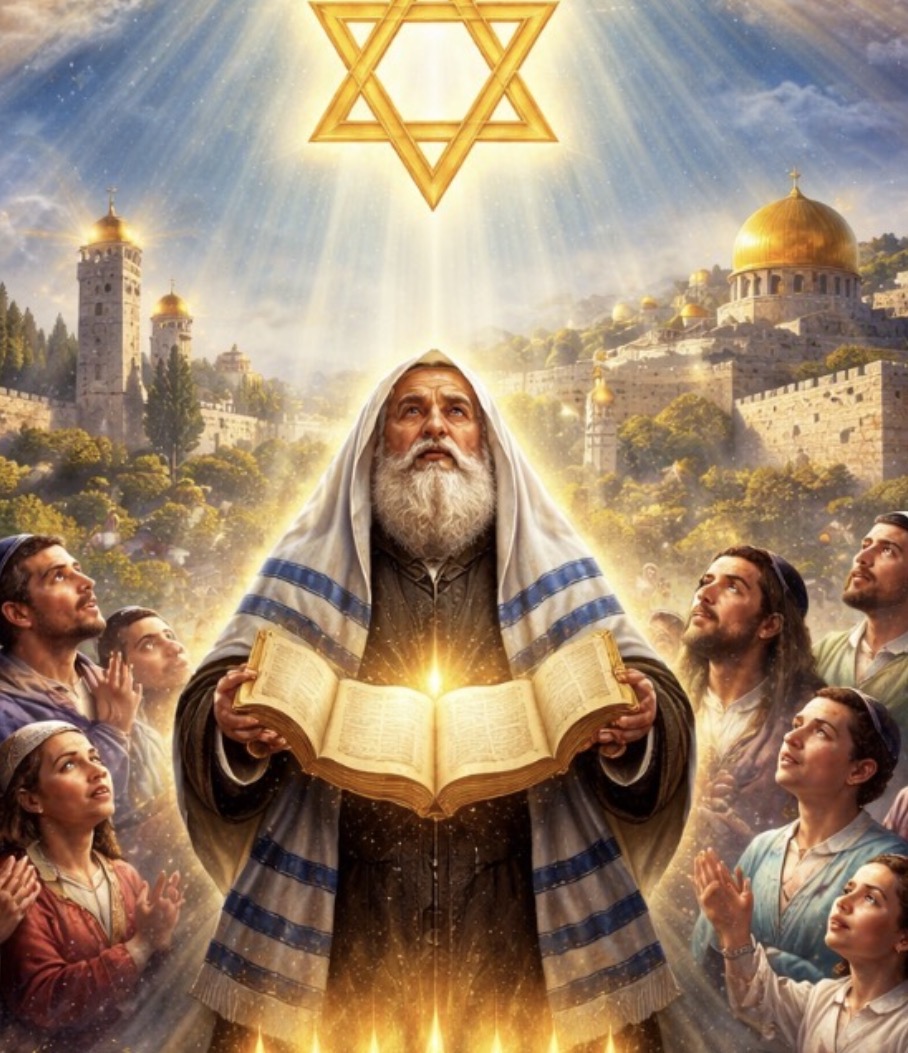
Few ideas in religious history, however, have exercised as much influence or provoked as much debate as the belief that a particular people were uniquely chosen by God. For centuries this doctrine has shaped theology, politics, and identity across the world. It lies at the heart of the biblical narrative and continues to echo in modern political rhetoric, particularly in the United States, where support for Israel is frequently justified by reference to what politicians and religious leaders call Judeo Christian values.
At first hearing, the phrase appears conciliatory, evoking the image of a shared moral inheritance linking two closely related religious traditions. Yet beneath its reassuring simplicity lies a profound theological tension that is seldom examined with sufficient rigor.
The central confession of Christianity is that Jesus Christ is Lord and the Son of God. In Christian scripture, especially in the New Testament, salvation and access to God are said to come through Christ and not through any other means. At the same time, many who affirm this belief speak of an unbroken spiritual alliance between Christianity and Judaism. Yet Judaism does not accept Jesus as the Messiah or as divine.
This tension raises a fundamental and unavoidable question. If Judaism rejects the very claim that defines Christianity, the divinity of Jesus Christ, how can the two traditions honestly be said to share foundational similarity?
This question is not merely academic. Across the world’s major religions there is broad agreement on basic moral principles such as justice, compassion, honesty, and care for the vulnerable. The real divisions therefore lie not in ethics but in the structure of belief, the nature of God, and the means by which humanity is reconciled to the divine.
The phrase Judeo Christian values often serves as a cultural shorthand rather than a precise theological description. Judaism’s sacred canon is the Tanakh, whose foundational section is the Torah, containing the first five books of the Old Testament. Christianity, however, incorporates these texts as the Old Testament but adds additional writings that reinterpret them through the life and teachings of Jesus in the New Testament.
For Jewish theology, the Christian claim that Jesus is divine conflicts with the strict monotheism that stands at the center of Jewish belief. In that sense the theological divide between the two traditions is not a minor disagreement but a fundamental difference. Yet both traditions inherited a powerful idea from the Hebrew scriptures that continues to shape religious imagination, the notion that the ancient Israelites were God’s chosen people.
This concept appears in passages such as the covenant narratives in Genesis and later declarations in Deuteronomy, where the descendants of Abraham are described as a people set apart. Within the biblical story this chosenness is not framed primarily as a claim of racial superiority but as a covenantal relationship, a mutual agreement between God and a particular community.
History, however, suggests that religious ideas rarely develop in isolation from the circumstances of the people who hold them. The Israelites’ understanding of their covenant matured during periods of profound crisis, particularly after the destruction of Jerusalem by the Babylonian Empire and the exile that followed in the sixth century BCE. Faced with the collapse of their kingdom and the loss of their temple, the community confronted a theological dilemma. If they were truly chosen by God, why had catastrophe overtaken them?
Their answer was both creative and psychologically powerful. They concluded that they had not been abandoned but disciplined. Their suffering was interpreted as divine correction for violating the covenant. This reinterpretation transformed national tragedy into moral meaning. It preserved identity, restored hope, and allowed the community to endure exile without losing its sense of purpose. In this way the doctrine of chosenness functioned not only as a theological claim but also as a narrative of survival.
A similar pattern can be seen elsewhere in religious history. When early Christian leaders gathered in the fourth century at the Council of Nicaea, they sought to resolve intense disputes about the nature of Jesus and his relationship to God the Father. The gathering produced what came to be known as the Nicene Creed, an effort to articulate a common understanding of Christian belief by affirming that the Son was of the same essence as the Father.
Yet even this historic council did not settle the matter once and for all. Differences in interpretation persisted and continued to shape the development of Christian traditions. Some strands of theology within the Eastern Orthodox tradition emphasized distinctions within the Godhead in ways that differed from later dominant formulations in Western Christianity, which stressed the full equality and co eternity of the Father and the Son. The episode illustrates a recurring truth of religious history. Councils may establish doctrine, but they rarely eliminate theological diversity.
This history reminds us that sacred texts and doctrines often emerge through communal deliberation. Faith traditions may preserve spiritual inspiration, but they also bear the imprint of human interpretation. The Bible itself reflects this long and complex process.
The Christian canon did not arrive as a single volume descending fully formed from heaven. It was assembled gradually over centuries through theological debate and ecclesiastical decision making. Different communities accepted different texts before eventually arriving at a broadly recognized collection of writings.
Even after the canon took shape, the text continued to evolve through translation and editorial influence. The well known King James Version of the Bible, commissioned in the early seventeenth century by King James I of England, was not simply a neutral translation. Like all translations, it reflected the political, cultural, and theological environment in which it was produced.
One of the most striking examples of how scripture could be shaped by historical circumstances is the so called Slave Bible used in the British Caribbean during the era of plantation slavery. In this edited version of the scriptures, passages that spoke of liberation and resistance were removed or heavily redacted. Stories such as the Israelites’ escape from bondage in Egypt were minimized because slave owners feared they might inspire revolt. The intention was unmistakable. The text was designed to encourage obedience rather than freedom.
Acknowledging such episodes does not invalidate the spiritual meaning believers find in scripture. It simply reminds us that what is today called the Bible has also been transmitted, translated, and sometimes altered within the currents of human history.
Seen in this broader context the doctrine of a chosen people invites deeper reflection. If God is understood as the creator of all humanity, the idea that one ethnic or national group enjoys permanent divine preference raises philosophical questions. Does divine partiality align with the notion of a just and universal creator?
Some scholars suggest that the biblical language of chosenness has often been misunderstood. In their interpretation election does not mean privilege but responsibility. Within the Hebrew scriptures Israel is frequently portrayed as chosen not for comfort but for a demanding role. The community is tasked with preserving monotheism and bearing witness to moral law in a world dominated by many gods and competing traditions. Understood in this way chosenness becomes less about favoritism and more about vocation.
Even so the tension between ancient theological language and modern ethical sensibilities remains. In a world of many cultures and many faiths the idea that God permanently favors one group over others sits uneasily beside the moral intuition that all human beings possess equal dignity. Reality often complicates the narratives that emerge from theology.
Contrary to popular assumptions Christians do not necessarily enjoy greater security in regions associated with biblical history. In recent years church leaders and international observers have reported incidents of harassment and vandalism directed at Christian clergy and institutions in parts of Jerusalem. At the same time it is an interesting demographic fact that some Muslim majority countries including Qatar host larger Christian populations than exist within Israel itself.
Such realities resist simple civilizational categories. They remind us that the relationships between religion, politics, and culture are far more complex than slogans or alliances suggest. Recognizing this complexity does not require believers to abandon their faith or their sacred texts. Rather it encourages a more thoughtful engagement with religious history, one that appreciates both the spiritual insight contained in scripture and the human processes through which that scripture has been transmitted.
Perhaps the deeper lesson lies here. The enduring power of religious ideas does not depend solely on whether they originated through revelation or historical consensus. Their strength lies in the meaning they offer to humanity’s search for purpose, belonging, and moral direction. But when those ideas are invoked to justify political positions or cultural hierarchies they deserve careful reflection.
Faith, after all, should illuminate the human condition rather than obscure it. The question of whether God keeps favorites among His children may ultimately tell us as much about human hopes and fears as it does about the divine itself.
Recorded in Plato’s Apology is Socrates’ famous observation that the unexamined life is not worth living. For people of faith, whether Christian, Jewish, Muslim, Hindu, Sikh, or adherents of other traditions, this insight carries a quiet challenge. The examination of belief should not be feared as heresy. When pursued with humility and honesty it can become one of the most meaningful paths toward deeper understanding.
Osmund Agbo is a medical doctor and author. His works include Black Grit, White Knuckles: The Philosophy of Black Renaissance and the fiction title The Velvet Court: Courtesan Chronicles. His latest works, Pray, Let the Shaman Die and Ma’am, I Do Not Come to You for Love, have just been released. He can be reached at eagleosmund@yahoo.com.
