

Stephen Ukandu, Umuahia
Rural communities in Abia State are witnessing a quiet healthcare revolution as the remodelling and digitalisation of Primary Health Centres by Governor Alex Otti’s administration begin to transform access to medical services.
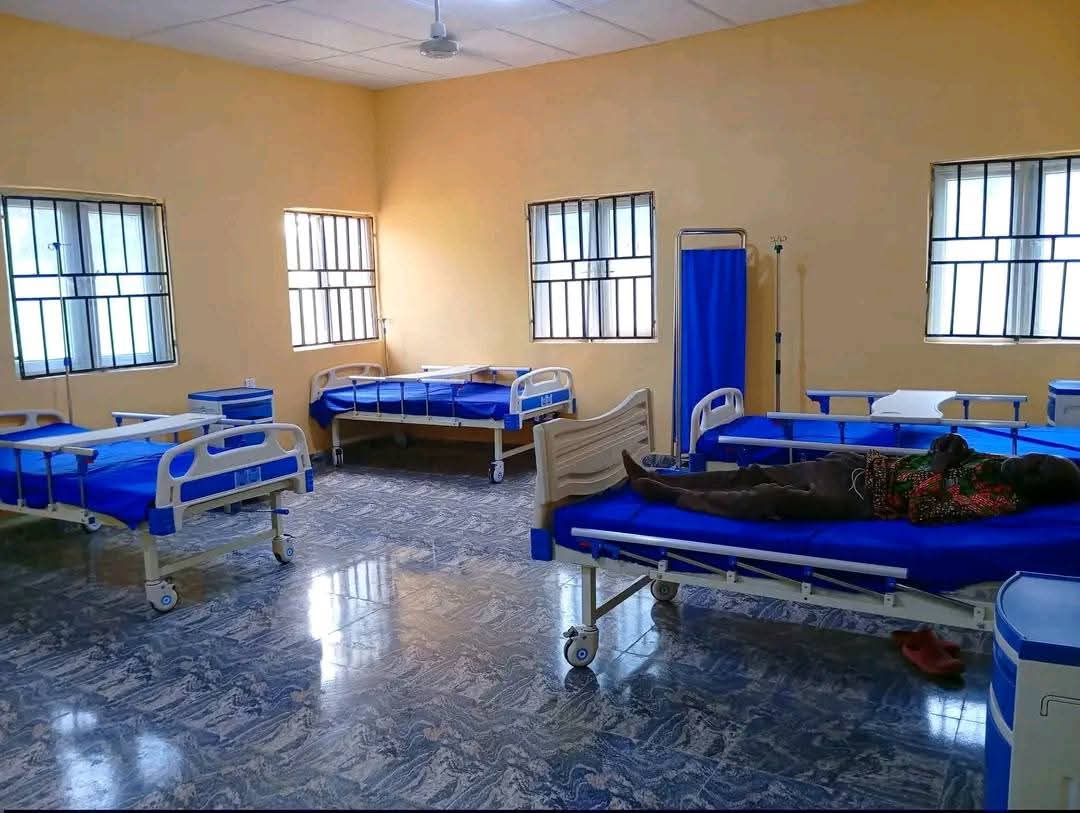
Residents of Umudike Ukwu in Ikwuano and Alayi in Bende Local Government areas say the once-neglected facilities have been revitalised with modern diagnostic equipment, solar power and telemedicine, bringing quality healthcare closer to the grassroots.
Speaking with newsmen during a facility tour, the excited locals commended Gov. Otti for restoring functionality to PHCs in their communities.
At the Umudike Ukwu PHC, many residents – mostly nursing mothers with their babies for immunisation, as well as elderly persons seeking routine medical checks – were seen accessing healthcare services.
The facility was equipped with modern clinical and diagnostic machines powered by solar energy, to ensure uninterrupted electricity supply.
Community members who spoke with journalists said the centre, which had previously been in a deplorable condition, had now become a lifeline for rural dwellers following the intervention of the state government.
Mrs Chinyere Azubuike, a resident in her early sixties who came for medical consultation, expressed appreciation to Governor Otti for restoring the facility.
According to her, the development has brought quality healthcare closer to people in rural communities.
Providing further insight into the transformation of the facility, the Health Secretary of the Ikwuano Council Health Authority, Dr Uchechi Nwachukwu, said the digitalisation of the centre had significantly improved healthcare delivery.
She explained that the new system allows patients to undergo preliminary tests before their data are uploaded digitally for proper diagnosis.
“Previously, patients were issued cards and had only physical consultations. Now, once a patient arrives, routine tests are conducted and the results are uploaded into the digital system. This enables us to consult other medical professionals across the world depending on the patient’s condition,” she said.
Dr Nwachukwu noted that patient turnout had increased significantly since the upgrade of the facility.
“We now receive more patients daily compared to the past. Data collection has improved, more health personnel are available across different medical fields. The overall operations have become more efficient. Everything is working better now and we are very happy,” she added.
A similar scenario played out at the Umueghere PHC in Alayi, where many patients were already waiting to receive medical attention when the media team arrived.
Leader of the visiting team, Mrs Chi-Chi Umudiaka, said the inspection was prompted by reports of remarkable improvements in Abia’s health sector, particularly the introduction of telemedicine services in rural PHCs.
She explained that the initiative aligns with the global target of achieving Universal Health Coverage (UHC) by 2030 under the United Nations Sustainable Development Goals (SDG 3.8), which seeks to ensure access to quality healthcare services without financial hardship.
According to her, global progress toward the target remains slow, but Abia State appears to be demonstrating a practical model for achieving it.
“Unfortunately, many believe universal health coverage is unrealistic, especially with the growing ‘japa’ syndrome where medical professionals are leaving the country. But today Abia is showing that it is possible,” she said.
Umudiaka described the telemedicine initiative as impressive and transformative, noting that remote communities that previously had limited access to healthcare can now consult doctors through digital technology.
“Some of these communities had no electricity for years and very poor internet access, yet this administration has broken that barrier,” she said.
She explained that residents now use digital cards to record their vital signs—including blood pressure, oxygen level, pulse rate and temperature—which are automatically transmitted to doctors for review.
“In the past, some of these centres had never received visits from doctors. But now, through telemedicine, specialists—even those outside the country—can support healthcare delivery in these villages.
“Even elderly and illiterate patients can receive proper treatment because nurses assist them in answering doctors’ questions and transmitting the information digitally for consultation and treatment,” she added.
Governor Otti had in December 2024 announced that 200 Primary Health Centres across the 17 local government areas of the state would be remodelled and retrofitted under Project Ekwueme.
