

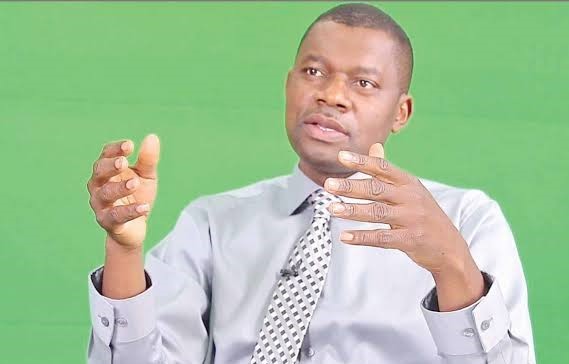
By Rudolf Ogoo Okonkwo
Oh, Brittle Paper, what am I going to do to thee? Should I rumple you up and fling you into the dustbin? Or should I add you to the fireplace on this cold February to extend the life of my smoldering wood?
Which one do you prefer?
My life was moving perfectly in tandem with my chi when that international African literary magazine, headquartered somewhere between a snowbank and a deep-dish pizza hut in Chicago, called me “21st Century Unoka.”
Unoka.
A whole me.
The grandson of Ezeobidi Oma Mma of Nnobi.
First son of the first son of the reincarnated sons.
The sole carrier of the original ancestral Wi-Fi intricately embedded deep inside my DNA.
And they said Unoka, the flute-playing, debt-collecting father of Okonkwo. Tufiakwa!
The magazine did not say it as a metaphor. They did not say that my musings were Unoka-esque. With the journal’s full chest, it branded my forehead with that infamous anthropological classification.
Do you people understand insults of this magnitude and altitude?
Not just any Unoka o.
Failed musician Unoka. Failed artist. Failed father. A father whose son did everything to disassociate himself from. What worse indignation could any man undergo?
Unoka, Achebe’s debt accumulator, creator of uncopyrighted flute solos, whom history remembered as a world-famous agricultural task dodger.
Ofeke.
Ofeke Pro Max Ultra.
What Brittle Paper did is not criticism. It is the equivalent of pushing a well-sharpened knife into the heart of an innocent man doing his best in this world. Chai!
In Igbo epistemology, calling a man Unoka is not a punitive literary commentary. No, it is a naked, open-market macroeconomic assessment- a credit-killing FICO score.
I’m better off with a criminal record for stealing okpa at Ogbete market than with that tag my former pastor called an ancestral generational curse.
I have suffered at the hands of contemporary writers. Saying suffered is a minor way of putting it. These people wake up, brush their teeth, and choose character assassination as their preferred way to start the day, deploying it like a glass of orange juice to wash down their breakfast of Fofo and bitterleaf soup.
But let’s set the record straight.
Unoka was not a failure.
Unoka was a creative in a free-loading society that paid no royalties for creative works they consumed with relish. (That culture is creeping up again with people reading free newspapers online and wondering why newspapers are firing reporters and closing down). He lived in a community that only respected yam-based capitalism. Unoka’s misfortune was being born into a meritocracy where art for art’s sake was an unknown concept.
Unoka was basically Flavor without Odumeje, the great Indaboski.
A Grammy nominee born 150 years too early.
Without Odumeje by his side, Unoka had no access to the abido shaker. No Indaboski pahose. No ganduka gandusa. No dabus kabash. And more importantly, no santus sanetorias.
What do you expect Unoka to do?
If Unoka had Spotify, Apple Music, YouTube Music, Instagram, and TikTok, he would have blown. Burna Boy, Wizkid, and Davido would have been his backup singers. Rema would have been carrying his goatskin bag containing his snuff container, while Phyno would be the boy in charge of his stool.
In fact, in today’s world, Unoka would have had a podcast called Flutes and Fortunes and a Substack where he would take delight in reviewing modern classical music. You can be sure that he would have delivered a TED Talk titled “From Yam Tuber to YouTuber: Redefining Success in 21st Century Umuofia.”
Anyway, because I know the Unoka that most readers of Things Fall Apart did not know, I endured this savage Blessing Uwisike’s literary drive-by shooting. As a nza bird in good standing, I have mastered the art of flying without perching, ever since hunters like Blessing Uwisike learned to shoot without aiming.
However, I will not lie — my spirit jubilated when the same magazine turned its unholy editorial binoculars toward that Amawbia partially beloved son, Professor Okey Ndibe.
Ah. I did not gloat. I am not small-minded.
I simply took solace in knowing that the magazine finished Prof. Okey Ndibe for me.
The international literary magazine saw through Okey Ndibe’s long grammar, moral thunder and lightening, philosophical acrobatics, and chains of abracadabra and called him out for what the New York Times reviewer of his upcoming novel will definitely call his American anthropologist protagonist, “a pseudo Onitsha market literature salesman pretending to be a high-octane public intellectual long abandoned by the public.”
That characterization made me dance Azonto blended with Amapiano. It is about time someone unmasks that beret-wearing Achebe’s baton-grabbing, snatching, running-away inheritor of the Umuofia Agwu spirit of excellent writing.
With the above characterization, my chi regained its peace.
I forgive Brittle Paper for calling me 21st Century Unoka only because they finished Okey Ndibe for me.
Nonsense!!!
Rudolf Ogoo Okonkwo teaches Post-colonial African History, Diasporic African Literature, and African Folktales at the School of Visual Arts in New York City. He is the author of “This American Life Sef.” His latest book is “A Kiss That Never Was.”
