
Close Menu
Ikenga Online
    What's Hot

    Subsidy was a scam — Ex-minister, Ikoh

    March 22, 2026

    My lord, Justice Kneel Down by Chidi Anselm Odinkalu

    March 22, 2026

    The insecurity triad (1): How kidnapping became Nigeria’s multi-billion naira ransom industry

    March 22, 2026
    Facebook X (Twitter) Instagram
    Ikenga Online
    Facebook X (Twitter) Instagram YouTube
    Donate
    • Home
      • Igboezue
      • Hall of Fame
      • Hall of Shame
    • News
      1. Other States
      2. National
      3. International
      4. Interviews
      5. Personalities
      6. View All

      Inibehe Effiong slams Umo Eno over alleged lavish lifestyle, questions ‘₦2m shoes’ claim

      March 17, 2026

      Maiduguri blasts: Resident doctors demand enhanced security for hospitals

      March 17, 2026

      Scores injured as Abuja–Kaduna train derails

      March 16, 2026

      Coroner gives LASUTH 14 days to account for unidentified body in Pelumi Onifade death probe

      March 6, 2026

      M/East tensions push petrol price to N1,245/litre as Dangote announces fresh hike

      March 21, 2026

      ‘Sick’ nation: Odinkalu decries killings at home as Nigerian leaders gather in London

      March 19, 2026

      Due process, not el-Rufai’s past should determine his case — Yesufu

      March 18, 2026

      RULAAC seeks probe of alleged redeployment of officers under investigation at FCID Abuja

      March 18, 2026

      Israeli president visits missile-hit home, warns Iran of ‘more havoc’ over cluster munitions attack

      March 16, 2026

      My father, wife killed by US, Israel — Iran’s new leader speaks, vows revenge

      March 12, 2026

      Okonjo-Iweala canvasses fresh ideas to revitalise WTO ahead of MC14

      March 6, 2026

      A Critical review of Reparations: History, Struggle, Politics and Law, by Chido Onumah 

      March 4, 2026

      Slash jumbo salaries to pay minimum wage, Bishop tells Tinubu

      June 19, 2024

      Nigeria remains a country in crisis that needs to heal – Chido Onumah

      January 24, 2024

      The Ekweremadus: Obasanjo writes UK court, seeks pardon for them

      April 5, 2023

      I’m coming with loads of experience to re-set Abia – Greg Ibe

      February 1, 2023

      Anambra-born Ugochi Nwizu shines as UNN best graduating doctor with multiple distinctions

      September 29, 2023

      Bulwark for women, girls: Meet Ikengaonline September town-hall guest speaker, Prof Joy Ezeilo

      September 27, 2023

      Rufai Oseni, the most dangerous man on Nigerian TV by Okey Ndibe

      February 13, 2023

      Stanley Macebuh: Unforgettable pathfinder of modern Nigerian journalism by Uzor Maxim Uzoatu

      February 7, 2023

      Subsidy was a scam — Ex-minister, Ikoh

      March 22, 2026

      Prof Nnenna Oti, uncompromising umpire that midwifed the birth of new Abia 

      March 22, 2026

      Otti affirms S’East unity, calls for deeper regional collaboration

      March 21, 2026

      M/East tensions push petrol price to N1,245/litre as Dangote announces fresh hike

      March 21, 2026
    • Abia

      Subsidy was a scam — Ex-minister, Ikoh

      March 22, 2026

      Prof Nnenna Oti, uncompromising umpire that midwifed the birth of new Abia 

      March 22, 2026

      Otti affirms S’East unity, calls for deeper regional collaboration

      March 21, 2026

      EID-EL-FITR: Otti felicitates Muslim community, urges unity

      March 20, 2026

      Otti woos investors, says Abia ready for business as Zenco Group eyes return

      March 19, 2026
    • Anambra

      FedPoly Oko bans direct sale of textbooks to students

      March 19, 2026

      Soludo dissolves cabinet, orders appointees to hand over

      March 19, 2026

      Obi congratulates Soludo as three security operatives collapse at inauguration

      March 17, 2026

      FirstPower not responsible for drop in electricity supply in Anambra — Okafor

      March 12, 2026

      Issues of women’s rights should go beyond policies, commitments – RoLAC

      March 11, 2026
    • Ebonyi

      NELAN engineers’ death linked to Effium–Ezza Effium conflict – Umahi 

      March 16, 2026

      Reinforced concrete roads will guarantee quality, durability — Umahi

      March 14, 2026

      Ezza/Ezillo crisis: Community seeks Nwifuru’s help to return home after 18 years of displacement

      March 11, 2026

      Police nab alleged mastermind of former Ebonyi deputy governor’s father’s murder

      March 10, 2026

      Court slams ₦5m damages against ex-PDP publicity secretary for defaming lawyer

      March 9, 2026
    • Delta
    • Enugu

      Oruruo dismisses ‘illegal’ PDP congresses in Enugu

      March 20, 2026

      Mbah assures autism society of government’s support

      March 18, 2026

      Former House Leader declares bid for Reps seat on ADC platform

      March 17, 2026

      2027: Step down for Igbo president, groups urge Tinubu

      March 16, 2026

      Nsukka zone emerges winner of Enugu secondary schools sports championship

      March 15, 2026
    • Imo

      MASSOB urges Ndigbo to obtain PVCs, lists benefits

      March 13, 2026

      Disband ‘Tiger Base’ now, Igbo group petitions Gov Uzodimma

      February 25, 2026

      RULAAC urges Imo CP to probe alleged atrocities by vigilante leader in Njaba

      February 13, 2026

      Akagburuonye @ 60: Ex-Eagles stars storm Mbaise to honour humanitarian

      February 13, 2026

      RULAAC petitions Imo attorney-general over alleged torture, sexual abuse of trainee nurse

      January 25, 2026
    • Rivers

      Aba Power breaks new ground with electricity supply to Rivers

      February 22, 2026

      Investigate Asari Dokubo over anti-Igbo rants now, IIC tells security agencies

      February 20, 2026

      Ohanaeze inaugurates committee on Igbo strategic engagement

      February 2, 2026

      Rivers assembly vows to proceed with Gov Fubara, deputy’s impeachment process 

      January 16, 2026

      Financial disagreements fuel impeachment moves against Fubara — Aide alleges

      January 16, 2026
    • Politics

      Oruruo dismisses ‘illegal’ PDP congresses in Enugu

      March 20, 2026

      Defection row deepens as APGA moves to unseat Abaribe, senator pushes back

      March 19, 2026

      For The Village Boys Movement, it is Peter Obi or no one else – Maazi Ezeoke

      March 17, 2026

      Intimidation, violence can’t win elections in Abia again — LP fires Uzor Kalu

      March 17, 2026

      Former House Leader declares bid for Reps seat on ADC platform

      March 17, 2026
    • Opinion & Editorial
      • Editorial
      • Columnists
        • Osmund Agbo
        • Chido Onumah
        • Uche Ugboajah
        • Hassan Gimba
        • Edwin Madunagu
        • Rudolf Okonkwo
        • Azu Ishiekwene
        • Osita Chidoka
        • Owei Lakemfa
        • Chidi Odinkalu
      • Opinion
    • Special Reports
    • Art & Entertainment
      • Nollywood
      • Music
      • Ikengaonline Literary Series (ILS)
      • Life
      • Travels
    • Sports
    Ikenga Online
    Home » The insecurity triad (1): How kidnapping became Nigeria’s multi-billion naira ransom industry
    Columnists

    The insecurity triad (1): How kidnapping became Nigeria’s multi-billion naira ransom industry

    EditorBy EditorMarch 22, 2026No Comments8 Mins Read
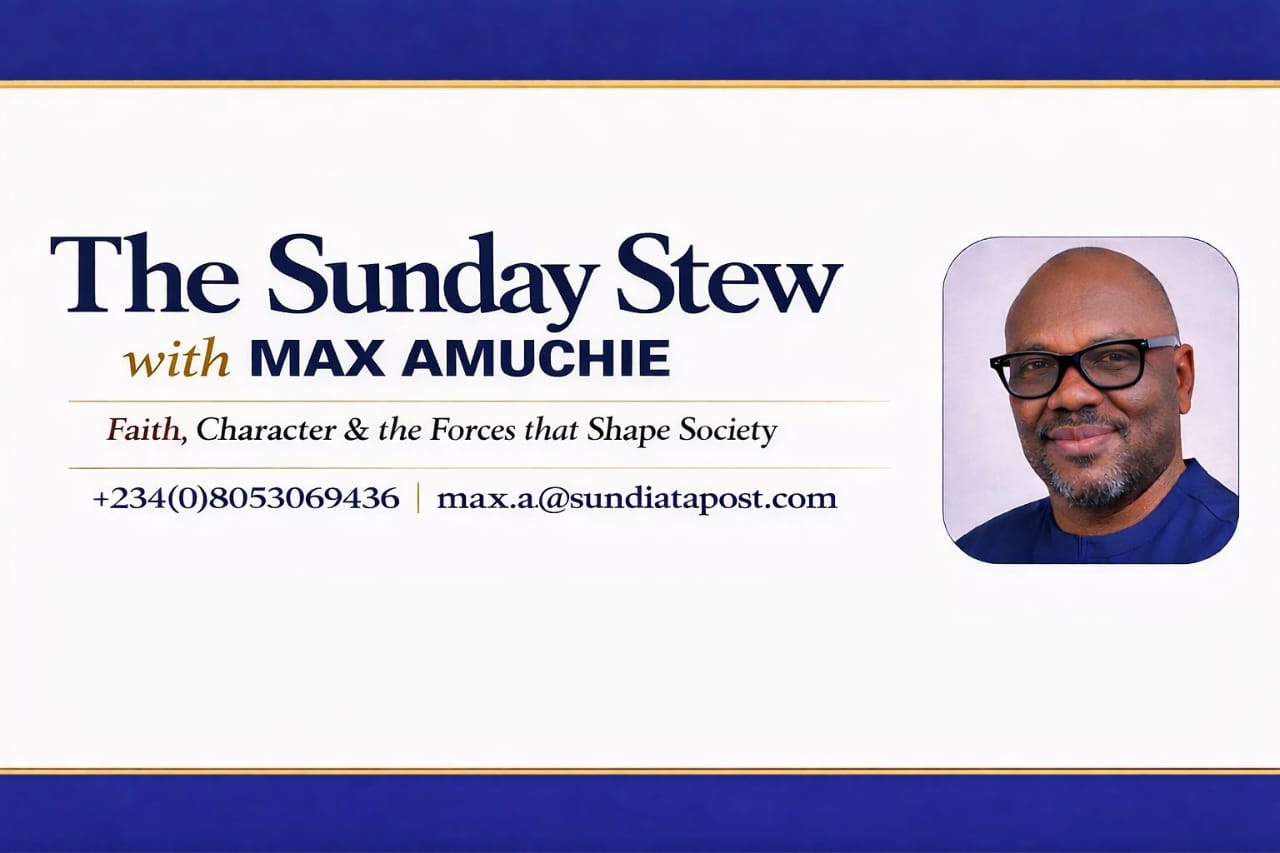
    Max Amuchie

    By Max Amuchie | The Sunday Stew 

    There is a particular kind of silence that follows a kidnapping. It is not the absence of sound, but the absence of certainty. Phones stay charged. Families stop sleeping. Every unknown number becomes both hope and dread. In that silence, the Nigerian citizen is reduced to a negotiable asset—waiting, not for justice, but for a price.

    In the concluding part of last week’s The Sunday Stew, I had promised that today we would take a deep dive into the paradox of living under the shadow of self-inflicted disasters. In reflecting on the approach to adopt, my mind went back to the world-acclaimed scholar, Ali Mazrui. 

    In 1986, Mazrui — then a towering figure at the University of Jos and Binghamton — released his seminal documentary, The Africans: A Triple Heritage. Mazrui argued that the African identity was a product of three interlocking legacies: the Indigenous, the Islamic, and the Western.

    Nigeria, however, appears to be shaped by a far more dangerous convergence of forces.

    We are currently shadowed by what I call The Insecurity Triad—a three-headed monster of Kidnapping, Banditry, and Terrorism that threatens to dismantle the very heritage Mazrui celebrated. We begin today with kidnapping, what I have chosen to call the ‘Ransom Economy.’

    From Global Origins to the Nigerian Evolution 

    Kidnapping is not a Nigerian invention. Historically, it has evolved from sporadic opportunism to structured enterprise. In the 19th-century United States, abductions were mostly local or motivated by personal vendettas. However, the 1932 abduction of Charles Lindbergh Jr. marked a global turning point, demonstrating the potential for ransom at a national scale and prompting the US Federal Kidnapping Act.

    Today, the more pressing parallels lie in the “narco-states” of Latin America. In Mexico, cartels use “express kidnappings” to drain bank accounts and mass-abduct migrants to extort their families.

    In Colombia, what began as a tool for political “taxation” by groups like the FARC eventually became an outsourced criminal market. Whether it is a drug lord in Michoacán or a bandit leader in the Kuyambana Forest, the logic is identical: kidnapping is the “venture capital” or liquidity that funds larger insurgencies.

    Nigeria’s journey followed a similar, albeit accelerated, trajectory. Prior to the year 2000, incidents were sporadic. By the early 2000s, the Niger Delta became the first laboratory for industrial-scale abductions.

    It is essential to note that the genesis of this trend was rooted in grievance rather than simple greed. In those early days, the targeting of oil workers was a violent form of protest against multinational oil companies accused of systemic environmental degradation and the utter neglect of oil-bearing communities. What began as a desperate cry for resource control, however, soon mutated. The “grievance model” of Niger Delta provided the blueprint for the “profit model” we see today nationwide, as criminal networks realised that human liberty was the most liquid asset they could trade.

    The Human Face of the Ransom Economy

    Behind the statistics are real people, real trauma, and real negotiations.

    In 2021, a friend of Sundiata Post, Mrs. Elsie Iloelunachi, a businesswoman, travelled from Abuja to Onitsha to purchase goods. On her return journey, somewhere in Kogi State, her vehicle was hijacked. While a few passengers managed to escape, she was not so fortunate. She was marched into the forest and held for a few days.

    According to her account, she survived partly because she could communicate in the language of her abductors. She pleaded. She negotiated. Eventually, the kidnappers sent an account number to her husband. He raised the money and transferred it.

    When she later came to my office to recount her experience, the psychological toll was unmistakable. She was visibly shaken, emotionally and mentally scarred, yet she still counted herself lucky. She had returned alive, without physical injury or molestation—a “best-case outcome” in a system where survival is increasingly uncertain.

    In another case, a past president of the Rotary Club of Abuja CBD travelled to Lagos on official duty. On his return journey to Abuja, his vehicle was hijacked in Ondo State. What followed was panic—not just within his family, but across the Rotary community. The club and district mobilised. Funds were raised. Networks were activated. For weeks, uncertainty loomed until he eventually regained his freedom.

    There is also the growing pattern of attacks on schools and religious institutions—spaces once considered sanctuaries. One particularly harrowing case involved St. Mary’s Catholic Primary and Secondary School in Papiri, Niger State, on November 21, 2025. Gunmen abducted 315 people, including nursery pupils as young as five. Parents received intermittent, terrifying calls from the abductors, alternating between threats and negotiation. Some students escaped into the surrounding forest, while others were released in staged groups over the next month. Families, like that of 62-year-old Dauda Chekula who lost four grandchildren, endured unimaginable trauma, with no immediate government support.

    Another alarming example occurred in Sokoto, where a cleric and his students were abducted during a nighttime raid. The cleric negotiated tirelessly to secure the children’s release, demonstrating the terrifying human calculus families now face in a system where trust in protection is fragile.

    The Ransom Economy has moved from the lonely highway to the family dinner table. The early 2024 abduction of the Al-Kadriyar sisters in Bwari, FCT, remains a scar on the national psyche. The subsequent killing of one daughter, Nabeehah, to “accelerate” payment proved that even the seat of power in Abuja was no longer a fortress. From coordinated street-level raids in Katampe to the surgical, contract-style snatching of professionals in Port Harcourt, kidnappers have weaponised the doorstep.

    The systematic targeting of the clergy represents a war on the soul of the nation. In the last year alone, at least 17 Catholic priests were abducted. Kidnappers demanded a total of ₦460 million with approximately ₦70 million verified as paid by desperate parishioners and families. The case of Fr. Mikah Suleiman in Sokoto and the heroic sacrifice of Fr. Thomas Oyode in Edo—who reportedly traded his own liberty for that of his students—illustrate that for the kidnapper, the Church is not a house of God, but a guaranteed source of crowd-funded negotiation.

    These stories are not isolated. They are fragments of a larger system—one that has turned fear into currency and human beings into collateral.

    Why Kidnapping is ‘Attractive’

    We must ask: why is Nigeria a global outlier in this menace? The answer lies in the collapse of the legitimate economy. When a state cannot provide viable means of income, the ‘Ransom Economy’ fills the vacuum. For a youth in a marginalised rural community or an urban slum, the return on investment (ROI) of a kidnapping raid far outweighs years of manual labour.

    However, we cannot ignore the role of greed. The industry has attracted “investors”—informants, logistics providers, and even rogue elements within formal structures—who see kidnapping as a high-reward, low-risk business. This combination of economic despair and predatory greed has turned a crime into a career path.

    The Ransom Economy by the Numbers

    To understand the financial scale of this crisis, we look to data provided by SBM Intelligence for the period of July 2024 to June 2025. During this window, the total ransom demanded by criminal networks reached a staggering ₦48 billion (approximately $31 million), reflecting a high-volume strategy. Out of this, ₦2.57 billion (roughly $1.66 million) was verified as paid—a 144% year-on-year increase in actual payments.

    These funds were extracted from 4,722 victims across 997 reported incidents. Most chilling is the lethality rate: 762 deaths were recorded, meaning nearly one person died for every reported incident. This reveals a “naira-to-dollar trap”; as the naira devalues, kidnappers become more aggressive, demanding higher sums simply to maintain their purchasing power for black-market arms and logistics.

    Why Nigeria?

    How can a country with so much promise and capacity be reduced to a state where it cannot protect its citizens? The answer lies in our “ungoverned spaces” and a centralised policing structure that has created a dangerous intelligence gap. When the state is physically absent, the criminal becomes the de facto sovereign.

    Ali Mazrui’s Triple Heritage was about the synthesis of culture to build a future. Our Insecurity Triad is about the collision of forces that destroy it. To protect her citizens, Nigeria must re-occupy her own land. We must:

    •Decentralise Intelligence

    •Close Ungoverned Spaces

    •Bankrupt the Triad

    Every abduction is a withdrawal from the fragile bank of national trust. If we do not act decisively, the Ransom Economy will continue to fund even more destructive forces.

    Join me next week for Part II, where we examine the Rural Siege of Banditry.

    Don’t miss it

    Trust it is sacred. Stay seasoned 

    Max Amuchie, CEO of Sundiata Post, writes The Sunday Stew, a weekly syndicated column on faith, character, and the forces that shape society, with a focus on Nigeria and Africa in a global context

    X – @MaxAmuchie | Email: max.a@sundiatapost.com | Tel: +234(0)8053069436.

    Editor
    • Website

    Related Posts

    My lord, Justice Kneel Down by Chidi Anselm Odinkalu

    March 22, 2026

    Ministry of finance and whistleblowing policy sensitization by Godwin Onyeacholem 

    March 21, 2026

    Washington’s three blind mice and how they destroy the world by Owei Lakemfa 

    March 20, 2026
    Editors Picks

    Subsidy was a scam — Ex-minister, Ikoh

    March 22, 2026

    My lord, Justice Kneel Down by Chidi Anselm Odinkalu

    March 22, 2026

    The insecurity triad (1): How kidnapping became Nigeria’s multi-billion naira ransom industry

    March 22, 2026

    Prof Nnenna Oti, uncompromising umpire that midwifed the birth of new Abia 

    March 22, 2026
    Latest Posts
    Abia

    Subsidy was a scam — Ex-minister, Ikoh

    Chidi Odinkalu

    My lord, Justice Kneel Down by Chidi Anselm Odinkalu

    Columnists

    The insecurity triad (1): How kidnapping became Nigeria’s multi-billion naira ransom industry

    Subscribe to Updates

    Get the latest news from Ikenga Online.

    Advertisement
    Demo

    IkengaOnline is a publication of the Ikenga Media & Cultural Awareness Initiative (IMCAI), a non-profit organisation with offices in Houston Texas and Abuja.

    We're social. Connect with us:

    Facebook X (Twitter) Instagram YouTube LinkedIn WhatsApp RSS
    • Home
      • Igboezue
      • Hall of Fame
      • Hall of Shame
    • News
      • Other States
      • National
      • International
      • Interviews
      • Personalities
    • Abia
    • Anambra
    • Ebonyi
    • Delta
    • Enugu
    • Imo
    • Rivers
    • Politics
    • Opinion & Editorial
      • Editorial
      • Columnists
        • Osmund Agbo
        • Chido Onumah
        • Uche Ugboajah
        • Hassan Gimba
        • Edwin Madunagu
        • Rudolf Okonkwo
        • Azu Ishiekwene
        • Osita Chidoka
        • Owei Lakemfa
        • Chidi Odinkalu
      • Opinion
    • Special Reports
    • Art & Entertainment
      • Nollywood
      • Music
      • Ikengaonline Literary Series (ILS)
      • Life
      • Travels
    • Sports

    Subscribe to Updates

    Get the latest news from Ikenga Online.

    Facebook X (Twitter) Instagram LinkedIn WhatsApp RSS
    © 2026 Ikenga Online. Ikenga.

    Type above and press Enter to search. Press Esc to cancel.