

Our Reporter, Abuja
The Independent National Electoral Commission (INEC) on Tuesday presented its draft 2026 Regulations and Guidelines for Political Parties to party leaders, seeking stakeholder input ahead of the 2027 general elections.
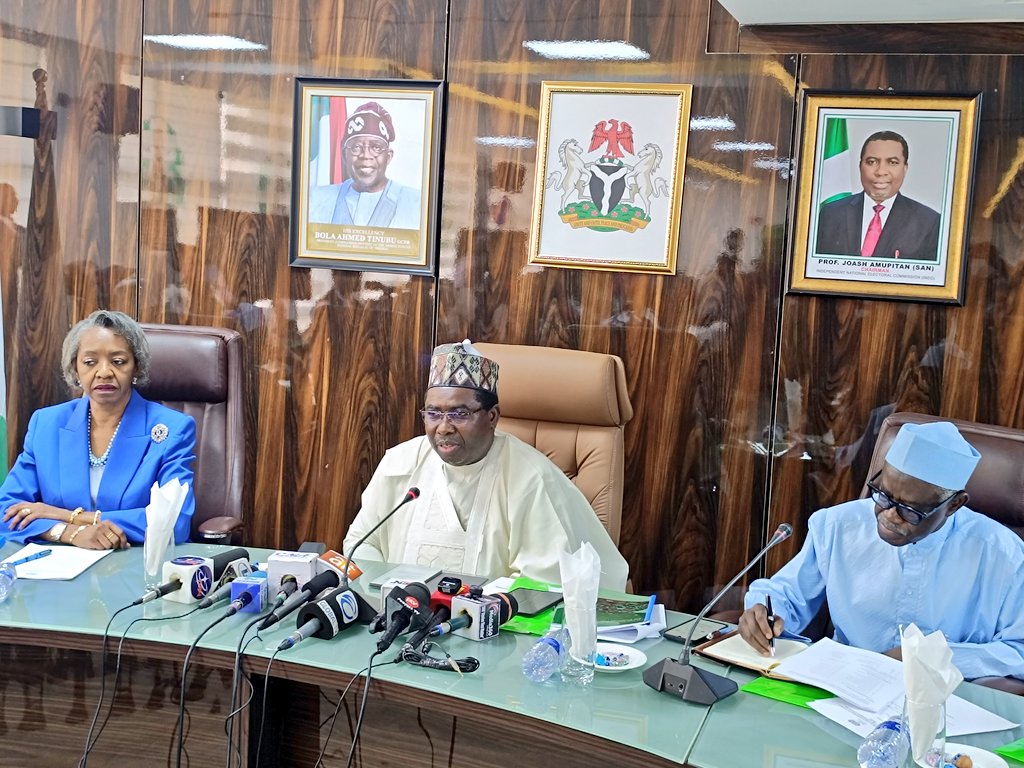
The draft was unveiled at a consultative meeting in Abuja, where the Commission said the proposed framework would guide party operations and electoral conduct in the next election cycle.
Opening the session, INEC Chairman, Joash Amupitan, described the meeting as a gathering of “joint custodians of Nigeria’s democratic future,” stressing that credible elections are built long before polling day.
“We meet today not merely as regulators and political actors, but as joint custodians of Nigeria’s democratic future,” Amupitan said, adding that the Commission had undertaken a technical retreat to review and reconstruct the 2022 regulations.
“Today, we share the outcome of that exercise with you,” he stated.
Amupitan explained that the draft guidelines were developed in line with provisions of the Constitution and the Electoral Act, 2026, noting that they represent a comprehensive overhaul of the 2022 framework to reflect new legal realities.
“We cannot navigate a 2027 horizon using a 2022 map,” he said.
He drew attention to Section 93(2) of the Electoral Act, which empowers INEC to determine election expenses for political parties in consultation with stakeholders. He urged parties to scrutinise Clause 40(4) and (5) of the draft, which deal with financial regulations governing party primaries and election conduct.
With the Presidential and National Assembly elections scheduled for January 16, 2027, and governorship and state assembly polls fixed for February 6, 2027, the INEC chairman noted that the Commission is working within a compressed timeline.
“The reduction in statutory timelines requires what we may call surgical precision in planning and execution,” he said.
According to INEC, the draft regulations cover critical areas such as party registration and mergers, internal administration, conduct of primaries, campaign activities, political finance, and procedures for deregistration.
The framework also introduces measurable benchmarks aimed at improving the participation of women, youth, and Persons with Disabilities in the electoral process.
Responding on behalf of political parties, National Chairman of the Inter-Party Advisory Council (IPAC), Yabagi Sani, commended INEC for the consultative approach, describing it as vital for producing a workable regulatory framework.
He said political parties were committed to constructive engagement with the draft but identified areas requiring further clarification.
Sani emphasised the need for flexibility in the conduct of party primaries, describing them as internal party affairs that should be accommodated within regulatory provisions.
He also highlighted challenges surrounding membership registration, noting that parties often struggle to compile comprehensive registers within stipulated timelines.
The IPAC chairman urged INEC to adopt provisions that balance inclusivity with accountability, while stressing the importance of transparency in result management.
While expressing support for technological innovations introduced by the Commission, he called for clear and unambiguous guidelines on the electronic transmission of election results.
The consultative process is expected to continue in the coming weeks, with stakeholders submitting inputs before the final regulations are adopted ahead of the 2027 polls.
