

Lawrence Nwimo, Awka
The University Librarian of Nnamdi Azikiwe University (UNIZIK), Professor Stella Ngozi Anasi, has called on governments at all levels to prioritise reforms aimed at repositioning libraries as critical drivers of national development.
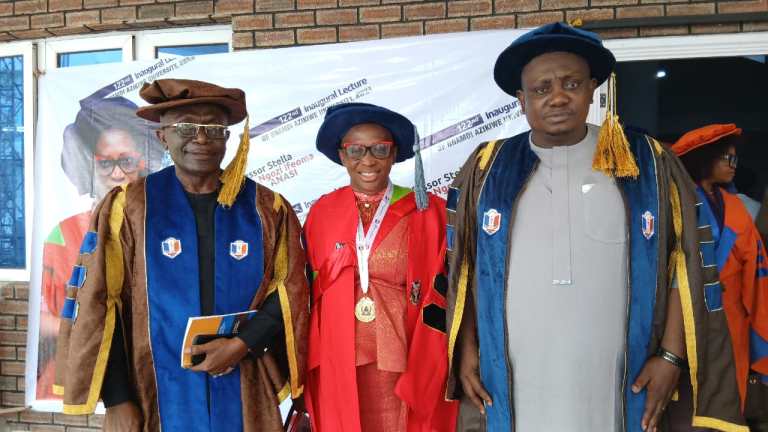
Prof. Anasi made the call while delivering UNIZIK’s 122nd inaugural lecture titled, “The Neglected Goldmine: Repositioning Nigerian Libraries at a Critical Crossroads.”
She lamented the persistent neglect of libraries in Nigeria, citing challenges such as inadequate funding, poor infrastructure, and lack of ICT facilities, despite their strategic importance to national growth.
According to her, “Despite the widely recognised contributions of libraries to economic and national development, libraries in Nigeria have suffered enormous neglect for many years.
“Libraries in Nigeria face a myriad of challenges ranging from insufficient funding and dilapidated facilities to inadequate information and communication technology infrastructure, as well as an unconducive learning environment. From school and public libraries to academic institutions and the National Library—the apex library—the situation remains largely the same.”
Prof. Anasi decried what she described as the government’s lack of commitment to library development, noting that funds allocated to libraries are often diverted to projects with more immediate and measurable economic returns.
“The development and growth of libraries are not top priorities for government. Funds meant for libraries are frequently redirected to other projects whose economic benefits are easier to quantify.
“Even in tertiary institutions, where libraries play a key role in enriching curricula and enhancing research productivity, the level of neglect is glaring,” she said.
The professor of Library, Archival and Information Science and Commonwealth Fellow, however, noted that despite these challenges, libraries have continued to evolve, adapting to meet the needs of 21st-century users.
She stressed that libraries are not peripheral institutions but vital intellectual infrastructure upon which national development is built, adding that investment in libraries is essential for sustaining social and intellectual sovereignty.
Prof. Anasi therefore called for urgent reforms to unlock the full potential of libraries in driving the country’s development agenda. She urged governments, policymakers, and stakeholders to adopt a more proactive approach by fostering collaboration and improving attitudes toward libraries and librarians.
“The sustainability and development of libraries should be a top government priority. There must be clear fiscal commitment through adequate and consistent budgetary allocations to enable libraries deploy cutting-edge technologies in support of teaching, learning, and research,” she said.
She also urged relevant government agencies and parastatals to fast-track the review of policies and regulatory frameworks to support the provision of modern technological infrastructure for libraries nationwide.
Prof. Anasi used the occasion to highlight her academic achievements, including research awards, honours, and her contributions to the development of UNIZIK during her tenure as University Librarian.
In his remarks, the Vice-Chancellor of UNIZIK, Professor Ugochukwu Bond Stanley Anyaehie, described the library as the lifeline of any society and a cornerstone of educational development.
He noted that inaugural lectures are a vital part of university tradition, providing a platform for professors to present their research and contribute to societal advancement. He urged scholars to think innovatively and translate research findings into practical solutions.
The well-attended lecture, held at the Zephaniah Madubuko Auditorium, Faculty of Social Sciences, attracted scholars, industry leaders, and members of the academic community.
In recognition of her contributions, Prof. Anasi was decorated with a commemorative medal for delivering the university’s 122nd inaugural lecture.
