

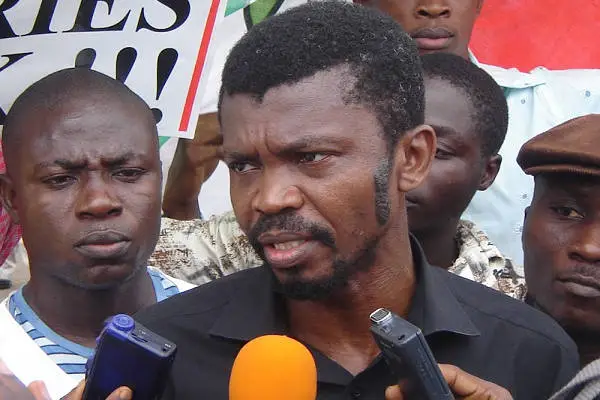
Stephen Ukandu, Umuahia
Governor Alex Otti of Abia State has hinted at plans by his administration to immortalise the late Civil Liberties Organisation (CLO) leader and rights activist, Comrade Chima Ubani, 20 years after his death in a controversial ghastly auto crash.
Regretting that the late rights activist “has not been given his due respect and place in Nigeria in view of the impact and lasting impression he made in the life of the nation,” Gov. Otti assured that “Abia, under his watch, will immortalise Comrade Ubani and his legacies very soon.”
The former CLO Executive Director died on September 21, 2005, on the Potiskum/Yobe highway while coordinating the Labour and Civil Society (LASCO) coalition rally/protests against the incessant increase in the prices of petroleum products by the then President Olusegun Obasanjo administration.
He was supposed to fly to Abuja for the continuation of the rally, but reports claimed the available aircraft seat was filled, and he had to give up the space for the then National Chairman of the Nigerian Labour Congress (NLC), Comrade Adams Oshiomhole.
Gov. Otti, in a posthumous tribute to commemorate the 20th anniversary of Ubani’s tragic death, regretted that nothing had been done to immortalise him.
He described the late Comrade Ubani, a father of four who died at the age of 42, as “a martyr of the masses.”
The Governor, in a message titled “20 Years After, the Vacuum Remains Unfilled,” described the late Abia-born pro-democracy crusader and activist as “a rare gem, a hero, and a courageous champion of democracy and good governance.”
Otti, in the statement signed by his Special Adviser on Media and Publicity, Mr. Ferdinand Ekeoma, said Ubani’s death “has continued to hurt 20 years after his demise in an inexplicable auto crash while fighting for the rights of Nigerian workers.”
The statement read in part: “Today, like every other year, reminds me of a disaster that brought distraught and psychological devastation to many. Knowing Chima Ubani meant loving him sincerely.
“We were brought together by a common quest for education as students and bonded by our positions as student leaders; little did we know that both his father and mine were not just clergymen in the same church, but close friends who trusted and respected each other.
“Chima yielded himself to the nation, serving humanity with courage, candour, and compassion—sacrificing his comfort and freedom. With a deep-rooted spirit of altruism, Chima displayed inexplicable tenacity that is only seen in true comrades, all for humanity.
“Chima didn’t die while on a business trip, but in a horrific motor accident along Potiskum Road, Maiduguri, during a nationwide protest organized by the Nigeria Labour Congress (NLC), leaving humanity shocked and shaken.”
Otti expressed grief over “the sorrow and eternal grief Comrade Ubani’s death has brought upon his immediate and extended families, friends, the nation, and humanity at large.”
He, however, said he was confident that “Ubani’s soul is resting in God’s bosom.”
Gov. Otti, meanwhile, reminded Ubani’s former colleagues that “it would be a betrayal of Chima’s spirit if those noble virtues he upheld and the struggles they embarked upon collectively are abandoned midway.”
The late Ubani came into the limelight in 1993, after the annulment of the June 12 presidential poll by the then Head of State, General Ibrahim Babangida.
Ubani played a key role in bringing various human rights organisations together under one umbrella group, the Campaign for Democracy.
He also joined the campaign against oil companies in the Niger Delta, supporting activists such as the writer Ken Saro-Wiwa, who was executed in 1995.
In February 1994, Ubani’s house and office were raided by security agents, and a report on women and children in Nigerian prisons, which he had co-authored, was confiscated.
He went on the run but was arrested and imprisoned in 1995 after his case was taken up by Amnesty International.
Ubani regained his freedom in 1996 and continued with his activism until his tragic death in 2005.
