
Close Menu
Ikenga Online
    What's Hot

    FirstPower electricity announces planned outage in Anambra

    December 5, 2025

    GPSDC, WACOL train journalists on GBV reporting, seek stronger collaboration

    December 5, 2025

    Rewarding ex-INEC chairman with ambassadorial role morally indefensible – Atiku 

    December 4, 2025
    Facebook X (Twitter) Instagram
    Ikenga Online
    Facebook X (Twitter) Instagram YouTube
    Donate
    • Home
      • Igboezue
      • Hall of Fame
      • Hall of Shame
    • News
      1. Other States
      2. National
      3. International
      4. Interviews
      5. Personalities
      6. View All

      Bandits hit Kogi church, abduct pastor, wife, members

      November 30, 2025

      Kaduna Anglican priest dies in kidnappers’ den

      November 27, 2025

      Bandits mutilate one, abduct pregnant woman, 23 others in Niger communities

      November 27, 2025

      Freed abductees receive medical treatment in Kwara govt house

      November 24, 2025

      Rewarding ex-INEC chairman with ambassadorial role morally indefensible – Atiku 

      December 4, 2025

      Tinubu swears in Gen Musa as defence minister

      December 4, 2025

      Ex-CDS, Gen Musa confirmed as defence minister

      December 3, 2025

      Police to arrest personnel escorting VIPs, declare such duty Illegal

      December 3, 2025

      US issues visa ban on individuals behind Christian genocide in Nigeria

      December 4, 2025

      Tinubu approves Nigeria’s membership of US-Nigeria joint working group

      November 27, 2025

      Obi meets EU lawmakers, seeks stronger partnership to tackle Nigeria’s challenges

      November 26, 2025

      CPC: Nigeria engaging world diplomatically, will defeat terrorism – Tinubu 

      November 6, 2025

      Slash jumbo salaries to pay minimum wage, Bishop tells Tinubu

      June 19, 2024

      Nigeria remains a country in crisis that needs to heal – Chido Onumah

      January 24, 2024

      The Ekweremadus: Obasanjo writes UK court, seeks pardon for them

      April 5, 2023

      I’m coming with loads of experience to re-set Abia – Greg Ibe

      February 1, 2023

      Anambra-born Ugochi Nwizu shines as UNN best graduating doctor with multiple distinctions

      September 29, 2023

      Bulwark for women, girls: Meet Ikengaonline September town-hall guest speaker, Prof Joy Ezeilo

      September 27, 2023

      Rufai Oseni, the most dangerous man on Nigerian TV by Okey Ndibe

      February 13, 2023

      Stanley Macebuh: Unforgettable pathfinder of modern Nigerian journalism by Uzor Maxim Uzoatu

      February 7, 2023

      FirstPower electricity announces planned outage in Anambra

      December 5, 2025

      GPSDC, WACOL train journalists on GBV reporting, seek stronger collaboration

      December 5, 2025

      Rewarding ex-INEC chairman with ambassadorial role morally indefensible – Atiku 

      December 4, 2025

      Tinubu swears in Gen Musa as defence minister

      December 4, 2025
    • Abia

      Gunmen hijack Aba-bound bus, abduct 14 passengers in Imo

      December 3, 2025

      Removal of barriers against PWDs’ participation in society a must – Gov Otti

      December 3, 2025

      Abia set to unveil building material testing laboratory

      December 3, 2025

      Otti empowers 150 Abia Poly outstanding graduates with N1m each

      December 2, 2025

      Experts meet in Umuahia to tackle MSMEs challenges

      December 2, 2025
    • Anambra

      FirstPower electricity announces planned outage in Anambra

      December 5, 2025

      GPSDC, WACOL train journalists on GBV reporting, seek stronger collaboration

      December 5, 2025

      Police nab member of kidnap syndicate in Anambra

      December 4, 2025

      Tinubu empowers Anambra PWDs with N50m business grant

      December 3, 2025

      Commission to establish disability counselling centre in Anambra

      December 3, 2025
    • Ebonyi

      Ebonyi LG poll: Ezillo stakeholders adopt power shift to Ezzagu zone

      December 2, 2025

      Nwifuru moves to equip Ebonyi hospitals, sets up five-man equipment distribution committee

      November 28, 2025

      Court remands man for alleged cyberbullying of federal lawmaker

      November 26, 2025

      Nwifuru presents N884.8bn 2026 budget to Ebonyi assembly

      November 25, 2025

      Coalition groups condemn arrests, detention of critics, journalists in Ebonyi

      November 23, 2025
    • Delta
    • Enugu

      PRODA DG preaches peace, unity among staff as 2025 games festival kicks off

      December 4, 2025

      Abductors of Enugu deputy governor’s kinsmen demand N20m ransom

      December 4, 2025

      Road crash: FRSC confirms 2 dead, 9 injured in Enugu multiple accidents 

      December 4, 2025

      Enugu budgets N1.62 trillion for 2026

      December 2, 2025

      Gov Mbah launches hi-tech drones, equipment, patrol vans to boost security

      December 2, 2025
    • Imo

      Gunmen hijack Aba-bound bus, abduct 14 passengers in Imo

      December 3, 2025

      Catholic bishops condemn violence in Nigeria, call for govt action to restore peace

      November 26, 2025

      MASSOB blasts Ayodele over anti-Igbo comment

      November 26, 2025

      ASUU gives FG 8-day ultimatum over unmet demands, threatens full-blown strike

      November 13, 2025

      S’East now cocoa farm for security operatives — Nwanguma, RULAAC boss

      November 5, 2025
    • Rivers

      DSS quizzes social media user for allegedly advocating coup d’état

      October 29, 2025

      Rumuorlumeni community calls for halt on sale of waterfront lands

      October 20, 2025

      Ohanaeze presidents demand unconditional release of Kanu, others

      October 18, 2025

      Fubara gives reasons for not challenging emergency declaration in court

      September 19, 2025

      Tinubu lifts emergency rule in Rivers, asks Fubara, deputy, assembly to return to office Thursday 

      September 17, 2025
    • Politics

      2027: Atiku finally joins ADC

      November 24, 2025

      Abia patriots caution APC leaders against ‘destructive opposition’ politics

      November 21, 2025

      S’East stakeholders meet in Enugu, unveil 2027 political road map 

      November 20, 2025

      PDP chairman invites President Trump, international community to ‘save Nigerian Democracy’

      November 18, 2025

      PDP expels Wike, Anyanwu, factional chair, others over anti-party activities

      November 15, 2025
    • Opinion & Editorial
      • Editorial
      • Columnists
        • Osmund Agbo
        • Chido Onumah
        • Uche Ugboajah
        • Hassan Gimba
        • Edwin Madunagu
        • Rudolf Okonkwo
        • Azu Ishiekwene
        • Osita Chidoka
        • Owei Lakemfa
        • Chidi Odinkalu
      • Opinion
    • Special Reports
    • Art & Entertainment
      • Nollywood
      • Music
      • Ikengaonline Literary Series (ILS)
      • Life
      • Travels
    • Sports
    Ikenga Online
    Home » How to drink from a poisoned cup: Harold Smith and the Nigerian story by Azu Ishiekwene
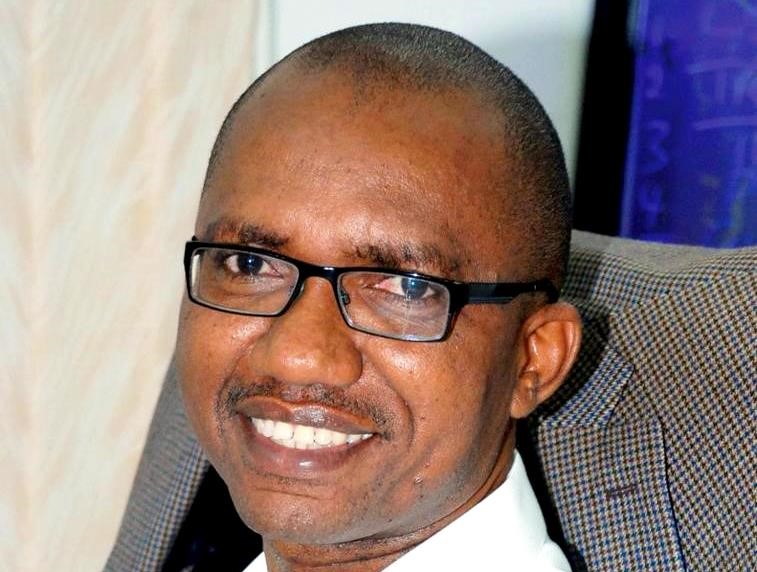
    Azu Ishiekwene

    How to drink from a poisoned cup: Harold Smith and the Nigerian story by Azu Ishiekwene

    EditorBy EditorOctober 2, 2025Updated:October 2, 2025No Comments7 Mins Read
    Azu Ishiekwene

    By Azu Ishiekwene

    On the eve of Nigeria’s 65th independence anniversary, I reflected on Harold Smith. He’s not widely known in Nigeria. And that’s probably to be expected for a man whom the British establishment ostracised for decades for daring to be different, before his death. He was everything the British colonial authorities didn’t want him to be, and he paid for it.

    But for his book, The Harold Smith Story, published by Lawless Publications four years ago, Smith would have died with the knowledge of how a promising country was sabotaged by Britain, with consequences that would last for generations.

    Sixty-five years after the Union Jack was lowered, many still speak wistfully of Nigeria’s “potential” for greatness, a potential that appears no less elusive today than it was when Smith arrived in Nigeria in 1955, fresh from Oxford and one year after he joined the British colonial office as a colonial officer.

    Gone, but alive!

    Smith is gone now. He died 14 years ago, but lived long enough to revisit Nigeria one year before the country celebrated its 50th anniversary. On that visit, he was quoted as saying, “My 20 years in Nigeria were certainly the best years of my life. Nothing I’ve done since has equalled that.”

     This article is not mainly about him, even though he would have been more than worthy. It’s about Nigeria, about how Smith’s account of his Nigerian odyssey reveals many aspects of the country that we often overlook or underestimate, but which we must confront and overcome to make progress.

    I’ll take a few of them – the system of government, the civil service, money politics, and corruption – all of which Smith covers extensively in his book, naming names and places and giving examples in many instances.

    It’s the system, stupid!

    Let’s start with the system of government. There are several accounts, of course, of how the British used and exploited indirect rule to foster division by promoting the domination of one section of the country over the other, using local rulers who were easier to manipulate. But not many of the accounts explain how this technique was implemented.

    Here, in his own words, was what Smith said about the state of affairs in what was then, broadly speaking, Northern and Southern Nigeria: “When the British invaded the Moslem North and realised that a stable feudal and authoritarian system of government was already in place, they decided to rule through the Emirs…the basic idea was that the Northern rulers could do as they pleased so long as they did not offend the British.

    “The restrictions placed on the Emirs were not as arduous, and so long as taxes were collected and there was no disorderly behaviour, the Emirs not only had a free hand but were assisted by the British administrators and, if necessary, by the force of the British army.”

    Tax and spend

    The taxes did not benefit the ordinary people; they were shared between the Emirs and the colonial authorities in such a brazen manner that, as of 1947, there was not a single secondary school in the North. Ignorance enabled feudal lordship. But as long as the Emirs and the British colonial authorities were happy, the system was preserved at all costs, including delaying self-government for as long as possible.

    When it became untenable, according to Smith, the British government went to extraordinary lengths to rig elections. “The British government determined beforehand to whom it would be handing the keys of the Nigerian kingdom. They were the rulers of the North, who had long been favoured by the British.”

    Crooked civil service

    Another point is the civil service. A common fetish is that General Murtala Muhammed’s massive purge of the civil service in 1975 is to blame for the decline. That purge had its adverse effects, no doubt, but there were others after Muhammed’s, notably in 1984 and 1999. However, it is generally believed that Nigeria’s civil service was solid and incorruptible until 1975.

    Smith’s book suggests that even though we may choose to look the other way, corruption in the civil service dates back to the colonial era, often portrayed as a time of innocence. And here, Smith names names without mincing his words.

    When it dawned on the British that the squalid legacy of colonial rule was no longer sustainable, they began to identify Nigerians to groom for leadership roles in the civil service, the backbone of the colonial administration.

    Naming names

    One of such Nigerians, according to Smith, was Francis Nwokedi, who later became permanent secretary of the Ministry of Labour and Nigeria’s foremost civil servant.

    Though Nwokedi (who would later play a significant role in Ironsi’s government) was an extraordinarily brilliant and self-assured man, Smith described him as “a stooge of the British” who not only betrayed his people during the shooting of the coal miners in Enugu but also as a conduit for the illegal funding of the National Council of Nigeria and the Cameroons (NCNC) using government funds. This practice is still rampant today.

    If complicity in politics by civil servants dates back to the 1950s, the hijacking of state resources by politicians to enrich themselves remains a persistent issue. The British could neither trust Obafemi Awolowo nor stand his independent-mindedness.

    They also suspected that, left to its own, the Northern Peoples Congress (NPC) would lose the federal election of 1959. So, they used politicians like Festus Okotie-Eboh to prop up the insolvent NCNC, whose leadership had wrecked the African Continental Bank, in an alliance with the NPC.

    This quote by Smith might interest those hoping for a clean election, with transparent party financing and an impartial electoral arbiter: “In 1956…the British government opened a conduit which saved the NCNC from bankruptcy…the extent of British philanthropy, or extortion, is revealed in the following figures. Between January 1957 and July 1960, that is the period which included the federal election of 1959, the NCNC had spent approximately £1.2 million. During the same period, its income from all resources had not exceeded £500,000.’”

    Okotie-Eboh, whose first appointment as Labour Minister was “like a child presented with the keys of a sweet shop,” sold government assets and pocketed the money without fear of a reprimand because he was as serviceable to British political interests as he was to his own. The British handed over the reins of power to a significant number of notorious politicians who, over the years, would make a fine art of notoriety.  

    That Cameron joke

    I’ve often joked that when former British Prime Minister David Cameron told President Muhammadu Buhari that Nigeria was fantastically corrupt, a good response might have been from Smith’s story. “I suppose the most corrupt act of all is colonialism itself…Why had the Governor General (of Nigeria) chosen such corrupt politicians?

    “Why did civil servants not refuse to cooperate with corrupt ministers? It was evident that the ministers could not carry out these corrupt deeds without cooperation from the civil service…It was clearly official policy to let the ministers be corrupt.”

    Of course, it’s been 65 years since, and Nigeria is only one of the over 80 percent of present-day independent countries that were colonised. How and why did other countries with a similar legacy, including India, Singapore, Brazil, and Malaysia, manage to turn things around?

    Looking forward

    Colonised countries that overcame setbacks usually did so because they had better institutions, more diversified economies, visionary leadership, and stronger social cohesion.

    In contrast, many African countries, including Nigeria, have inherited fragile states, extractive economies, and deep divisions, which have been exacerbated by global power struggles and internal governance failures. If the British handed Nigeria a poisoned cup, the flawed and bloated federal system has not helped matters.

    Yet, the Harold Smith story is not a death sentence. What we do with it might be.

    Ishiekwene is Editor-In-Chief of LEADERSHIP and author of the book Writing for Media and Monetising It.

    Editor
    • Website

    Related Posts

    A troubling message from Guinea-Bissau, by Azu Ishiekwene

    December 4, 2025

    Jeunalists must have a uniform like policemen by Uzor Maxim Uzoatu 

    December 3, 2025

    An Open Letter to Ndigbo (2): What Must Change, by Osmund Agbo

    December 3, 2025
    Editors Picks

    FirstPower electricity announces planned outage in Anambra

    December 5, 2025

    GPSDC, WACOL train journalists on GBV reporting, seek stronger collaboration

    December 5, 2025

    Rewarding ex-INEC chairman with ambassadorial role morally indefensible – Atiku 

    December 4, 2025

    Tinubu swears in Gen Musa as defence minister

    December 4, 2025
    Latest Posts
    Anambra

    FirstPower electricity announces planned outage in Anambra

    Anambra

    GPSDC, WACOL train journalists on GBV reporting, seek stronger collaboration

    National

    Rewarding ex-INEC chairman with ambassadorial role morally indefensible – Atiku 

    Subscribe to Updates

    Get the latest news from Ikenga Online.

    Advertisement
    Demo

    IkengaOnline is a publication of the Ikenga Media & Cultural Awareness Initiative (IMCAI), a non-profit organisation with offices in Houston Texas and Abuja.

    We're social. Connect with us:

    Facebook X (Twitter) Instagram YouTube LinkedIn WhatsApp RSS
    • Home
      • Igboezue
      • Hall of Fame
      • Hall of Shame
    • News
      • Other States
      • National
      • International
      • Interviews
      • Personalities
    • Abia
    • Anambra
    • Ebonyi
    • Delta
    • Enugu
    • Imo
    • Rivers
    • Politics
    • Opinion & Editorial
      • Editorial
      • Columnists
        • Osmund Agbo
        • Chido Onumah
        • Uche Ugboajah
        • Hassan Gimba
        • Edwin Madunagu
        • Rudolf Okonkwo
        • Azu Ishiekwene
        • Osita Chidoka
        • Owei Lakemfa
        • Chidi Odinkalu
      • Opinion
    • Special Reports
    • Art & Entertainment
      • Nollywood
      • Music
      • Ikengaonline Literary Series (ILS)
      • Life
      • Travels
    • Sports

    Subscribe to Updates

    Get the latest news from Ikenga Online.

    Facebook X (Twitter) Instagram LinkedIn WhatsApp RSS
    © 2025 Ikenga Online. Ikenga.

    Type above and press Enter to search. Press Esc to cancel.