
Close Menu
Ikenga Online
    What's Hot

    Medical fellowship not equivalent to PhD, FG clarifies

    March 6, 2026

    IPAC threatens 2027 election boycott over electoral act

    March 6, 2026

    Africa and the deadly dust from Iran by Azu Ishiekwene

    March 5, 2026
    Facebook X (Twitter) Instagram
    Ikenga Online
    Facebook X (Twitter) Instagram YouTube
    Donate
    • Home
      • Igboezue
      • Hall of Fame
      • Hall of Shame
    • News
      1. Other States
      2. National
      3. International
      4. Interviews
      5. Personalities
      6. View All

      Kaduna victims’ coalition demands probe of alleged abuses under El-Rufai

      February 16, 2026

      Dadiyata: Kperogi raises questions as El-Rufai, Ganduje trade allegations

      February 15, 2026

      Kole Shettima, others to be turbaned by Machina Emirate

      January 26, 2026

      APC makes it 29 governors as Yusuf defects with 22 Kano lawmakers

      January 26, 2026

      Medical fellowship not equivalent to PhD, FG clarifies

      March 6, 2026

      IPAC threatens 2027 election boycott over electoral act

      March 6, 2026

      RULAAC urges safeguards, democratic oversight in proposed state police framework

      March 5, 2026

      Just in: Tinubu nominates ‘tax man’ Taiwo Oyedele as minister of state for finance

      March 3, 2026

      A Critical review of Reparations: History, Struggle, Politics and Law, by Chido Onumah 

      March 4, 2026

      Iran strikes: US issues security alert to citizens in Nigeria, worldwide

      March 2, 2026

      Iran supreme leader, Ayatollah Ali Khamenei killed in US–Israel strikes

      March 1, 2026

      US, Israel launch attacks on Iran as explosions rock Tehran

      February 28, 2026

      Slash jumbo salaries to pay minimum wage, Bishop tells Tinubu

      June 19, 2024

      Nigeria remains a country in crisis that needs to heal – Chido Onumah

      January 24, 2024

      The Ekweremadus: Obasanjo writes UK court, seeks pardon for them

      April 5, 2023

      I’m coming with loads of experience to re-set Abia – Greg Ibe

      February 1, 2023

      Anambra-born Ugochi Nwizu shines as UNN best graduating doctor with multiple distinctions

      September 29, 2023

      Bulwark for women, girls: Meet Ikengaonline September town-hall guest speaker, Prof Joy Ezeilo

      September 27, 2023

      Rufai Oseni, the most dangerous man on Nigerian TV by Okey Ndibe

      February 13, 2023

      Stanley Macebuh: Unforgettable pathfinder of modern Nigerian journalism by Uzor Maxim Uzoatu

      February 7, 2023

      Medical fellowship not equivalent to PhD, FG clarifies

      March 6, 2026

      IPAC threatens 2027 election boycott over electoral act

      March 6, 2026

      AE-FUNAI college of medicine inducts 42 pioneer doctors

      March 5, 2026

      Varsity offers free respiratory treatment to Ebonyi rice mill workers

      March 5, 2026
    • Abia

      Abia tops climate change preparedness ranking, wins PACE commendation

      March 5, 2026

      Rights Abuse: Army warns soldiers, threatens sanctions over gambling, misconduct

      March 5, 2026

      Otti applauds Ohanaeze leadership, reaffirms support for Igbo unity, development

      March 4, 2026

      Otti flags off functionalisation of PHCs, unveils Alaukwu ward health centre

      March 4, 2026

      APC targets Abia in 2027 as Ikoh hails party unity, Tinubu’s reforms

      March 4, 2026
    • Anambra

      ALGAF: JDPC tasks fellows on project monitoring for grassroots development

      March 2, 2026

      Thousands to benefit from IDEAS-TVET project in Anambra — Prof Onyeizugbe

      February 24, 2026

      Sit-at-home: Anambra govt urges transporters to resume full operations

      February 24, 2026

      Soludo shuts down Nnewi auto parts market over sit-at-home

      February 23, 2026

      IWA, Igbo stakeholders push for enforcement of laws to strengthen Igbo language

      February 22, 2026
    • Ebonyi

      AE-FUNAI college of medicine inducts 42 pioneer doctors

      March 5, 2026

      Varsity offers free respiratory treatment to Ebonyi rice mill workers

      March 5, 2026

      Former Ebonyi deputy governor’s father kidnapped

      March 1, 2026

      Ebonyi orders contractor to stop work over substandard materials

      March 1, 2026

      Gov Nwifuru suspends two commissioners in Ebonyi

      February 28, 2026
    • Delta
    • Enugu

      Rev Father escapes death, two vigilantes killed, as gunmen invade Enugu community

      March 5, 2026

      Enugu govt takes over warehouse renovated by UNICEF, thanks donor

      March 5, 2026

      APC concludes congresses, elects new executives in Enugu

      March 4, 2026

      Enugu council boss inaugurates six solar-powered boreholes

      March 1, 2026

      Mbah urges Enugu youths to seize opportunities in technology, innovation

      February 25, 2026
    • Imo

      Disband ‘Tiger Base’ now, Igbo group petitions Gov Uzodimma

      February 25, 2026

      RULAAC urges Imo CP to probe alleged atrocities by vigilante leader in Njaba

      February 13, 2026

      Akagburuonye @ 60: Ex-Eagles stars storm Mbaise to honour humanitarian

      February 13, 2026

      RULAAC petitions Imo attorney-general over alleged torture, sexual abuse of trainee nurse

      January 25, 2026

      Reporters’ diaries: S-East governors earn praise for rural road improvements

      January 6, 2026
    • Rivers

      Aba Power breaks new ground with electricity supply to Rivers

      February 22, 2026

      Investigate Asari Dokubo over anti-Igbo rants now, IIC tells security agencies

      February 20, 2026

      Ohanaeze inaugurates committee on Igbo strategic engagement

      February 2, 2026

      Rivers assembly vows to proceed with Gov Fubara, deputy’s impeachment process 

      January 16, 2026

      Financial disagreements fuel impeachment moves against Fubara — Aide alleges

      January 16, 2026
    • Politics

      IPAC threatens 2027 election boycott over electoral act

      March 6, 2026

      APC targets Abia in 2027 as Ikoh hails party unity, Tinubu’s reforms

      March 4, 2026

      APC concludes congresses, elects new executives in Enugu

      March 4, 2026

      Digital membership register, trap set for opposition parties — ADC

      March 3, 2026

      APC dismisses ADC allegations over attack on Peter Obi, Odigie-Oyegun, others 

      February 26, 2026
    • Opinion & Editorial
      • Editorial
      • Columnists
        • Osmund Agbo
        • Chido Onumah
        • Uche Ugboajah
        • Hassan Gimba
        • Edwin Madunagu
        • Rudolf Okonkwo
        • Azu Ishiekwene
        • Osita Chidoka
        • Owei Lakemfa
        • Chidi Odinkalu
      • Opinion
    • Special Reports
    • Art & Entertainment
      • Nollywood
      • Music
      • Ikengaonline Literary Series (ILS)
      • Life
      • Travels
    • Sports
    Ikenga Online
    Home » For Nigeria, 24 million reasons to fear the future? By Chidi Anselm Odinkalu
    Chidi Odinkalu

    For Nigeria, 24 million reasons to fear the future? By Chidi Anselm Odinkalu

    EditorBy EditorOctober 5, 2025No Comments7 Mins Read
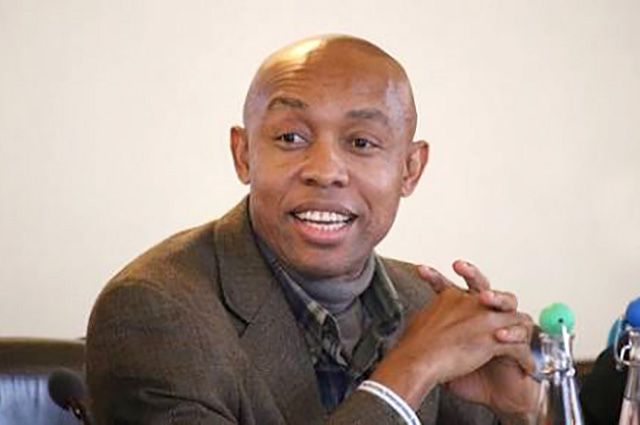
    Professor Chidi Anselm Odinkalu

    By Chidi Anselm Odinkalu

    When Olusegun Obasanjo took over in the middle of 1976 from the slain Murtala Mohammed as Nigeria’s military Head of State, the regime was already committed as a matter policy to transition power to an elected civilian administration in 1979. This was a big deal alright but not one over which he had much say as such. As military Head of State, General Obasanjo identified two issues to define his personal legacy.

    One was food security. To address that, he launched “Operation Feed the Nation,” better known by the acronym (OFN). Those were the same initials of Obasanjo Farms Nigeria, the name of the company under which the General would later pursue his post-retirement vocation in agriculture. The coincidence was not lost on many.

    The other issue was education. To pursue this, General Obasanjo launched the Universal Primary Education (UPE) in 1976. 40 years later, an independent study determined that the UPE had “a statistically significant impact on schooling attainment of beneficiaries” but there were questions as to its reach and coverage. Quite apart from the usual dysfunctions associated with centrally dictated government programmes, the UPE also faced opposition from traditional and religious leaders in some parts of Nigeria, who reportedly felt “that it is a Christian brainwashing which alienates their children from their own religious beliefs.” Those were also people who largely opposed the education of the girl-child.

    The three and a half years of the Obasanjo military regime were too short for such an ambitious programme as the UPE to prove itself. The best he could hope for was that his civilian successors would continue with the idea.

    At the launch of the UPE, the country was in the middle of what its rulers believed would be an interminable Oil Boom. In hindsight, the onset of the UPE coincided with the beginning of a bust. The programme became one of the casualties of the rampant corruption and the subsequent Austerity that bedevilled the administration of Obasanjo’s chosen successor, President Shehu Shagari.

    The military regime that toppled Shehu Shagari four years later paid no heed to basic education. Chronically careening from the twin crises of balance of payments and elite banditry of the Nigerian political class, the system never quite rediscovered the will to invest in basic education as a duty of the Nigerian state. By the time Obasanjo returned as civilian president 20 years after his first tour of duty, the country had begun to reap whirlwind from decades of costly omission.

    President Obasanjo appeared to understand this but arguably waited too long to address it. In the fifth year of his eight year tenure, he enacted the Universal Basic Education Programme (UBE), which made basic education compulsory for all children in Nigeria. Basic education under the law was defined as nine years of formal education – six years in primary school and three years of junior secondary education. It also became a federal crime to deny a child in Nigeria access to such education. To encourage uptake by the states, the Federal Government offered generous co-financing incentives to the states. Many failed to take it up.

    Two years later, in 2006, President Obasanjo launched a National Policy on Education. By this time, a diagnosis had indicated the depth of the emergency. Of 42.1 million Nigerian children eligible for primary education at the end of 2005, “only 22.3m were in the primary schools. This figure implies that about 19.8m or 47% Nigerian children that should [have] been in primary schools [were] not.”

    It is no surprise that this period coincided with the onset of what would later become an Islamist insurgency founded on an ideology opposed to Western education.

    As with his first tour of presidential duty, the policy measures implemented by President Obasanjo on his second coming equally relied for their durability on his successors sharing his sense of mission and urgency. It was a tall hope. In the two decades since Obasanjo’s National Policy on Education of 2006, successive administrations neglected it to a point where the country has become the most natural recruiting ground in the world for radicalisation.

    On Monday, 13 November, 2017, Muhammadu Buhari, another Nigerian ruler on his second tour of presidential duty, hosted a Cabinet retreat on education. Vice-President Yemi Osinbajo, himself a teacher of considerable stature and Education Minister, Adamu Adamu, also addressed the retreat which, however, involved little deliberation and ended with an inconclusive communique.

    A high point of the Buhari Cabinet retreat was the presentation of Minister Adamu Adamu’s “Education for Change: A Ministerial Strategic Plan, 2016-2019.” Launched in August 2016 and better known under the acronym MSP, its title was a play upon the “Change” mantra of the then government, and the United Nations’ Education for All campaign. If it had been launched today, the plan would probably have been called “Education for Renewed Hope”.

    At over 120 pages, most Nigerians, including senior staff of the Federal Ministry of Education (FMoE), were unlikely ever to read the MSP. In his foreword, Minister Adamu promised to “welcome rigorous discussion with all levels of stakeholders to ensure a sustainable and enduring document.” It never happened.

    The MSP offered the government’s vision for education in Nigeria, setting out three strategic outcomes namely: improving access, enhancing quality, and strengthening sectoral systems. The scope covered ten major areas. Under access, in particular, the MSP focused on out-of-school children (OOSC).

    The MSP identified a priority in the twin challenges of OOSC and mass illiteracy. The plan estimated the number of OOSC at 10.5 million and illiteracy at 38% or 60 million Nigerians. With reference to OOSC, it proposed “a state of emergency on education in the states most affected by the (Boko Haram) insurgency.” This was an implicit recognition of the relationship of cause and effect between policy failure and national security consequence.

    By 2019, the plan hoped to reduce by half the number of illiterate people in Nigeria through the deployment of 170,000 instructors, 100,000 of whom will be mobilised by the Federal Government and another 70,000 by the States. For the first time, the MSP offered a plan for a pre-primary (nursery) education curriculum. Not much has been heard of these since then.

    The pivotal planning data on which the MSP was anchored was dubious and dated. On the issue of OOSC, for instance, it claimed that Nigeria had “10.5 million out-of-school children”, a figure first used by the FMoE in its planning in 2006. Contradicting the MSP, however, President Buhari informed the country at the retreat that in Nigeria “an estimated 13.2 million children are out of school.” This was one-third more than the estimate by the MSP.

    On the back of this frightening number, President Buhari then touted the goal of the FMoE as “fostering the development of all Nigerian citizens to their full potentials, in the promotion of a strong, democratic, egalitarian, indivisible and indissoluble sovereign nation under God.”

    For all its ambition, the MSP was starkly un-costed. Instead, it proposed to increase already bloated education overheads by elevating the National Board for Arabic and Islamic Studies (NBAIS) to a parastatal. It is hardly any surprise that President Buhari’s goal of enlightened governance based on egalitarian civics came to naught.

    These and many more flaws in the MSP highlight the reasons why Nigeria’s educational sector drifted into a zone of dangerous incoherence under President Buhari’s watch. In the period since then, the country has descended into a snarling cauldron of inter-ethnic hate.

    This past week, President Obasanjo disclosed that the population of OOSC in Nigeria has nearly doubled to 24 million, which is over 10% of the country’s current population estimate. He predictably warned: “You don’t need an oracle to know they will become the recruiting ground for the Boko Haram of tomorrow.”

    Education should be a national security priority for all levels of government. States need both a coherent policy environment and a committed partner at the federal level. Yet very few Nigerians can say who the Minister of Education is, what is his or her name and what is their plan for addressing Nigeria’s 24 million reasons to fear the future.

    A lawyer and a teacher, Odinkalu can be reached at chidi.odinkalu@tufts.edu

    Editor
    • Website

    Related Posts

    Africa and the deadly dust from Iran by Azu Ishiekwene

    March 5, 2026

    Metabolism does not tolerate stagnation by Mukaila Kareem

    March 2, 2026

    From Tehran to Zamfara: The cost of abandoning diplomacy, by Cheta Nwanze 

    March 2, 2026
    Editors Picks

    Medical fellowship not equivalent to PhD, FG clarifies

    March 6, 2026

    IPAC threatens 2027 election boycott over electoral act

    March 6, 2026

    Africa and the deadly dust from Iran by Azu Ishiekwene

    March 5, 2026

    AE-FUNAI college of medicine inducts 42 pioneer doctors

    March 5, 2026
    Latest Posts
    National

    Medical fellowship not equivalent to PhD, FG clarifies

    News

    IPAC threatens 2027 election boycott over electoral act

    Azu Ishiekwene

    Africa and the deadly dust from Iran by Azu Ishiekwene

    Subscribe to Updates

    Get the latest news from Ikenga Online.

    Advertisement
    Demo

    IkengaOnline is a publication of the Ikenga Media & Cultural Awareness Initiative (IMCAI), a non-profit organisation with offices in Houston Texas and Abuja.

    We're social. Connect with us:

    Facebook X (Twitter) Instagram YouTube LinkedIn WhatsApp RSS
    • Home
      • Igboezue
      • Hall of Fame
      • Hall of Shame
    • News
      • Other States
      • National
      • International
      • Interviews
      • Personalities
    • Abia
    • Anambra
    • Ebonyi
    • Delta
    • Enugu
    • Imo
    • Rivers
    • Politics
    • Opinion & Editorial
      • Editorial
      • Columnists
        • Osmund Agbo
        • Chido Onumah
        • Uche Ugboajah
        • Hassan Gimba
        • Edwin Madunagu
        • Rudolf Okonkwo
        • Azu Ishiekwene
        • Osita Chidoka
        • Owei Lakemfa
        • Chidi Odinkalu
      • Opinion
    • Special Reports
    • Art & Entertainment
      • Nollywood
      • Music
      • Ikengaonline Literary Series (ILS)
      • Life
      • Travels
    • Sports

    Subscribe to Updates

    Get the latest news from Ikenga Online.

    Facebook X (Twitter) Instagram LinkedIn WhatsApp RSS
    © 2026 Ikenga Online. Ikenga.

    Type above and press Enter to search. Press Esc to cancel.