
Close Menu
Ikenga Online
    What's Hot

    Democracy in Name Only: Why Bother?, by Osmund Agbo

    February 11, 2026

    Why Akpabio must read the room and the mood, by Zainab Suleiman Okino

    February 11, 2026

    Know when to stop playing with fire by Obiageli “Oby” Ezekwesili 

    February 11, 2026
    Facebook X (Twitter) Instagram
    Ikenga Online
    Facebook X (Twitter) Instagram YouTube
    Donate
    • Home
      • Igboezue
      • Hall of Fame
      • Hall of Shame
    • News
      1. Other States
      2. National
      3. International
      4. Interviews
      5. Personalities
      6. View All

      Kole Shettima, others to be turbaned by Machina Emirate

      January 26, 2026

      APC makes it 29 governors as Yusuf defects with 22 Kano lawmakers

      January 26, 2026

      Abduction of 172: Soldiers blocking access to Kaduna community, rights group alleges

      January 20, 2026

      RULAAC petitions Lagos CP over alleged unlawful detention, abuse of police powers

      January 18, 2026

      PDP faults senate’s revised stance on electronic transmission, calls it ‘backdoor rejection’

      February 10, 2026

      Public pressure forced senate reversal on e-transmission of election results — ADC

      February 10, 2026

      Electoral act amendment: Amaechi joins protest with son

      February 10, 2026

      FG begins implementation of renegotiated ASUU agreement, approves 40% allowance hike

      February 10, 2026

      Banditry: US finally deploys troops to Nigeria

      February 4, 2026

      Nnamdi Kanu conferred honorary citizenship of Georgia, USA

      January 24, 2026

      US delivers military supplies to Nigeria

      January 13, 2026

      Trump vows more strikes in Nigeria if attacks on Christians persist

      January 9, 2026

      Slash jumbo salaries to pay minimum wage, Bishop tells Tinubu

      June 19, 2024

      Nigeria remains a country in crisis that needs to heal – Chido Onumah

      January 24, 2024

      The Ekweremadus: Obasanjo writes UK court, seeks pardon for them

      April 5, 2023

      I’m coming with loads of experience to re-set Abia – Greg Ibe

      February 1, 2023

      Anambra-born Ugochi Nwizu shines as UNN best graduating doctor with multiple distinctions

      September 29, 2023

      Bulwark for women, girls: Meet Ikengaonline September town-hall guest speaker, Prof Joy Ezeilo

      September 27, 2023

      Rufai Oseni, the most dangerous man on Nigerian TV by Okey Ndibe

      February 13, 2023

      Stanley Macebuh: Unforgettable pathfinder of modern Nigerian journalism by Uzor Maxim Uzoatu

      February 7, 2023

      PDP faults senate’s revised stance on electronic transmission, calls it ‘backdoor rejection’

      February 10, 2026

      Abia monarch lauds Otti for clearing leave allowance backlog, rolling out electric buses

      February 10, 2026

      Public pressure forced senate reversal on e-transmission of election results — ADC

      February 10, 2026

      Killings: Nwifuru orders Amasiri to return severed heads or face stiffer sanctions

      February 10, 2026
    • Abia

      Abia monarch lauds Otti for clearing leave allowance backlog, rolling out electric buses

      February 10, 2026

      Army discovers explosive devices in Abia forest

      February 10, 2026

      Otti to investors: Abia open for business as Aba smart city project boosts hope

      February 8, 2026

      We didn’t budget N250m for photocopier — Abia govt clarifies, blames budget error

      February 8, 2026

      APC ’ll capture Abia in 2027, Uzodimma declares, inaugurates renewed hope ambassadors

      February 7, 2026
    • Anambra

      80 Anambra students receive full scholarships for JAMB, WAEC registrations

      February 6, 2026

      CVR: INEC registers 4,423 in Anambra, calls for increased participation

      February 4, 2026

      SWAN praises Soludo’s sports investment, calls for sector reforms

      February 4, 2026

      Onitsha main market reopens after one-week shutdown by Soludo

      February 2, 2026

      Soludo reaches agreement with Onitsha market leaders, vows to rejig market security

      January 31, 2026
    • Ebonyi

      Killings: Nwifuru orders Amasiri to return severed heads or face stiffer sanctions

      February 10, 2026

      Three children stolen in Abakaliki by unidentified women

      February 8, 2026

      S’East receiving unprecedented federal attention under Tinubu – Umahi

      February 8, 2026

      Nwifuru sets three-month deadline for projects, orders rural electrification — Omebe

      February 5, 2026

      Army debunks alleged killing of two soldiers in Amasiri/Oso Edda crisis

      February 4, 2026
    • Delta
    • Enugu

      Ohanaeze: Igbo youths condemn fake news, demand investigation into threat statement

      February 8, 2026

      NBA president decries high-level of corruption among judicial officers

      February 7, 2026

      1,500 persons benefit from NAS medical outreach in Enugu community

      February 7, 2026

      NGO blames insecurity, joblessness, grassroots poverty on LGs emasculation

      February 5, 2026

      SEDC conceived for structural transformation — Shettima

      February 5, 2026
    • Imo

      RULAAC petitions Imo attorney-general over alleged torture, sexual abuse of trainee nurse

      January 25, 2026

      Reporters’ diaries: S-East governors earn praise for rural road improvements

      January 6, 2026

      Rights advocates warn of threats over tiger base accountability campaign

      December 22, 2025

      Four cheat death as Port Harcourt-bound plane crashes at Owerri airport

      December 17, 2025

      RULAAC warns of renewed #EndSARS as police abuses persist, cites Imo ‘tiger base’

      December 16, 2025
    • Rivers

      Ohanaeze inaugurates committee on Igbo strategic engagement

      February 2, 2026

      Rivers assembly vows to proceed with Gov Fubara, deputy’s impeachment process 

      January 16, 2026

      Financial disagreements fuel impeachment moves against Fubara — Aide alleges

      January 16, 2026

      The Tinubu I know will not discard Wike for Fubara — Fayose

      January 13, 2026

      APC rejects moves to impeach Gov Fubara

      January 8, 2026
    • Politics

      PDP faults senate’s revised stance on electronic transmission, calls it ‘backdoor rejection’

      February 10, 2026

      Public pressure forced senate reversal on e-transmission of election results — ADC

      February 10, 2026

      Electoral act amendment: Amaechi joins protest with son

      February 10, 2026

      Ohanaeze, PANDEF, Agbakoba, editors insist on e-transmission of election results

      February 9, 2026

      Electoral act amendment bill: Nobody can intimidate senate — Akpabio

      February 7, 2026
    • Opinion & Editorial
      • Editorial
      • Columnists
        • Osmund Agbo
        • Chido Onumah
        • Uche Ugboajah
        • Hassan Gimba
        • Edwin Madunagu
        • Rudolf Okonkwo
        • Azu Ishiekwene
        • Osita Chidoka
        • Owei Lakemfa
        • Chidi Odinkalu
      • Opinion
    • Special Reports
    • Art & Entertainment
      • Nollywood
      • Music
      • Ikengaonline Literary Series (ILS)
      • Life
      • Travels
    • Sports
    Ikenga Online
    Home » Concerning courts of electoral kleptocracy by Chidi Anselm Odinkalu
    Chidi Odinkalu

    Concerning courts of electoral kleptocracy by Chidi Anselm Odinkalu

    EditorBy EditorNovember 12, 2023No Comments7 Mins Read
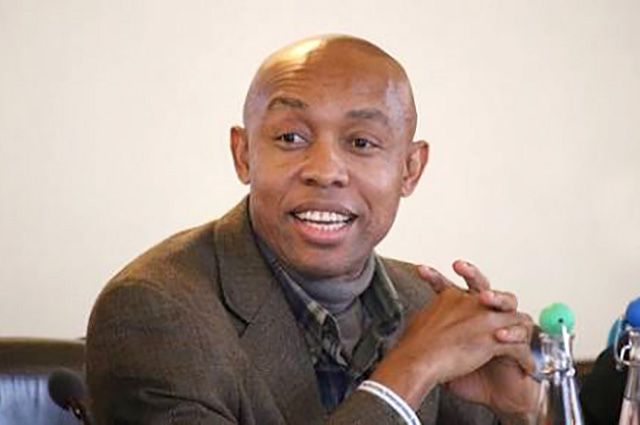
    Professor Chidi Anselm Odinkalu

    By Chidi Anselm Odinkalu

    In 1968, Stanislav Andrzejewski, the former Polish soldier and prisoner-of-war, who later founded the Sociology Department at the University of Reading in England, coined the word ‘kleptocracy,” which he defined as “a system of government (that) consists precisely of the practice of selling what the law forbids to sell.” He saw in the system of Nigeria’s First Republic, “the most perfect example of a kleptocracy” in which “power rested on the ability to bribe.”

    According to Andrzejewski, the defining characteristic of a kleptocracy “is that the functioning of the organs of authority is determined by the mechanisms of supply and demand rather than the laws and regulations.”

    In a democracy, there are two things access to which should not be determined by the economic laws of buying and selling. One is the legitimacy of government; the other is the authority of the courts in the administration of justice. Today in Nigeria, however, the authority to govern is conferred not by the people but by the courts and, for the most part, we now know that the decision as to whom the judges decide to confer the mandate in most cases is traded, bought, and sold.

    To be sure, courts always have a legitimate role in the democratic process and this was so well before Nigeria embarked on the experiment in presidential politics. The electoral process everywhere is established by law and the courts exist to interpret law. Ideally, the rules that govern elections should be determinate and determined by the courts while the outcome of elections should be indeterminate until the votes are cast. In Nigeria, however, the cone has been inverted so that the courts ensure that the rules are indeterminate, in order that the outcomes can be pre-determined.

    This outcome has been achieved by judicial overreach resulting in a jurisprudence of kleptocracy. The four major landmarks in the evolution of this outcome occurred in cases arising from Anambra, Rivers, Zamfara, and Imo States.

    First, the Courts granted themselves the powers of an electoral umpire to add and subtract votes in order to pick, choose, and determine who was declared winner in elections. A defining landmark in this trajectory was the decision by the Court of Appeal in March 2006 rightfully striking down the declaration of Dr. Chris Ngige in the 2003 as the Governor of Anambra State. In its judgment, the Court re-computed the numbers declared by the Independent National Electoral Commission (INEC), and found that Peter Obi had actually won the election. On the facts, the judgment looked unimpeachable. No one could question the powers of the courts to strike down an outcome procured by electoral debauchery. What this case also did was to establish that the courts could compute electoral arithmetic with greater finality than the INEC. The courts were to exercise this power subsequently in governorship elections in Ondo, Ekiti, and Edo ostensibly to check a perception of habitual abuse of the electoral process by the then ruling Peoples Democratic Party, (PDP).

    Next, in October 2007, the Supreme Court determined in the case involving the governorship election in Rivers State that a person could be elected as Governor even when his name was not on the ballot. In that case, the then ruling party had arbitrarily replaced the winner of its governorship primaries with a loser in the primaries and acted in defiance of a court order. The Supreme Court struck down the substitution but, in a poorly reasoned fit of judicial pique, went further to say that a person who was not on the ballot actually won the election. To justify this, the court claimed that it was political parties alone who ran for office in Nigeria and not candidates. In so doing, the court established a dubious principle that candidates do not matter in Nigeria’s version of elective politics. Judicial kleptocracy was about to take off on a horse girdled with good intentions.

    If the interventions of the courts in Anambra and then in Rivers appeared well-intentioned on the facts, the next two were evidence of courts amok. In May 2019, the Supreme Court ruled to confer the mandate to govern Zamfara State in North-west Nigeria on a man who had been hopelessly beaten into second position, losing in every local government area in the state. It held that the votes of the winning candidate were “wasted votes” because of some pre-election infraction. Now, votes are the only currency of an electoral process and a judiciary committed to upholding the people as the source of legitimacy in a democracy will not venture a jurisprudence that consigns any votes to the dust-bin but that is exactly what the Supremes ordered. So, today, Nigerian courts – many induced by material benefit – talk about “wasted votes” with undisguised glee.

    Then, in January 2020, the Supreme Court nullified the election of Emeka Ihedioha as governor of Imo State, replacing him with a man who had been well beaten to fourth place in the election and substituting the computation of the INEC in that case with that of a rogue police officer who claimed to have the true results of the ballot. Miraculously, these rogue results just happened not to have been available to any other except the person for whom six Justices of the Supreme Court (none of whom was registered to vote in Imo State) cast their votes. In this decision, the Supreme Court effectively ruled that when it suits them, the courts could usurp or retrench the INEC as electoral umpire.

    So, according to Nigerian courts, you can undertake an election without candidates; administer an election without INEC; and produce winners without votes. Acknowledging the extent of the resulting judicial overreach, former Vice-Chairman (North-West) of the ruling All Progressives Congress (APC), Salihu Lukman, describes Nigeria as a place in which “citizens can vote but winners are decided in the courtroom by conclaves of Judges.” In 2011, for instance, Alphonsus Igbeke who had never won an election, secured a court order returning him to the National Assembly for the third successive election cycle. On each occasion, he had worked with judges to send him to the National Assembly without any need for the votes of citizens. It was all transparent electoral kleptocracy perpetrated by judges.

    The role of adjudicating election petitions has, therefore, become a very prized one in the judicial system. Judges lobby to be put on them. There, many of them indulge in trading in electoral outcomes and getting in bed with politicians and political parties.

    Recent results from the election petition tribunals present a confetti of decisions that simply cannot be explained rationally except with reference to a jurisprudence of buying and selling judgments. There have been clear instances of judicial kleptocracy in Abia State, for instance.

    But perhaps the state that evokes the greatest attention by far is Plateau State, where there appears to be a clear judicial design to overturn the will of the people and re-assign their mandate to candidates and parties for whom they did not vote. It could be entirely coincidental that the President of the Court of Appeal who oversees election petitions just happens also to come from the state.

    There will be time to take a deeper dive into these outcomes sometime soon. What seems evident right now is that through a series of jurisprudential manouvres over the past decade and a half, Nigeria’s courts have become places where, to hark back to Stanislav Andrzejewski, the two things that no one should sell – electoral legitimacy and judicial authority – are now bought and sold in the courts.

    A lawyer and a teacher, Odinkalu can be reached at chidi.odinkalu@tufts.edu 

    Editor
    • Website

    Related Posts

    Democracy in Name Only: Why Bother?, by Osmund Agbo

    February 11, 2026

    Why Akpabio must read the room and the mood, by Zainab Suleiman Okino

    February 11, 2026

    Know when to stop playing with fire by Obiageli “Oby” Ezekwesili 

    February 11, 2026
    Editors Picks

    Democracy in Name Only: Why Bother?, by Osmund Agbo

    February 11, 2026

    Why Akpabio must read the room and the mood, by Zainab Suleiman Okino

    February 11, 2026

    Know when to stop playing with fire by Obiageli “Oby” Ezekwesili 

    February 11, 2026

    PDP faults senate’s revised stance on electronic transmission, calls it ‘backdoor rejection’

    February 10, 2026
    Latest Posts
    Columnists

    Democracy in Name Only: Why Bother?, by Osmund Agbo

    Columnists

    Why Akpabio must read the room and the mood, by Zainab Suleiman Okino

    Columnists

    Know when to stop playing with fire by Obiageli “Oby” Ezekwesili 

    Subscribe to Updates

    Get the latest news from Ikenga Online.

    Advertisement
    Demo

    IkengaOnline is a publication of the Ikenga Media & Cultural Awareness Initiative (IMCAI), a non-profit organisation with offices in Houston Texas and Abuja.

    We're social. Connect with us:

    Facebook X (Twitter) Instagram YouTube LinkedIn WhatsApp RSS
    • Home
      • Igboezue
      • Hall of Fame
      • Hall of Shame
    • News
      • Other States
      • National
      • International
      • Interviews
      • Personalities
    • Abia
    • Anambra
    • Ebonyi
    • Delta
    • Enugu
    • Imo
    • Rivers
    • Politics
    • Opinion & Editorial
      • Editorial
      • Columnists
        • Osmund Agbo
        • Chido Onumah
        • Uche Ugboajah
        • Hassan Gimba
        • Edwin Madunagu
        • Rudolf Okonkwo
        • Azu Ishiekwene
        • Osita Chidoka
        • Owei Lakemfa
        • Chidi Odinkalu
      • Opinion
    • Special Reports
    • Art & Entertainment
      • Nollywood
      • Music
      • Ikengaonline Literary Series (ILS)
      • Life
      • Travels
    • Sports

    Subscribe to Updates

    Get the latest news from Ikenga Online.

    Facebook X (Twitter) Instagram LinkedIn WhatsApp RSS
    © 2026 Ikenga Online. Ikenga.

    Type above and press Enter to search. Press Esc to cancel.