
Close Menu
Ikenga Online
    What's Hot

    Africa and the deadly dust from Iran by Azu Ishiekwene

    March 5, 2026

    AE-FUNAI college of medicine inducts 42 pioneer doctors

    March 5, 2026

    Varsity offers free respiratory treatment to Ebonyi rice mill workers

    March 5, 2026
    Facebook X (Twitter) Instagram
    Ikenga Online
    Facebook X (Twitter) Instagram YouTube
    Donate
    • Home
      • Igboezue
      • Hall of Fame
      • Hall of Shame
    • News
      1. Other States
      2. National
      3. International
      4. Interviews
      5. Personalities
      6. View All

      Kaduna victims’ coalition demands probe of alleged abuses under El-Rufai

      February 16, 2026

      Dadiyata: Kperogi raises questions as El-Rufai, Ganduje trade allegations

      February 15, 2026

      Kole Shettima, others to be turbaned by Machina Emirate

      January 26, 2026

      APC makes it 29 governors as Yusuf defects with 22 Kano lawmakers

      January 26, 2026

      RULAAC urges safeguards, democratic oversight in proposed state police framework

      March 5, 2026

      Just in: Tinubu nominates ‘tax man’ Taiwo Oyedele as minister of state for finance

      March 3, 2026

      ICPC confirms seized items from El-Rufai’s residence

      March 3, 2026

      Digital membership register, trap set for opposition parties — ADC

      March 3, 2026

      A Critical review of Reparations: History, Struggle, Politics and Law, by Chido Onumah 

      March 4, 2026

      Iran strikes: US issues security alert to citizens in Nigeria, worldwide

      March 2, 2026

      Iran supreme leader, Ayatollah Ali Khamenei killed in US–Israel strikes

      March 1, 2026

      US, Israel launch attacks on Iran as explosions rock Tehran

      February 28, 2026

      Slash jumbo salaries to pay minimum wage, Bishop tells Tinubu

      June 19, 2024

      Nigeria remains a country in crisis that needs to heal – Chido Onumah

      January 24, 2024

      The Ekweremadus: Obasanjo writes UK court, seeks pardon for them

      April 5, 2023

      I’m coming with loads of experience to re-set Abia – Greg Ibe

      February 1, 2023

      Anambra-born Ugochi Nwizu shines as UNN best graduating doctor with multiple distinctions

      September 29, 2023

      Bulwark for women, girls: Meet Ikengaonline September town-hall guest speaker, Prof Joy Ezeilo

      September 27, 2023

      Rufai Oseni, the most dangerous man on Nigerian TV by Okey Ndibe

      February 13, 2023

      Stanley Macebuh: Unforgettable pathfinder of modern Nigerian journalism by Uzor Maxim Uzoatu

      February 7, 2023

      AE-FUNAI college of medicine inducts 42 pioneer doctors

      March 5, 2026

      Varsity offers free respiratory treatment to Ebonyi rice mill workers

      March 5, 2026

      RULAAC urges safeguards, democratic oversight in proposed state police framework

      March 5, 2026

      Rev Father escapes death, two vigilantes killed, as gunmen invade Enugu community

      March 5, 2026
    • Abia

      Abia tops climate change preparedness ranking, wins PACE commendation

      March 5, 2026

      Rights Abuse: Army warns soldiers, threatens sanctions over gambling, misconduct

      March 5, 2026

      Otti applauds Ohanaeze leadership, reaffirms support for Igbo unity, development

      March 4, 2026

      Otti flags off functionalisation of PHCs, unveils Alaukwu ward health centre

      March 4, 2026

      APC targets Abia in 2027 as Ikoh hails party unity, Tinubu’s reforms

      March 4, 2026
    • Anambra

      ALGAF: JDPC tasks fellows on project monitoring for grassroots development

      March 2, 2026

      Thousands to benefit from IDEAS-TVET project in Anambra — Prof Onyeizugbe

      February 24, 2026

      Sit-at-home: Anambra govt urges transporters to resume full operations

      February 24, 2026

      Soludo shuts down Nnewi auto parts market over sit-at-home

      February 23, 2026

      IWA, Igbo stakeholders push for enforcement of laws to strengthen Igbo language

      February 22, 2026
    • Ebonyi

      AE-FUNAI college of medicine inducts 42 pioneer doctors

      March 5, 2026

      Varsity offers free respiratory treatment to Ebonyi rice mill workers

      March 5, 2026

      Former Ebonyi deputy governor’s father kidnapped

      March 1, 2026

      Ebonyi orders contractor to stop work over substandard materials

      March 1, 2026

      Gov Nwifuru suspends two commissioners in Ebonyi

      February 28, 2026
    • Delta
    • Enugu

      Rev Father escapes death, two vigilantes killed, as gunmen invade Enugu community

      March 5, 2026

      Enugu govt takes over warehouse renovated by UNICEF, thanks donor

      March 5, 2026

      APC concludes congresses, elects new executives in Enugu

      March 4, 2026

      Enugu council boss inaugurates six solar-powered boreholes

      March 1, 2026

      Mbah urges Enugu youths to seize opportunities in technology, innovation

      February 25, 2026
    • Imo

      Disband ‘Tiger Base’ now, Igbo group petitions Gov Uzodimma

      February 25, 2026

      RULAAC urges Imo CP to probe alleged atrocities by vigilante leader in Njaba

      February 13, 2026

      Akagburuonye @ 60: Ex-Eagles stars storm Mbaise to honour humanitarian

      February 13, 2026

      RULAAC petitions Imo attorney-general over alleged torture, sexual abuse of trainee nurse

      January 25, 2026

      Reporters’ diaries: S-East governors earn praise for rural road improvements

      January 6, 2026
    • Rivers

      Aba Power breaks new ground with electricity supply to Rivers

      February 22, 2026

      Investigate Asari Dokubo over anti-Igbo rants now, IIC tells security agencies

      February 20, 2026

      Ohanaeze inaugurates committee on Igbo strategic engagement

      February 2, 2026

      Rivers assembly vows to proceed with Gov Fubara, deputy’s impeachment process 

      January 16, 2026

      Financial disagreements fuel impeachment moves against Fubara — Aide alleges

      January 16, 2026
    • Politics

      APC targets Abia in 2027 as Ikoh hails party unity, Tinubu’s reforms

      March 4, 2026

      APC concludes congresses, elects new executives in Enugu

      March 4, 2026

      Digital membership register, trap set for opposition parties — ADC

      March 3, 2026

      APC dismisses ADC allegations over attack on Peter Obi, Odigie-Oyegun, others 

      February 26, 2026

      NJF calls for justice, equity, fair play in replacement of Okey Ezea

      February 23, 2026
    • Opinion & Editorial
      • Editorial
      • Columnists
        • Osmund Agbo
        • Chido Onumah
        • Uche Ugboajah
        • Hassan Gimba
        • Edwin Madunagu
        • Rudolf Okonkwo
        • Azu Ishiekwene
        • Osita Chidoka
        • Owei Lakemfa
        • Chidi Odinkalu
      • Opinion
    • Special Reports
    • Art & Entertainment
      • Nollywood
      • Music
      • Ikengaonline Literary Series (ILS)
      • Life
      • Travels
    • Sports
    Ikenga Online
    Home » Police state or state police? By Chidi Anselm Odinkalu
    Chidi Odinkalu

    Police state or state police? By Chidi Anselm Odinkalu

    EditorBy EditorDecember 7, 2025No Comments7 Mins Read
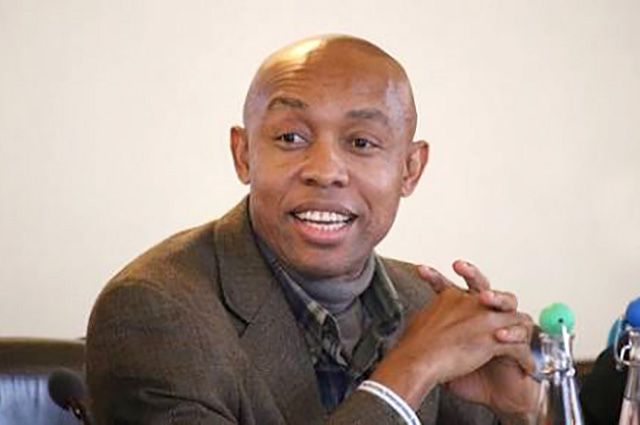
    Professor Chidi Anselm Odinkalu

    By Chidi Anselm Odinkalu

    On 26 November 2025, Nigeria’s president, Bola Ahmed Tinubu, announced in a statement personally signed by him that he had “decided to declare a nationwide security emergency” to be accompanied by some measures, including the recruitment by the Nigeria Police Force (NPF) and the Armed Forces of 20,000 and 50,000 new personnel respectively. In the fortnight preceding the announcement, a flurry of frightening terror incidents had created among populations and communities around the country a heightened state of fear. It also reinforced the perception of a normalisation of insecurity and of the traumas associated with it. 

    Yet, the text and terms of the president’s announcement were odd, to say the least. 

    Nigeria’s 1999 Constitution empowers the president to declare or proclaim a “state of emergency.”  Under the terms of the Constitution, an emergency proclamation is time-bound (for an initial period of not more than six months) and must be confirmed by a joint resolution of a qualified majority of both chambers of the National Assembly within 48 hours of the proclamation. 

    The predicate conditions for the proclamation of a state of emergency in Nigeria under Section 305(3) of the constitution are that the country is at war or in imminent danger of invasion or of entering into a war or suffering from a breakdown of public order and safety or in imminent danger of such breakdown. The flood of casualties would seem to suggest that the predicate condition of a country at war exists. 

    Apart from thousands killed and many more unaccounted for, reports of  7,568 people abducted in 1,130 incidents across the country in just one year between July 2023 to June 2024 suggest also that there is significant breakdown in public safety. However, the president was unwilling to cite any of these as grounds for his action, probably because it would represent an admission of how bad things have become under his watch.

    Moreover, a formal acknowledgement of the existence of an armed conflict would entail the application of the norms of international humanitarian law under the Geneva Conventions Act, which could lead to the recognition as belligerents the motley crowd of insurgent groups presently afflicting the country. That is considered a step too far for a country that has already survived a brutal civil war from July 1967 to January 1970.

    Howsoever it is looked at, this “nationwide security emergency” declared by President Tinubu does not sound like the “state of emergency” authorised by the constitution. The use of “emergency” to describe the measures announced by the president was artful, designed to create the public impression that the administration was at last waking up to its primary responsibility to assure the safety and security of all who live in Nigeria. In reality, none of the measures announced by the president requires the existence of an emergency for their accomplishment nor does it make sense why the administration had to wait until now to consider them for implementation. Moreover, the so-called “emergency” is open-ended. It is not hedged by duration and there has been no effort to take it before the National Assembly.

    In an innocuous insertion in the announcement, however, the president invites “the National Assembly to begin reviewing our laws to allow states that require state police to establish them.” In this sentence, President Tinubu commits the sleight of hand of suggesting that “state police” will be merely optional only for those states who want it. Of course, he knew better than even suggest that. 

    State police has become a very emotive expression in Nigeria’s political and security lexicon. Politicians who cannot be bothered to do the most basic of things to protect their people somehow create the impression that they could have accomplished that and more if only they had the magic wand of state police. The evidence to the contrary is very stark and conveniently buried. 

    First, the record of state security initiatives has been very abysmal. Native Authority policing was abolished following the onset of military rule in 1966 because of the tendency to make them instruments of decentralised despotism. Writing in 2018, pioneer post-colonial public servant, Ahmed Joda, recalled the record of the Native Authority Police: “first generation pioneer opposition politicians of the forties and fifties and up to the end of the civilian era in 1966 experienced hell…. Many of them, especially at election times were simply rounded up at rallies, walked to the Native Authority courts, promptly convicted and sent to another Native Authority institution: the Native Authority Prison for long enough periods to take them out for the election period and render political opposition prostrate. Some were simply abducted and disappeared for the period of the elections.” There is nothing to suggest that State police this time will be any less despotic. On the contrary, the omens indicate that it could be worse. 

    Second, when he introduced Islamic criminal law of Huddud (crimes against God) into Zamfara State at the beginning of a wave of Sharia insertion into north-west Nigeria in October 1999, then governor, Sani Yerima, justified it with reference to the need to upgrade public safety and security in the state. Despite his best spin, public safety and security in Zamfara State did not get better. Instead, it has disintegrated. 

    Zamfara State was far from the only state to experience this trend. In the Middle Belt, Benue State adopted a vigilante law in 2000, creating armed volunteer guards supposedly to enhance the protection of the state. Far from enhancing safety and security in Benue, the State turned into a haven of insecurity. Around the same time, Anambra State in the South-East launched its own Anambra Vigilante Service (AVS) under cover of state law in 2000. Under that law, then Governor Chinwoke Mbadinuju claimed authority to invite and establish the Bakassi as an armed, anti-crime vigilante in the state. Anyone who wants to understand how insecurity subsequently prospered in South-East Nigeria must return to the origins of the story in the atrocity-with-impunity franchise that the Bakassi became. 

    Third, when it reported to the presidency in August 2012, the Parry Osayande Presidential Committee on Police Reform recommended quite strongly against the clamour for State police. At the submission of the report, the Chairperson of the Committee, Parry Osayande, a former Deputy Inspector-General of Police, feared that the country lacked the institutional wherewithal to oversight, train, or professionalise a proliferation of armed police units across the country. He recommended effective de-centralisation of the existing NPF “with effective participation of state governors; financial autonomy and better professionalism for the police.” Six years later, Ahmed Joda supported “the need to decentralise our policing system.”

    The question now is how to achieve that goal.

    The political fad of today appears to be that the answer lies in State Police. Many people will argue that any opposition to this idea, first, reflects path-dependency; and second, that the times have changed and require that the country should explore the idea. Third, advocates of “true federalism” also denounce any opposition to state police, even when they are not able to tell anyone what exactly makes their version of federalism any truer than the next.

    The times may have changed certainly but not necessarily for the better. If anything, the reluctance and caution sounded by Parry Osayande 13 years ago is even more resounding today in a context of corroded democratic controls and multi-dimensional impunity.

    State police will not be served a la carte nor will it be a matter of variable geometry. Every state governor will see it as a necessary accessory of power. It will not be reserved to only governors who understand the idea of constrained power. Those who enjoy abuse of power will be the first to acquire it, not to advance security but to visit insecurity on their political enemies. 

    So, in addition to the very challenged NPF which the country struggles with today, we will have 37 more, one for each state and another for the FCT. Each will function under the control of the governor and will be armed by their gubernatorial patrons. This is not state police. Instead, it could be a recipe for a de-centralised police state with no hope of relief. In their enthusiasm, advocates of State police offer no safeguards against this danger.

    A lawyer & a teacher, Odinkalu can be reached at chidi.odinkalu@tufts.edu 

    Editor
    • Website

    Related Posts

    Africa and the deadly dust from Iran by Azu Ishiekwene

    March 5, 2026

    Metabolism does not tolerate stagnation by Mukaila Kareem

    March 2, 2026

    From Tehran to Zamfara: The cost of abandoning diplomacy, by Cheta Nwanze 

    March 2, 2026
    Editors Picks

    Africa and the deadly dust from Iran by Azu Ishiekwene

    March 5, 2026

    AE-FUNAI college of medicine inducts 42 pioneer doctors

    March 5, 2026

    Varsity offers free respiratory treatment to Ebonyi rice mill workers

    March 5, 2026

    RULAAC urges safeguards, democratic oversight in proposed state police framework

    March 5, 2026
    Latest Posts
    Azu Ishiekwene

    Africa and the deadly dust from Iran by Azu Ishiekwene

    Ebonyi

    AE-FUNAI college of medicine inducts 42 pioneer doctors

    Ebonyi

    Varsity offers free respiratory treatment to Ebonyi rice mill workers

    Subscribe to Updates

    Get the latest news from Ikenga Online.

    Advertisement
    Demo

    IkengaOnline is a publication of the Ikenga Media & Cultural Awareness Initiative (IMCAI), a non-profit organisation with offices in Houston Texas and Abuja.

    We're social. Connect with us:

    Facebook X (Twitter) Instagram YouTube LinkedIn WhatsApp RSS
    • Home
      • Igboezue
      • Hall of Fame
      • Hall of Shame
    • News
      • Other States
      • National
      • International
      • Interviews
      • Personalities
    • Abia
    • Anambra
    • Ebonyi
    • Delta
    • Enugu
    • Imo
    • Rivers
    • Politics
    • Opinion & Editorial
      • Editorial
      • Columnists
        • Osmund Agbo
        • Chido Onumah
        • Uche Ugboajah
        • Hassan Gimba
        • Edwin Madunagu
        • Rudolf Okonkwo
        • Azu Ishiekwene
        • Osita Chidoka
        • Owei Lakemfa
        • Chidi Odinkalu
      • Opinion
    • Special Reports
    • Art & Entertainment
      • Nollywood
      • Music
      • Ikengaonline Literary Series (ILS)
      • Life
      • Travels
    • Sports

    Subscribe to Updates

    Get the latest news from Ikenga Online.

    Facebook X (Twitter) Instagram LinkedIn WhatsApp RSS
    © 2026 Ikenga Online. Ikenga.

    Type above and press Enter to search. Press Esc to cancel.