

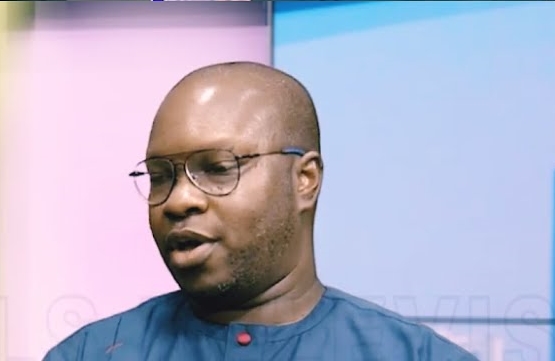
By Cheta Nwanze
The same “Trump Corollary” that justifies intervention in Latin America against “drug cartels” and “illegal migration” can, with chilling ease, be retrofitted to our context. When our multifaceted security crisis is persistently framed in certain Western capitals through a simplistic lens of religious persecution, the groundwork for a similar “humanitarian” or “law enforcement” justification is already being laid.
The events of the past weeks have presented the world with a stark and unsettling new reality. The United States’ military invasion of Venezuela and the capture of its president, Nicolás Maduro, under the novel justification of executing a domestic arrest warrant, is not merely an escalation in a bilateral feud. It is the violent enactment of a doctrine, one formally outlined in the 2025 National Security Strategy, that privileges unilateral force and hemispheric dominance over the crumbling edifice of international law. While global attention fixates on Caracas, we in Nigeria and across West Africa must recognise this action for what it truly is: a direct and menacing precedent that casts a long shadow over our own future.
The core of this new American doctrine is a transactional and brutal reinterpretation of sovereignty. By asserting the right to remove a foreign leader because he stands accused of crimes in an American courtroom, Washington has effectively declared that the sovereignty of nations it deems problematic is conditional. This is a catastrophic shift. For countries like Nigeria, which, like Venezuela, have a complex profile of being resource-rich yet burdened by poverty, security challenges, and persistent governance tensions, the analogy is not academic; it is an existential risk assessment. The same “Trump Corollary” that justifies intervention in Latin America against “drug cartels” and “illegal migration” can, with chilling ease, be retrofitted to our context. When our multifaceted security crisis is persistently framed in certain Western capitals through a simplistic lens of religious persecution, the groundwork for a similar “humanitarian” or “law enforcement” justification is already being laid.
The Christmas Day airstrikes in Sokoto, which our government approved as a counter-terrorism measure, now appear in a more ominous light. They were a demonstration of capability and a test of boundaries. While officially coordinated, the American political framing, the glib characterisation of lethal force as a “Christmas present,” revealed the underlying dynamic. Our territory and our security challenges became a backdrop for another nation’s domestic political narrative. This is the essence of the transactional alliance model now in vogue in Washington: cooperation exists only so long as it serves a narrowly defined American interest, and the narrative is controlled from afar. It is a partnership of profound asymmetry.
The implications for West Africa are profound and destabilising. First, it introduces a paralysing variable into our economic stability. Investment is a creature of predictability. What large-scale, long-term capital will commit to the oil fields of the Niger Delta or the mineral deposits of the Sahel if the ultimate sovereign risk is no longer just local instability, but the potential for a foreign power to invoke a new doctrine and intervene militarily? The flight of capital and the suffocation of development would be immediate consequences, plunging already fragile economies into deeper crisis.
Second, it threatens to fragment our hard-won, if imperfect, regional security architecture. The American retreat from a posture of global leadership to one of blunt unilateralism forces a brutal calculus upon every nation. The pressure for West African states to individually “choose a side” in a new, fragmented world order will intensify, potentially splitting ECOWAS and turning our shared security threats into proxy battlegrounds. Our collective sovereignty, our greatest asset in a turbulent world, would be the first casualty.
Finally, the Venezuela precedent serves as a green light to every other revisionist power. If the principal architect of the post-war order so flagrantly dismantles the rules, then why should Russia, China, or even regional aggressors exercise restraint? We will find ourselves navigating a world where might makes right, a world uniquely dangerous for continents like Africa, historically caught in the crossfire of great power ambition.
The path forward demands a clear-eyed and urgent reassessment. We must move beyond a foreign policy of reaction and pleading. The imperative is to actively diversify our economic and security partnerships, to strengthen regional integration with concrete, sovereign purpose, and to articulate a vision of our national interests that is impervious to external bullying or co-option. The United States has revealed its new hand, one that holds a missile rather than a rulebook. For Nigeria and West Africa, the task now is to build a hand strong enough and smart enough to ensure we never have to play by its devastating rules. Our future as sovereign states depends on it.
Nwanze is a partner at SBM Intelligence, a geopolitical risk advisory.
