

By Chido Onumah
If a single idea has guided the work of the African Centre for Media and Information Literacy (AFRICMIL) over the past years, it is this simple truth: a nation cannot win the war against corruption by sacrificing its most courageous citizens along the way.
The whistleblower is not an inconvenience to governance. He or she is its essential early warning system. And yet, nearly a decade after Nigeria introduced a whistleblower policy, the country still operates without the one safeguard that makes integrity sustainable: a clear, enforceable law that protects those who speak up.
In 2025, AFRICMIL made a deliberate pivot. We moved from managing the consequences of this gap to strengthening the architecture that must eventually close it. Individual case interventions remained central to our work, but the focus widened. This became a year of institutional engagement, judicial preparation, and evidence building. A year spent laying the intellectual and legal groundwork for a system that can outlive goodwill and survive political seasons.
At the heart of this shift was a recognition that laws do not operate in isolation. They are interpreted, enforced, and animated by institutions and people. Chief among them is the judiciary.
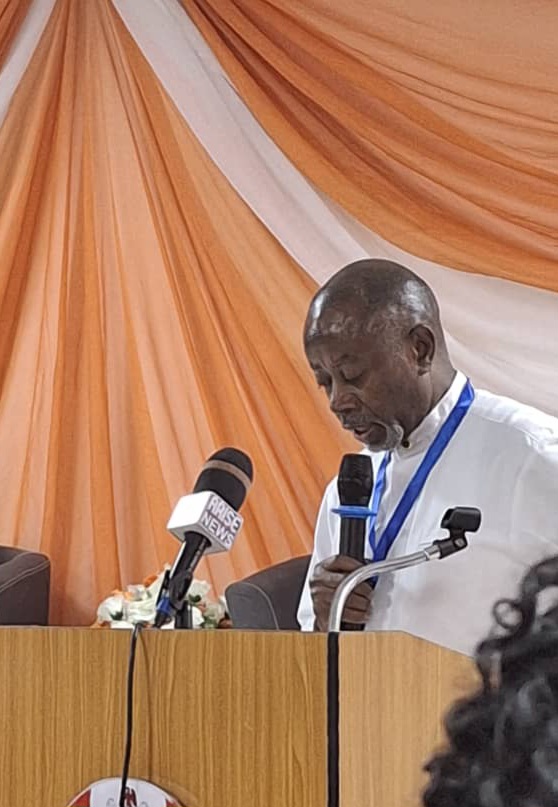
That understanding informed last September’s National Interactive Forum for Judges on Whistleblowing and Whistleblower Protection held in Abuja. It was convened in partnership with the National Human Rights Commission (NHRC), TAP Initiative, Progressive Impact Organisation for Community Development (PRIMORG), and Centre for Fiscal Transparency and Public Integrity (CeFTPI), and supported by the Platform to Protect Whistleblowers in Africa (PPLAAF), Whistleblowing International Network (WIN), MacArthur Foundation, and the Independent Corrupt Practices and Other Related Offences Commission (ICPC).
Federal High Court judges gathered not for ceremony, but for a candid exchange on the dilemmas that whistleblowing presents to modern jurisprudence. Questions of anonymity, retaliation, national security, and the balance between transparency and due process were confronted head on.
It was evident at the forum that the effectiveness of whistleblower protection will ultimately be determined by the courts. Preparing the judiciary is therefore not an auxiliary task. It is foundational. When a comprehensive law eventually emerges, it must meet a bench that is already conversant with its logic and committed to its spirit. The forum was an exercise in institutional readiness, the kind of quiet work that rarely makes headlines but determines long-term outcomes.
This institutional engagement was reinforced by rigorous research. Our nationwide survey in 2021 examining five years of Nigeria’s whistleblowing policy offered a sobering diagnosis. Awareness of the policy is widespread. Confidence in it is not. Nearly three-quarters of respondents reported that they had stopped reporting corruption altogether. Fear of retaliation and scepticism about state protection dominated their responses.
The data did not tell a new story. It confirmed, with empirical clarity, what years of casework have shown. A policy without legal backing creates exposure rather than protection. It asks citizens to be brave while leaving them legally exposed. In that sense, the survey was not merely a research exercise. It became an advocacy instrument, anchoring public conversation in evidence and shifting debate from anecdotes to systemic failure.
Behind these numbers lie real people. The human cost of Nigeria’s legal vacuum remains the moral centre of AFRICMIL’s work. The experiences of courageous Nigerians like Aaron Kaase, Murtala Ibrahim, Ntia Thompson, Joseph Akeju, Sambo Abdullahi, Joseph Ameh, Yisa Usman, Abiodun Thomas, Abraham Taiwo, and others illustrate the price of integrity in a system that lacks protective muscle. Each exposed large-scale wrongdoing. Each paid with suspension, seizure of salary, dismissal, or professional exile. Their partial victories in court speak more to personal resilience than to institutional justice.
These are not isolated tragedies. They are symptoms of a framework that deters honesty while emboldening misconduct. Their courage explains why AFRICMIL insists that whistleblower protection is not a favour to individuals. It is a structural necessity for governance.
Our work in the past years also recognised that corruption does not respect borders, and neither should reform. Through the Whistleblowing Advocacy Coalition of West Africa (WACOWA), launched in 2024, AFRICMIL continued to nurture a subregional platform for learning, coordination, and standard setting. Countries such as Ghana and Senegal, which have enacted whistleblower protection laws, offer lessons that can inform Nigeria’s journey, just as Nigeria’s struggles offer cautionary insights to its neighbours.
This regional outlook was complemented by our engagement with broader governance questions. Our First Sub-Regional Conference on Whistleblowing and Whistleblower Protection in West Africa in November 2024, with the theme “Reducing Corruption in West Africa: The Importance of Whistleblowing and Whistleblower Protection Legislations,” touched on issues around economic policymaking for equitable growth and social inclusion, interrogating the links between anti-corruption, citizen welfare, and economic justice. Corruption is not an abstract moral failing. It is a daily tax on opportunity, health, and social trust. Policies that ignore citizen wellbeing cannot be sustainable, no matter how technically sound they appear.
Taken together, AFRICMIL’s past interventions were not isolated activities. They formed a coherent strategy centred on institutional capacity, evidence-based advocacy, regional solidarity, and citizen protection. The logic is straightforward. Strong institutions protect individuals. Protected individuals strengthen accountability. Accountability improves governance. Governance improves lives.
In 2026 and beyond, this logic continues to guide our priorities. Legislative advocacy for a dedicated whistleblower protection law remains paramount. Judicial engagement will deepen through follow-up trainings, resource development, and sustained dialogue. Legal defence and support for whistleblowers will continue through initiatives such as our flagship project, Corruption Anonymous, and most critically, collaboration with development partners. Regionally, we shall work towards building WACOWA into a stronger platform for shared standards and collective action. Domestically, we believe that secure reporting systems, institutional partnerships, and civic dialogues will expand citizen participation in accountability processes.
As everyone engaged in this field of endeavour understands, this is not work that yields instant gratification. It is patient, structural, and often unglamorous. But it is precisely the kind of work that turns courage into consequence and ideals into institutions.
AFRICMIL’s journey in 2025 and the previous years was about fortifying the space between law and justice, between policy and protection. In that space stand judges, institutions, citizens, and the quiet systems that decide whether truth is punished or preserved. Strengthening that space is how nations mature.
By December 2026, it would have been 10 years since the whistleblowing policy in Nigeria was introduced. Five years after AFRICMIL’s nationwide survey on whistleblower protection in 2021, the sentiments haven’t changed; if anything, they have been reinforced and have given room for despair and despondency.
Now is the time to make the much-needed transition from policy to law; from intent to action.
In Nigeria, courage should not be an act of self-destruction. It should be met with justice. Having an enabling law to protect whistleblowers is the first step in achieving this. That is the future this work insists on building.
Chido Onumah, PhD, is Coordinator at the African Centre for Media and Information Literacy (AFRICMIL).
