

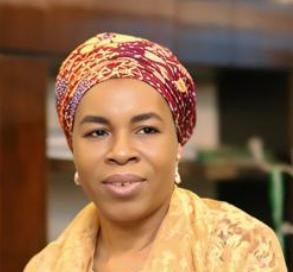
By Zainab Suleiman Okino
The hallowed chambers of the National Assembly and the Senate in particular, were never meant to be a theatre for the absurd. It is supposed to be a place where robust conversations revolving around Nigeria’s progress and development take place; where representatives of the Nigerian people disagree without being disagreeable and resolve issues in the nation’s interest.
Yet under the stewardship of Godswill Akpabio, the “Red Chamber” increasingly feels like a stage for a comedy of errors; one where resolutions are at the expense of the Nigerian people. This week, the simmering frustration finally boiled over into the streets. Nigerians trooped to the National Assembly to halt what they perceived as a legislative ambush on the Electoral Act and the message was clear, that the era of opaque governance will no longer be tolerated.
The bone of contention revolves around the real-time electronic transmission of results versus a vague “transfer” of figures. With the overwhelming unexpected reaction to the Senate’s rigmarole, comes a signpost for the beginning of the battle for the soul of 2027. For a man who has spent a career on the edge of controversy, Akpabio’s latest manoeuvre could lead to his political downfall.
Akpabio’s political brand has long been a curious mix of “uncommon transformation” and uncommon blunders. His political career is littered with a litany of gaffes that suggest a profound detachment from the lived reality of the average Nigerian.
From the patronising “let the poor breathe” remark, a phrase that mocked the very suffocation Nigerians feel under record inflation to the tone-deaf announcement that “prayers” had been sent to the “mailboxes” of senators to enjoy their holidays (an unkind reference to money changing hands), Akpabio has consistently demonstrated a knack for saying the wrong thing at the most sensitive time.
These are not just slips of the tongue; they are glimpses into a mindset that views the Nigerian public as a secondary consideration. When he told lawmakers to be mindful of the “3Gs”-God, Gun, and Government, he wasn’t offering fatherly advice; he was signaling a brand of politics rooted in intimidation and coercion rather than inspiration. He seems to be living it too.
Notwithstanding their number, (APC controls the majority in the National Assembly), a few senators led by Enyinnaya Abaribe threw the Akpabio group under the bus when they alleged manipulation of the electoral amendment process in contrast to their resolution. More surprises await the Senate President whose only preoccupation is to do the biddings of the executive.
His penchant for high-stakes political maneuverings, drama, suppression of dissent and high-handedness reached a sickening low in his recent altercation with Senator Natasha Akpoti-Uduaghan. The spectacle of a Senate President attempting to silence a female colleague through procedural bullying, followed by her suspension amidst allegations of harassment and public shaming about “pancaking her face,” was condescendingly frivolous.
It did more than just damage Akpabio’s personal image; it painted the 10th Senate as a boys’ club where dissent is met with victimisation rather than debate. By reducing a serious legislative disagreement to petty insults, Akpabio proved that his gavel is often used more for suppression, self-service and pettiness than for order and sanity.
Perhaps most damaging of all is the perception that the National Assembly has abdicated its role as a watchdog, opting instead to be a “rubber stamp” for the presidency. The relationship between the two arms of government has moved beyond “cordial” into something far more concerning: a cozy, unquestioning partnership that serves the elite while the country sinks deeper into a quagmire of debt.
Under Akpabio’s watch, the Senate has approved multibillion-dollar loan requests with a speed of light. From the $800 million World Bank loan to the staggering $21.5 billion infrastructure package, the Senate has consistently approved massive borrowing without the rigorous oversight Nigerians expect, while sinking Nigeria deeper into indebtedness. By failing to challenge the executive’s fiscal profligacy, the Senate has become complicit in a legacy of debt that will haunt generations of Nigerians yet unborn.
The irony of Akpabio’s position is not lost on the public. This is a man whose journey to the 10th Senate was paved not by a resounding victory in his party’s primaries, but by a highly controversial Supreme Court pronouncement that bypassed the will of the local electorate. For a leader who owes his seat to a legal technicality rather than a clear popular mandate, one would expect a modicum of humility and a heightened sensitivity to the democratic aspirations of the people.
Instead, we see a Senate President who appears to be working for himself and the President, but definitely not for the citizens. The attempt to tinker with the Electoral Act’s provisions on real-time result transmission is the final straw. Nigerians haven’t forgotten the “glitch” of 2023 that cast a long, dark shadow over the presidential election. They are looking to 2027 with a mixture of hope and trepidation, and any attempt to weaken the transparency of the process is viewed as a direct assault on the future of Nigerian democracy. Therefore, Akpabio needs to be aware of the people’s angst.
Akpabio must understand that there is a limit to how far a people can be pushed. The protests at the National Assembly gates were not just about a bill; they were an expression of collective exhaustion. Nigerians are tired of the profligacy, the corruption, and the redundancy of a legislature that seems more interested in its own comfort than in the development of the country.
The “uncommon” tag he so cherishes is being replaced by a far more sinister reputation of a leader who presides over the erosion of legislative independence. If he continues to ignore the anger in the land, he will find that the same courtrooms and corridors of power that shielded him in the past will offer no protection against the righteous indignation of a nation that has decided it has had enough. The message to the Senate President is for him to tread carefully, because people are angry and are no longer ready for more patience.
That is why the protests were somehow spontaneous, almost organic outpouring of pent-up frustration and anger. I had cause, in the past, to warn President Tinubu that the streets were far from smiling, in the aftermath of the fuel subsidy removal and the floating of the Naira, policies that almost pushed millions of Nigerians to the brink.
Our lawmakers, as the representatives closest to the people, stand to lose the most if public patience is stretched beyond limits. It is therefore in their best interest to stand on the good side of history. Akpabio must as well decode the mood of the moment, amend his ways and show patriotism in all things revolving around the progress and development of the country, electoral reforms included.
Zainab Suleiman Okino chairs the Blueprint Editorial Board. She is a syndicated columnist and can be reached via: zainabokino@gmail.com
