

…Says it must be real-time electronic transmission of results or nothing
Our Reporter, Abuja
A chieftain of the New Nigeria Peoples Party (NNPP), Buba Galadima, has accused political forces of orchestrating a smear campaign against the party’s leader, Senator Rabiu Musa Kwankwaso, describing recent allegations linking him to terrorism financing and the imposition of Sharia law as “most unfair” and driven by the intrigues of the 2027 general elections.
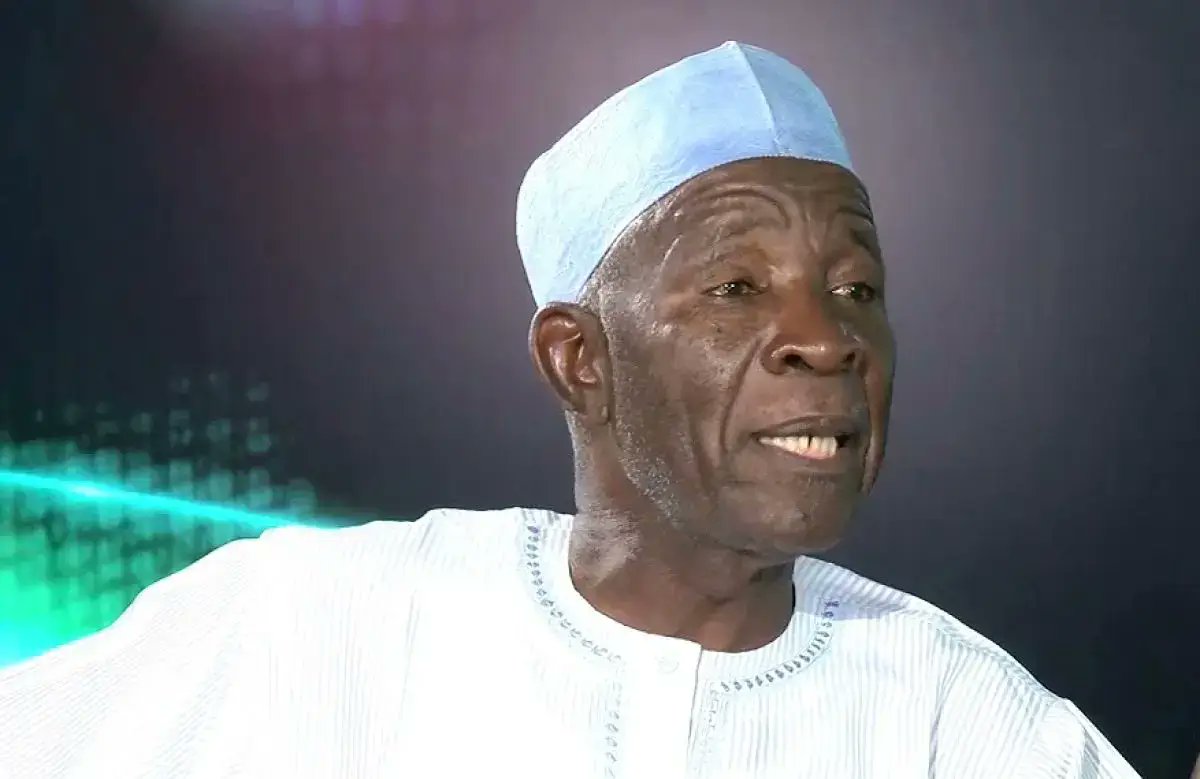
Galadima spoke on Thursday during an appearance on The Morning Show, an Arise Television programme, where he strongly defended Kwankwaso’s record and integrity, insisting that the former Kano State governor was being deliberately targeted because of fears over his political relevance ahead of 2027.
“I learned of it through my son yesterday around 10pm. He sent me a clip, and later a lot of people started bombarding me with questions that Kwankwaso was a financier of terrorism and that he promulgated Sharia law in Kano, making blasphemy a capital offence,” Galadima said.
“I thought that was most unfair — unfair to Kwankwaso, unfair to his person, and unfair to his integrity as a peaceful Nigerian.”
According to him, the allegations were part of a broader political plot to discredit Kwankwaso and “technically eliminate him” from future electoral calculations.
“What we are seeing is the intrigue of the 2027 election,” Galadima said, alleging that sections of the media were being used to blackmail and disparage the NNPP leader.
He recalled a December report alleging that Kwankwaso had made “impossible demands” of the ruling All Progressives Congress (APC), including seeking the vice-presidential slot and 25 per cent of federal appointments as conditions for defection.
“Arise TV even constituted a panel of three people, all anti-Kwankwaso, and found him guilty, disparaged his image and blackmailed him,” Galadima said.
“That was most unfortunate coming from friends.”
Galadima challenged anyone with evidence of talks between Kwankwaso and the APC to make it public, insisting that apart from a meeting with President Bola Tinubu in Paris in 2023, Kwankwaso had never discussed merger or defection with the ruling party.
“If there is any evidence available, they should come out with it and show the world,” he said.
He further claimed that there had been rumours of plans to arrest Kwankwaso or unleash anti-graft agencies on him should he refuse to defect to the APC, expressing surprise that the allegations later “surfaced offshore, in the United States.”
On the issue of Sharia law, Galadima rejected claims that Kwankwaso was responsible for its promulgation in Kano State, noting that he was in fact reluctant and among the last northern governors to adopt it.
“Kwankwaso was governor between 1999 and 2003. He was under enormous pressure, and the Sharia law was promulgated by the Kano State House of Assembly,” he said.
“He was actually a victim of the Sharia politics.”
Galadima argued that Kwankwaso’s reluctance to politicise religion cost him his re-election when his successor, Ibrahim Shekarau, leveraged Sharia sentiments against him.
“How can anybody in his right senses accuse Kwankwaso, who was a loser during that Sharia debacle?” he asked.
“Those who started it were not even mentioned.”
He also described Kwankwaso as a leader who protected minorities in Kano despite the state’s volatile politics, citing testimonies from Christian indigenes who, according to him, acknowledged Kwankwaso’s inclusive governance.
“They fear Kwankwaso either running for president or vice president, and that is why they are playing this kind of politics,” Galadima said.
On electoral reforms, Galadima criticised the Senate over its stance on real-time electronic transmission of election results, warning against any attempt to retain manual alternatives.
“It must be electronic transmission of results or nothing,” he said.
“Any ‘but’ in that law is an invitation to rig elections.”
He maintained that Nigerians overwhelmingly support electronic transmission and urged citizens to mount pressure on lawmakers.
“The National Assembly should know they are our servants. Nigerians did not elect kings,” Galadima said.
“There is no single person who supports manual transmission except beneficiaries of fraud.”
He warned that continued manipulation of electoral reforms could provoke public anger, stressing that technological excuses were no longer acceptable in a country preparing for future elections.
