

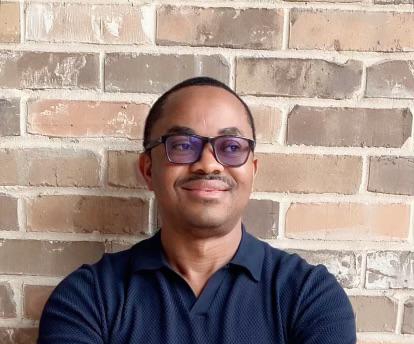
In The New York Times article, Emeka Umeagbalasi, former South East Coordinator of the Civil Liberties Organization, founder of Intersociety, former volunteer and coordinator with Amnesty International, and former associate member of Human Rights Watch, was reduced to a screwdriver seller. Not because the description was false, but because it was useful.
After the last United States election, I cancelled my cable news subscriptions without a second thought. I had reached a point of saturation. I no longer wished to permit Time Warner, the Murdoch family, or any other corporate media conglomerate to monetize my anxiety. I could not continue to endure the psychological battering that came from the incessant recycling of the inanities of Trump’s first term, a spectacle that messed with my mental health. Strip away the sanctimony and the performative outrage, and the underlying loyalty of cable news becomes unmistakable: the maximization of shareholder returns, not enlightenment for public good.
I did, however, retain my subscription to The New York Times. Unlike cable news, it afforded me the luxury of discernment. I could curate my intellectual diet, engaging only with what genuinely mattered and discarding what did not. I did not need to know, for instance, that a sitting U.S. president gave the middle finger when heckled by an auto plant worker in Michigan. Such anecdotes merely clutter my mind.
That confidence, however, proved short lived. Just last week, a report published by The New York Times suggested that a so called screwdriver seller in Onitsha bore responsibility for a United States missile strike carried out on Christmas Day in Sokoto. In that moment, it became clear that my media housecleaning exercise was far from complete.
Anyone with experience in data analysis, intelligence assessment, or investigative reporting understands the discipline required. Multiple sources are consulted, credibility is weighed, claims are cross checked, and conclusions are drawn only after rigorous validation. Yet here, a publication of global repute implicitly asks its readers to believe that, despite the vast intelligence architecture available to the President of the United States, the decisive catalyst for a military strike in northern Nigeria was deeply flawed information allegedly supplied by a lone trader operating from a stall in Onitsha Main Market.
According to this framing, Donald Trump was persuaded not by classified intelligence briefs, satellite surveillance, congressional testimonies, or allied security assessments, but by a man selling screwdrivers in eastern Nigeria. One is almost invited to imagine the shop conveniently located, probably not too far from Peter Obi’s house, just to complete the implied subtext.
To grasp the full absurdity of this claim, one must return to the broader context.
Nigeria has endured years of relentless terror. In its most visible modern incarnation, this violence began with Boko Haram, a group founded by Mohammed Yusuf in 2002, which never concealed its ambition to transform Nigeria into a theocratic Islamic state governed by Sharia law. Over time, splinter groups and affiliates such as ISWAP and Ansaru emerged. Although these organizations finance themselves through kidnapping, extortion, and banditry, their ideological core has remained constant and unmistakable.
In many respects, they represent a contemporary reenactment of the religious conquest led by Usman dan Fodio, which swept across much of northern Nigeria in the nineteenth century. Where the objective is the establishment of an Islamic caliphate, it should surprise no one that churches and Christian communities become symbolic and strategic targets. Violence against them is not collateral. It is ideological.
Alongside these ideologically driven groups exists another menace: killer herders. These are largely criminal enterprises motivated not by theology but by naked economic gain. They attack churches, mosques, farms, highways, and villages, leaving indiscriminate death in their wake. Anything that obstructs profit becomes expendable. Their victims include Christians, Muslims, traditional worshippers, and atheists alike.
These distinctions are not academic. They clarify why those who speak of Christian persecution are not inventing a fantasy, even as it remains true that many victims of Nigeria’s violence are Muslims as well. Two truths can coexist. They are not mutually exclusive.
What is indisputable is that these terror networks and criminal syndicates have battered Nigeria from every direction, while successive governments have demonstrated an alarming inability or unwillingness to confront them decisively. At best, the state has failed. At worst, it has been complicit. With each passing year, the crisis deepens.
The kidnapping of the Chibok girls briefly jolted the global conscience. Michelle Obama spoke. Hashtags trended. Commitments were announced. Yet as mass kidnappings and massacres persisted, the world grew desensitized. Each new atrocity now struggles to survive even a single news cycle before vanishing into collective amnesia.
Meanwhile, images circulated of entire communities in Southern Kaduna, Plateau, and Benue reduced to rubble, their survivors consigned to life in internally displaced persons camps. For years, their pleas went largely unheard. Eventually, a few voices pierced the silence. One of them was Bishop Wilfred Chikpa Anagbe of the Catholic Diocese of Makurdi, who testified before the United States Congress about what he described as the escalating crisis of Christian persecution and genocide in Nigeria.
At that point, the United States took notice, not because of a lone individual, but because of the cumulative efforts of clergy, activists, journalists, diplomats, and advocates such as Bishop Anagbe, Mike Arnold, and others who refused to remain silent.
When Donald Trump, motivated in part by his evangelical base, chose to respond, the Nigerian government grew visibly uneasy. Rather than engage the substance of the allegations, it opted to counter with an alternative narrative. Of all possible explanations for American concern, Abuja settled on one convenient villain: IPOB. Fully aware of the political marketability of any narrative that casts anything remotely connected to Ndigbo as Nigeria’s perennial problem, the government advanced it aggressively.
In this account, the United States did not act because villages filled with men, women, and children were being erased, or because terror groups had rendered entire regions ungovernable. It acted solely because of IPOB lobbying in Washington. Nothing else mattered.
When American aircraft later struck terrorist targets around Sokoto on Christmas Day, Nigerians were initially informed that the operation resulted from joint security coordination between Nigeria and the United States. That explanation endured briefly, until it did not.
Abruptly, the narrative shifted. The strike was no longer about terrorists. It was now attributed to faulty intelligence allegedly supplied by a screwdriver seller in Onitsha, one man named Emeka Umeagbalasi. The claim was deemed credible, Nigerians were told, because it appeared in The New York Times.
Never mind that the United States Congress had already dispatched a fact finding delegation to Nigeria led by Representative Riley Moore, which toured multiple regions and returned with findings they believe supported christian genocide. Never mind that Nigerian officials held repeated engagements with U.S. authorities, or that Nuhu Ribadu himself traveled to the United States for high level discussions. Never mind that the Nigerian government had earlier acknowledged coordination following the airstrike.
Weeks later, reports emerged that the Nigerian government had retained the Washington based lobbying firm DCI Group to influence U.S. policymakers regarding the narrative surrounding the killing of Christians in Nigeria. According to public filings, the six month contract, valued at nine million dollars, was signed on December 17, 2025. It included an upfront payment of four point five million dollars and a monthly retainer of seven hundred and fifty thousand dollars, with provisions for automatic renewal.
The arrangement was not intended for public scrutiny, but it inevitably filtered out. Nigerians reacted with fury. At a time when the nation hemorrhages blood, vast sums were being expended to deny the existence of the disease rather than to confront its cause.
Then, almost predictably, came a concerted effort to pivot the narrative. One Emeka from the region that birthed IPOB was said to have made Donald Trump bomb Northern Nigeria. The precision was deliberate. The name had to be Emeka. The region had to be the South East.
Nigeria, it seems, has a permanent scapegoat. They are called the Ndigbo, a group the national imagination perversely portrays as monstrous and struggles to associate with anything benign. A drought in Katsina somehow implicates the Igbo. A killing in Auchi follows the same illogical trajectory. Yet even if the United States strike had indeed been based on flawed intelligence from a lone activist, does that negate the reality of terrorists operating with near total impunity? Does it absolve the state’s indulgent non kinetic posture toward mass murder?
When will Nigeria prosecute the sponsors of terror? When will it act decisively on intelligence shared by the United States and the United Arab Emirates? When will those erecting gilded mansions with counterterrorism funds be held accountable? Instead, the state finds refuge in blaming the most convenient villain in its tragic narrative.
In The New York Times article, Emeka Umeagbalasi, former South East Coordinator of the Civil Liberties Organization, founder of Intersociety, former volunteer and coordinator with Amnesty International, and former associate member of Human Rights Watch, was reduced to a screwdriver seller. Not because the description was false, but because it was useful.
There is nothing inherently wrong with an activist earning an honest living. But we do not introduce Donald Trump as a cryptocurrency dealer, even though he trades digital assets. We identify him first as President of the United States, because relevance matters. Emeka could have been introduced as a human rights activist with longstanding affiliations to respected civil society organizations. Those details were omitted because they complicated the narrative. Someone understood precisely what they were doing. Nine million dollars can travel a long way.
In Nigeria’s long and blood soaked tragedy, profit, propaganda, and scapegoating have once again triumphed over truth. That an institution as storied as The New York Timeswould lend its platform to such a crude and expedient narrative is deeply troubling, though perhaps not entirely inexplicable. As has long been observed, journalism is first a business, and only secondarily a public service, when it remains profitable to be so.
Anyone uncertain about the consequences of scapegoating when it hardens into state policy and ultimately descends into genocide need only recall the Holocaust, the Nigerian Biafran War, and, most recently, the Rwandan genocide. Long before gas chambers, tanks, or machetes were deployed, there existed a sophisticated propaganda apparatus that systematically singled out a designated group, recasting every individual transgression as proof of a collective and malignant conspiracy.
Nigeria has ninety nine problems, and neither Emeka Umeagbalasi nor the Ndigbo is one of them. Borrowing from the lyrical candor of the hip hop icon Marshall Mathers, known professionally as Eminem, The New York Times has reminded me exactly why I am cleaning out my closet.
Osmund Agbo is a medical doctor and author. His works include Black Grit, White Knuckles: The Philosophy of Black Renaissance and a fiction work titled The Velvet Court: Courtesan Chronicles. His latest works, Pray, Let the Shaman Dieand Ma’am, I Do Not Come to You for Love, have just been released. He can be reached at eagleosmund@yahoo.com
